
 Business License

Magnetic Coercivity: What It Means for Electromagnetic Component Design
Li Wei still remembers the day his relay test bench started failing in March 2026. His team had switched to a new supplier for stamped core plates. The parts looked identical under inspection. Dimensions matched. Surface finish matched. Yet the relays stuck closed after cycling tests. The root cause wasn't mechanical tolerance. It was magnetic coercivity. The core material held onto magnetic field strength too stubbornly, so the armature stayed magnetized even after the coil current dropped to zero. Switching to a verified low-coercivity electromagnetic pure iron solved the problem within a week.
His story points to a specification that engineers often overlook. Magnetic coercivity controls how much energy a material wastes during every magnetization cycle. It determines whether your transformer runs cool, whether your solenoid releases on command, and whether your motor maintains efficiency under load. You can't afford to ignore it.
You already know that material selection drives electromagnetic performance. This guide explains what magnetic coercivity measures, how it appears on hysteresis curves, why it matters for common components, and how to select materials that keep coercivity low without sacrificing other magnetic properties. By the end, you'll know exactly which questions to ask your material supplier.
What Is Magnetic Coercivity?
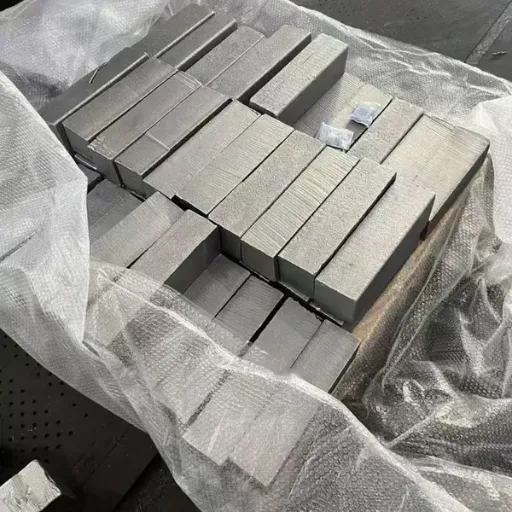
Magnetic coercivity is the intensity of the reverse magnetic field required to reduce a material's magnetization to zero after it has been saturated. Engineers also call this value coercive force. It quantifies how strongly a material resists demagnetization. Low coercivity means a material magnetizes and demagnetizes easily. High coercivity means it holds magnetic alignment stubbornly and needs a strong opposing field to return to an unmagnetized state.
The unit for magnetic coercivity is amperes per meter (A/m) in the SI system. Some legacy datasheets still list oersteds (Oe). One oersted equals roughly 79.58 A/m. For perspective, high-grade electromagnetic pure iron grades such as DT4C often show coercivity below 80 A/m. Permanent magnet materials like neodymium alloys can exceed 800,000 A/m. That three-order-of-magnitude gap explains why the same physical element behaves completely differently in a transformer core versus a loudspeaker magnet.
Coercivity sits alongside magnetic permeability and saturation induction as one of the three pillars of soft magnetic performance. You want high permeability to amplify weak fields. You want high saturation to handle peak flux. And you want low coercivity to minimize the energy lost when the field direction reverses. No single grade maximizes all three, but understanding the trade-offs lets you optimize for your operating conditions.
Want to see which pure iron grades deliver the lowest coercivity for your application? Browse our full range of electromagnetic pure iron products.
How Magnetic Coercivity Differs From Magnetic Permeability
Manufacturers sometimes confuse coercivity with permeability because both describe magnetic response. They measure different things. Permeability tells you how much flux density a material produces for a given applied field. Coercivity tells you how much reverse field you need to erase that flux after the material has been driven to saturation.
Think of permeability as acceleration and coercivity as braking distance. A car with rapid acceleration isn't necessarily easy to stop. A material with sky-high permeability isn't necessarily easy to demagnetize. In practice, the best soft magnetic materials combine both: they amplify fields efficiently and release those fields cleanly when the driving current drops.
We've covered magnetic permeability in depth in our magnetic permeability guide. That article explains why pure iron achieves higher permeability than silicon steel and how processing affects the final value. For this discussion, keep one rule in mind: low coercivity and high permeability usually travel together in ultra-low-carbon pure iron because both properties depend on free magnetic domain movement.
Reading the Hysteresis Loop: Where Coercivity Lives
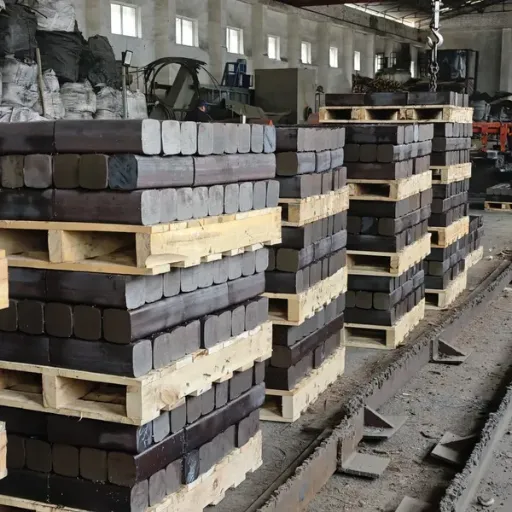
Engineers visualize magnetic coercivity on a B-H curve, also called a hysteresis loop. The horizontal axis shows applied magnetic field strength H. The vertical axis shows resulting flux density B inside the material. If you slowly increase H from zero, B rises along the initial magnetization curve until the material saturates. When you reduce H back to zero, B doesn't return to zero. The remaining flux density is remanence, labeled Br. To drive B to zero, you must apply a reverse field. The magnitude of that reverse field is the coercivity, labeled Hc.
The area inside the hysteresis loop represents energy lost as heat during each magnetization cycle. Low-coercivity materials form narrow loops with small enclosed areas. High-coercivity materials form wide loops that waste more energy. At 50 Hz or 60 Hz, those tiny losses multiply into serious heat and efficiency penalties.
Here's where design trade-offs appear. You can reduce coercivity by increasing material purity, annealing after cold work, and keeping carbon content extremely low. Each intervention has cost and mechanical consequences. Ultra-pure iron is softer and more ductile than silicon steel, which can be an advantage for stamping but a limitation for structural loads. The best design picks the narrowest loop that still meets mechanical and economic constraints.
Soft Magnetic Materials vs Hard Magnetic Materials
The boundary between soft and hard magnetic materials is mostly a question of coercivity. Soft magnetic materials serve in devices where the field reverses constantly. Hard magnetic materials serve as permanent magnets.
| Material Type | Typical Coercivity | Common Use |
|---|---|---|
| Electromagnetic pure iron (DT4C) | <100 A/m | Transformer cores, relay stampings, solenoid housings |
| Silicon electrical steel | 30–100 A/m | Power transformers, motors at line frequency |
| Nickel-iron alloys (Permalloy) | <10 A/m | Magnetic shielding, precision instrument transformers |
| Ferrite soft magnets | 10–200 A/m | High-frequency inductors, EMI filters |
| Alnico permanent magnets | 40,000–150,000 A/m | Loudspeakers, sensors |
| Neodymium permanent magnets | 800,000–1,200,000 A/m | Hard disk drives, electric vehicle motors |
Notice the gap between soft and hard materials. There is no useful middle ground for most electromagnetic devices. You either want the lowest possible coercivity for alternating-field applications, or you want extremely high coercivity for permanent magnets.
Why Low Magnetic Coercivity Matters in Electrical Engineering
Every AC electromagnetic device cycles through magnetization and demagnetization hundreds or thousands of times per second. Each cycle traces part of the B-H loop. The wider that loop, the more energy converts to heat instead of useful work. Low magnetic coercivity keeps the loop narrow and the device efficient.
Maria Gonzalez learned this during a transformer redesign project at her company in January 2026. Her team had specified a low-cost silicon steel to save on material costs. Bench testing showed acceptable permeability but elevated core temperatures at full load. The problem was coercivity roughly 40% higher than the previous grade. The extra hysteresis loss pushed total losses beyond the design budget. Switching to DT4C electromagnetic pure iron cut coercivity from 95 A/m to 68 A/m and reduced core temperature rise by 12 degrees Celsius. The material cost increased slightly, but the customer saved money on cooling and copper over the full product life.
Maria's case illustrates why coercivity belongs on every material checklist. Here are three application categories where it dominates performance.
Transformers and Inductors
Transformer cores experience alternating magnetization at power frequency. Hysteresis loss per cycle equals the area of the B-H loop multiplied by frequency. Lower coercivity means a narrower loop and less loss. High-efficiency transformers, especially those targeting DOE or IEC efficiency tiers, demand core materials with coercivity well below 100 A/m. Our DT4C pure iron specifications detail the coercivity values and thickness options available for distribution and instrumentation transformers.
Relays and Solenoids
Relays must switch cleanly. When the coil de-energizes, the core must lose magnetization fast so the spring can pull the contacts open. High coercivity creates residual magnetism that delays release or causes contact sticking. That's exactly what happened to Li Wei's relay line. For high-speed relays and proportional solenoids, pure iron grades with coercivity under 80 A/m provide the crisp magnetic response that reliable switching demands.
Motors and Sensors
Electric motors rely on rotating magnetic fields. Stator and rotor laminations with low coercivity reduce no-load losses and improve partial-load efficiency. Automotive sensors, especially those measuring crankshaft position or current, depend on stable, low-coercivity cores to produce clean signal waveforms. Any residual magnetization from previous cycles distorts the output and reduces measurement accuracy.
How Material Processing Affects Magnetic Coercivity

Coercivity is not an intrinsic constant. It depends strongly on microstructure, impurities, mechanical stress, and thermal history. Two samples of the same nominal alloy can show very different coercivity values depending on how they were processed.
Carbon content is the biggest single factor. Carbon atoms pin magnetic domain walls, making them harder to move. Even 0.01% carbon can double the coercivity of otherwise pure iron. That's why electromagnetic grades like DT4C specify carbon at or below 0.004%. The ultra-low carbon content leaves domain walls free to move, which produces both high permeability and low coercivity.
Cold working raises coercivity by introducing dislocations and internal stress. A cold-drawn pure iron bar will almost always show higher coercivity than the same alloy in an annealed, hot-rolled condition. Stress-relief annealing after forming can recover much of the lost performance. If your application requires tight dimensional tolerances and low coercivity, specify final annealing as part of the manufacturing sequence.
Grain size also matters. Larger grains generally reduce coercivity because domain walls encounter fewer grain boundaries. However, very large grains can reduce mechanical strength and make stamping more difficult. Most soft magnetic steels target an optimized grain size that balances magnetic performance with manufacturability.
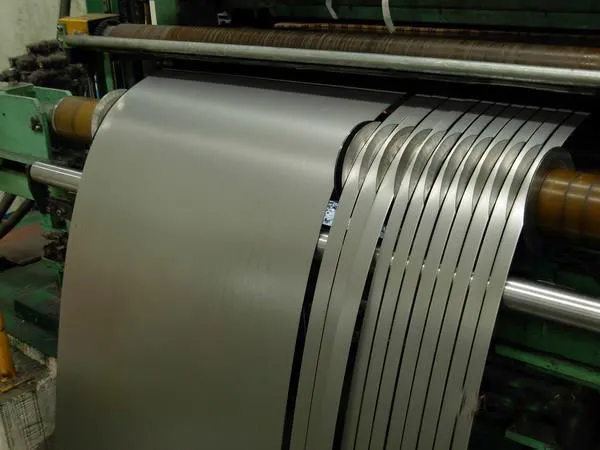
Surface condition plays a role too. Oxide scale, residual rolling lubricants, and shallow decarburization layers can all create localized pinning sites. Precision-slit coils and custom-cut bars should arrive clean and, if needed, coated with a thin anti-rust film that doesn't interfere with subsequent processing.
Selecting Materials Based on Magnetic Coercivity
Start with the operating frequency. At DC or very low frequency, pure iron offers unbeatable low coercivity and high saturation. At 50 Hz or 60 Hz, silicon steel trades some permeability and coercivity performance for higher resistivity that suppresses eddy currents. Above 10 kHz, ferrites dominate despite lower saturation because metallic eddy losses become prohibitive.
Next, consider flux density swing. If your design cycles through a large portion of the B-H curve, hysteresis loss scales with loop area. In that case, coercivity reduction delivers large efficiency gains. If the device operates at small signal levels near the origin, initial permeability matters more than saturation coercivity.
Mechanical requirements constrain the choice. Pure iron is softer than silicon steel and much softer than structural alloys. Stamped laminations work well. Load-bearing parts do not. For components that need both magnetic performance and structural integrity, forged or machined pure iron shapes may be appropriate, but you must protect critical magnetic surfaces from nicks and work hardening.
Chen Ran, a procurement engineer at a motor manufacturer, ran into this issue last year. His shop had switched to a lower-cost bar supplier for CNC-machined stator cores. The parts measured correctly, but motor efficiency dropped by 3%. A materials audit revealed that the new supplier had skipped the final annealing step. Surface hardness was elevated, and coercivity had risen by 35%. Returning to a supplier that provided properly annealed custom-cut bars restored the original performance. The experience taught Chen to specify coercivity on his purchase orders, not just chemistry and dimensions.
Testing and Verifying Magnetic Coercivity Values
Reliable coercivity data requires controlled measurement. The most common method uses a toroidal sample or an Epstein frame with primary and secondary windings. The test system applies a known magnetizing field, measures the resulting flux, and plots the full B-H loop. Coercivity is read directly from the horizontal intercept of the descending branch.
Sample preparation is critical. Any mechanical damage, burrs, or surface contamination can raise measured coercivity above the true material value. Samples should be sheared or machined carefully and, if appropriate, stress-relief annealed before testing. Always ask your supplier whether reported coercivity values come from finished material or from specially prepared laboratory samples.
Temperature affects results too. Coercivity generally decreases slightly as temperature rises, then drops sharply near the Curie point. If your device operates hot, request elevated-temperature data rather than assuming room-temperature values apply across the full range.
For incoming inspection, you don't always need a full hysteresis loop tracer. Comparative testing against a known-good reference sample can flag bad lots quickly. Many manufacturers keep reference coils wound from historical best-performing material and compare inductance or coercive voltage against each incoming batch.
Need help matching a coercivity specification to your application? Contact our engineering team to review your design and recommend the right DT grade. Request a technical consultation today.
Conclusion
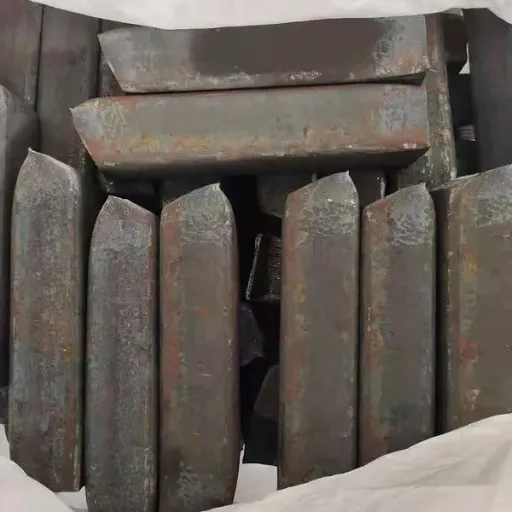
Magnetic coercivity shapes the efficiency, temperature, and reliability of every AC electromagnetic device you build. Low coercivity keeps hysteresis loops narrow, reduces energy loss, and ensures clean switching in relays and solenoids. High coercivity belongs in permanent magnets, not in transformer cores or motor laminations.
Keep these takeaways in mind for your next design:
Coercivity measures the reverse field needed to demagnetize a saturated material.
Ultra-low carbon pure iron grades like DT4C deliver coercivity below 100 A/m for demanding soft magnetic applications.
Processing history matters: cold work raises coercivity, while proper annealing restores low values.
Always verify that your supplier's coercivity data matches the finished form you'll actually use.
Combine low coercivity with high permeability and appropriate saturation for the best overall magnetic performance.
Don't let a hidden coercivity mismatch turn into a field failure six months after launch. Specify your magnetic requirements clearly, test incoming material, and partner with a supplier that understands how metallurgy translates into component performance. If you're sourcing pure iron for transformers, relays, motors, or sensors, our team can help you select the grade and processing route that hits your coercivity target. Get in touch today for a quote tailored to your exact specifications.
Recently Posted
-
Transformer Calculation: A Practical Guide for Core Design and Material Selection
June 30, 2026A 2-millimeter error in core cross-section can quietly drain thousands of dollars from a transformer production run. That is exact Read More
 -
Magnetic Flux: A Complete Guide for Electrical Engineering Applications
June 30, 2026In late 2024, a power equipment manufacturer in Poland received a shipment of transformer cores that looked perfect on paper. The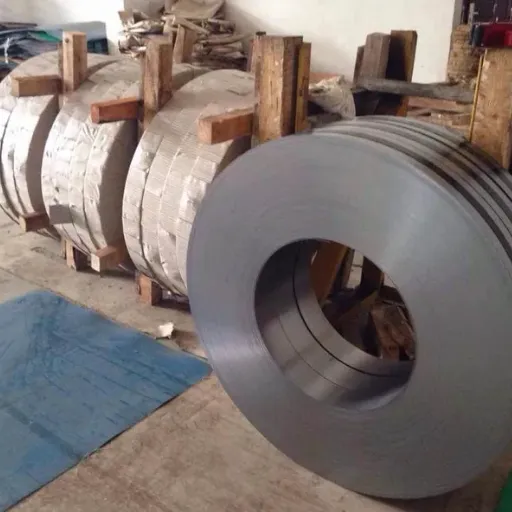 Read More
 -
Magnetic Field Strength: A Practical Guide for Electromagnetic Design
June 30, 2026When Wang Chen's solenoid valve line began missing stroke targets in March 2026, his team suspected the usual suspects: worn s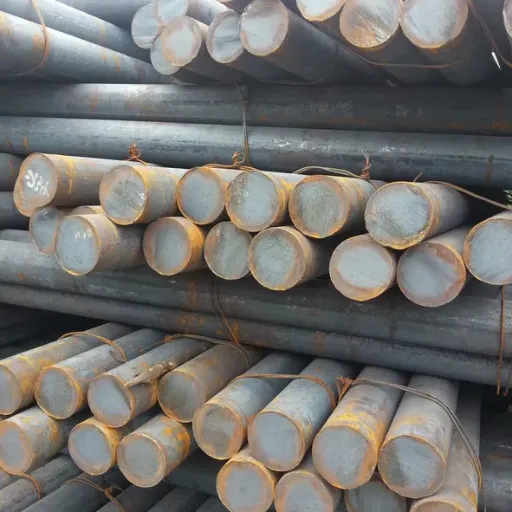 Read More
 -
AC Electromagnet: Design, Applications, and Material Selection Guide
June 30, 2026Last quarter, a relay manufacturer in Dongguan shipped 5,000 solenoid valves to a European automotive client. Two weeks after inst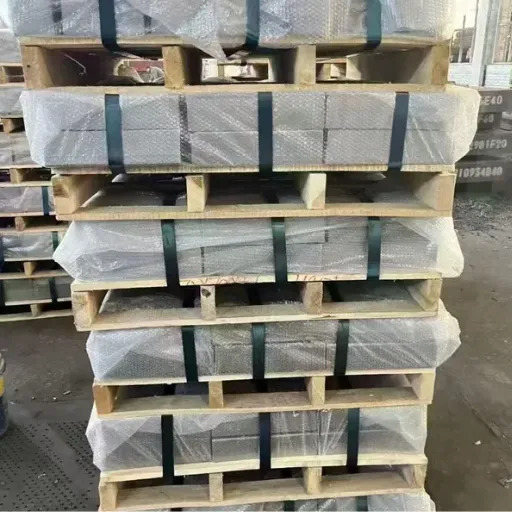 Read More

Contact Us
Recommended Products
-
 Seamless Tube With Good Cold Electrical Pure Iron Fittings Hot Workability for Forming Fittings and ConduitsNegotiableMOQ: 1 Ton
 -
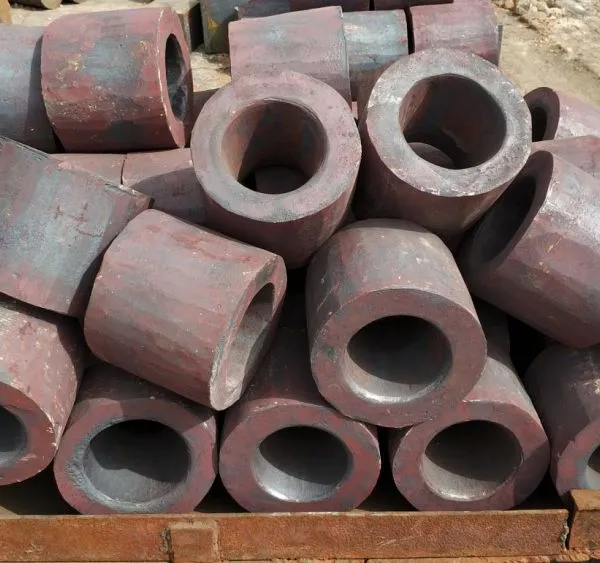
Electromagnetic Pure Iron Forging for Automotive Sensor ManufacturingNegotiableMOQ: 100 Kilograms
-
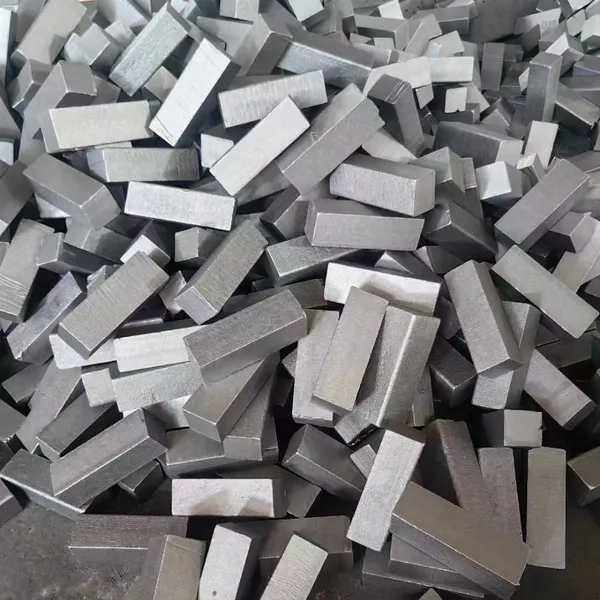
Precision Cut Pure Iron Square Bar High Saturation Induction Raw Material for Generator and RotorNegotiableMOQ: 100 Kilograms
-
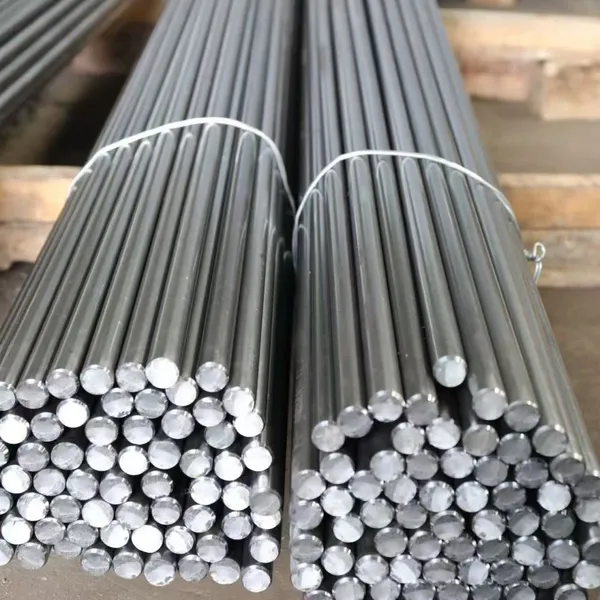
DT4C Super Grade Electromagnetic Pure Iron Bright Bar With Bundle Weight 30-100kg for Easy TransportationNegotiableMOQ: 1 Ton
-
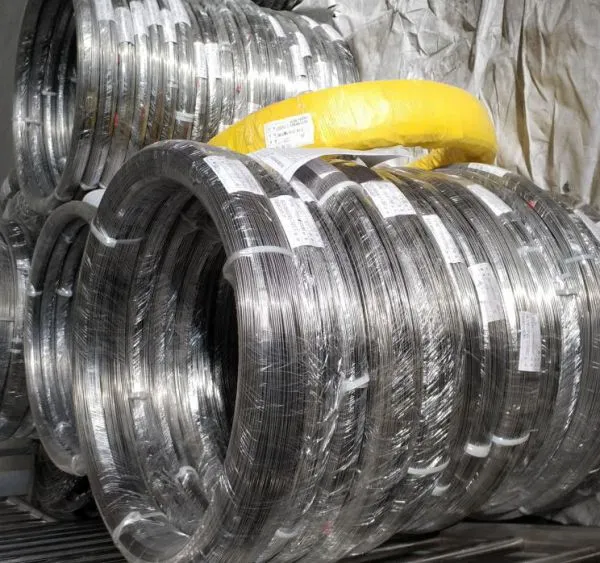
DT4C Electromagnetic Pure Iron Cold-Drawn Wire 0.5mm-6.0mm Diameter for TransformersNegotiableMOQ: 100 Kilograms
-
Industrial Pure Iron Bar for Electromagnetic Relay and Sensor ProductionNegotiableMOQ: 1 Ton
-
Electromagnetic Pure Iron Thin Sheet 0.3mm-0.8mm for Solenoid and Relay ManufacturingNegotiableMOQ: 500 Kilograms
-
Electrical Pure Iron Hot-Rolled Coil for Magnetic Components With Low Iron LossNegotiableMOQ: 1 Ton
-
Low Carbon DT4C Pure Iron Round Bar With 99.8% Fe Content for Electrical ApplicationsNegotiableMOQ: 1 Ton
-
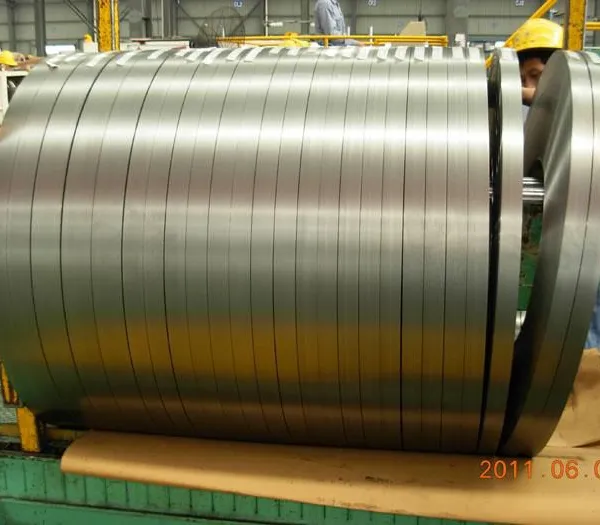
Cold Rolled Pure Iron Slit Coil DT4C Grade Ultra Low Carbon ≤0.004% for Magnetic ComponentsNegotiableMOQ: 1 Ton
-
Low Iron Loss Electromagnetic Pure Iron Hot-Rolled Coil DT4C for Transformer CoresNegotiableMOQ: 1 Ton
-
Soft Magnetic Pure Iron Sheet With Minimum Iron Loss for High-Efficiency MotorsNegotiableMOQ: 1 Ton
-
Electromagnetic Pure Iron Cold Rolled Coil DT4C for High Magnetic Permeability ApplicationsNegotiableMOQ: 1 Ton
-
Industrial Pure Iron Tube Superior Surface Quality Electromagnetic Pure Iron Tube for Welding and Plating ProcessesNegotiableMOQ: 1 Ton
-
DT4 Seamless Pure Iron Tubing for High-Performance Electrical Equipment ApplicationsNegotiableMOQ: 1 Ton
-
DT4C Iron Wire Rod for Precision Magnetic Shielding ApplicationsNegotiableMOQ: 100 Kilograms
-
Industrial Pure Iron Fittings DT4 Pure Iron Seamless Tube With Low Hysteresis Loss for Electromagnetic SystemsNegotiableMOQ: 1 Ton
-
DT4C Cold Rolled Coil Slitting for Electrical Enclosure ManufacturingNegotiableMOQ: 1 Ton
-
Anti Rust Coated Pure Iron Square Bar Low Carbon Raw Material for Welding and Forging Magnetic PartsNegotiableMOQ: 100 Kilograms
-
DT4 Pure Iron Cold-Drawn Wire 0.5mm-6.0mm Diameter for Precision EngineeringNegotiableMOQ: 500 Kilograms