
 Business License

Magnetic Field Strength: A Practical Guide for Electromagnetic Design
When Wang Chen's solenoid valve line began missing stroke targets in March 2026, his team suspected the usual suspects: worn seals, coil degradation, and contaminated air supplies. Two weeks of troubleshooting later, an instrumentation engineer traced the fault to something far simpler. The coil was generating the designed magnetic field strength, but the core material had shifted to a lower-grade steel. The weaker material needed more magnetizing force to reach the same pull force, which pushed the coil into thermal runaway during continuous duty. Replacing the core with verified electromagnetic pure iron restored the original stroke characteristics and eliminated the overheating.
Wang's story highlights a fundamental truth that crosses every electromagnetic product category. Magnetic field strength is the invisible input that drives every motor, transformer, relay, and sensor. Get it right and your design runs cool, efficient, and predictable. Get it wrong and even the best mechanical design will underperform.
You already know that magnetic design requires balancing current, turns, and core geometry. What this guide adds is a clear picture of how magnetic field strength relates to material behavior, how to read the design curves that matter, and how to select core materials that keep field strength working in your favor. We cover the essentials, the practical measurements, and the material choices that separate reliable products from warranty nightmares.
What Magnetic Field Strength Means in Electrical Engineering
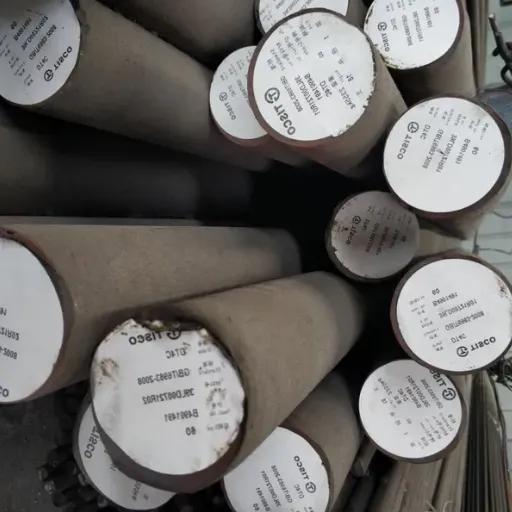
Magnetic field strength describes the intensity of the magnetic field produced by electric current or permanent magnets. In electromagnets, engineers control it directly through coil current and the number of winding turns. Unlike magnetic flux density, which depends on the material inside the field, magnetic field strength depends only on the external source.
The distinction matters because it separates what you control from what the material does. You set the field strength with your coil design. The core material then responds by producing a specific magnetic flux density. That response is governed by the material's permeability, which we explored in our magnetic permeability guide. Together, field strength and permeability determine whether your component reaches the required flux without excessive current or heat.
Magnetic Field Strength vs. Magnetic Flux Density
Many engineers use these terms interchangeably in casual conversation, but they describe different quantities. Magnetic field strength, represented by H, measures the magnetizing force that drives magnetic flux through a material. Magnetic flux density, represented by B, measures the resulting magnetic effect inside the material.
The relationship is straightforward: B equals the product of permeability and H. In free space, the two differ only by the permeability of vacuum. Inside a magnetic material, permeability can amplify the effect by thousands of times, which makes the difference between B and H enormous. A coil producing a modest field strength can create a very high flux density inside a high-permeability core.
Confusing the two leads to real design errors. A design team might specify a coil to deliver a certain flux density directly, ignoring the material response. Or they might calculate field strength correctly but choose a core material with permeability too low to reach the target flux. Understanding the B-H relationship prevents both mistakes.
Common Magnetic Field Strength Units and Conversions
Magnetic field strength uses several unit systems depending on region and industry. The SI unit is the ampere per meter, written as A/m. This is the standard in most engineering documentation and material data sheets today. One ampere per meter represents the field produced by one ampere of current flowing in a single-turn coil of one meter length.
In some older American specifications, you may still encounter oersteds, abbreviated Oe. One oersted equals approximately 79.58 A/m. Another common unit is the ampere-turn per meter, which emphasizes the coil geometry. Since ampere-turn per meter is dimensionally identical to A/m, the numerical value is the same.
For quick reference:
1 A/m = 0.01257 Oe
1 Oe = 79.58 A/m
1 kA/m = 1000 A/m
When reviewing supplier certificates or international standards, always verify which unit system appears. A value listed without units can cause costly confusion if one engineer assumes A/m and another assumes oersteds.
Want to understand how field strength converts into flux inside your core material? Read our detailed magnetic flux density guide for pure iron applications.
Why Magnetic Field Strength Controls Electromagnetic Performance
Every electromagnetic device translates electrical energy into magnetic force or vice versa. Magnetic field strength is the lever that controls this translation. Higher field strength produces more flux, more force, and more torque. But higher field strength also means more current, more copper loss, and more heat. Successful design finds the minimum field strength that delivers the required performance.
Magnetic Field Strength in Transformers
Transformer designers use magnetic field strength to establish the operating flux density in the core. The primary winding creates an alternating field strength proportional to applied voltage, frequency, and turns count. The core material converts this field strength into flux density, which in turn induces voltage in the secondary winding.
If field strength is too low, the transformer underutilizes the core and requires more copper for the same power rating. If field strength is too high, the core approaches magnetic saturation. Saturation causes magnetizing current to spike, efficiency to drop, and audible noise to increase. Transformer standards specify maximum flux densities precisely because exceeding them creates these problems.
High-permeability core materials allow designers to use lower field strength for the same flux density. This reduces copper losses and improves efficiency. That is why instrument transformers and specialized power transformers often specify electromagnetic pure iron rather than ordinary silicon steel.
Relays, Solenoids, and Actuators
In relays and solenoids, magnetic field strength determines the mechanical force available to move an armature or plunger. Force is proportional to the square of flux density in the air gap, which depends on both field strength and core permeability. A small increase in field strength can produce a large increase in force.
However, more field strength requires more coil current or more turns. More turns increase resistance and slow response time. More current increases heat and power consumption. Designers therefore optimize the coil and core together rather than treating field strength as an independent variable.
A relay manufacturer in Zhejiang discovered this during a cost-reduction project. The team reduced the copper in the coil to save a few cents per unit. The resulting field strength was still sufficient at room temperature, but at minus 20 degrees Celsius the higher coil resistance reduced current enough to cause pull-in failures. The root cause was not the coil alone but the combination of field strength, resistance, and temperature.
Electric Motors and Generators
Motors and generators rely on rotating magnetic fields. Stator windings create a field strength pattern that interacts with rotor currents to produce torque. The amplitude and distribution of field strength directly affect torque density, efficiency, and cogging.
Permanent magnet motors use high-strength magnets to establish much of the field, but designers still need to control the field strength from stator currents. Induction motors depend entirely on current-generated field strength. In both cases, core materials with high permeability and high saturation induction extend the usable range of field strength before saturation limits performance.
Reading the B-H Curve: Field Strength in Practice
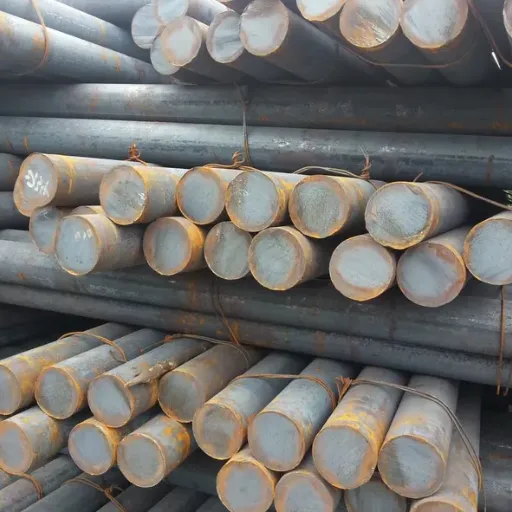
The B-H curve is the most important tool for visualizing how a material responds to magnetic field strength. It plots magnetic flux density on the vertical axis against magnetic field strength on the horizontal axis. Engineers use it to identify saturation points, permeability values, and hysteresis losses.
At low field strengths, high-quality soft magnetic materials show steep B-H curves. Small increases in field strength produce large increases in flux density. This region corresponds to high permeability. As field strength increases, the curve flattens as the material approaches saturation. Beyond saturation, additional field strength produces little additional flux.
The slope of the B-H curve at any point equals the differential permeability. Initial permeability describes the slope near the origin. Maximum permeability describes the steepest point on the curve. Both values matter for different applications. A current transformer operates at very low flux and cares about initial permeability. A power transformer runs at higher flux and cares about permeability near its operating point.
Hysteresis appears as a loop rather than a single line when field strength reverses direction. The area inside the loop represents energy lost as heat during each cycle. Soft magnetic materials like pure iron have narrow loops, which means low hysteresis loss. Hard magnetic materials have wide loops, which makes them useful as permanent magnets but unsuitable for alternating-field applications.
How Material Choice Affects Magnetic Field Strength Response
Different core materials respond very differently to the same magnetic field strength. Choosing the right material lets you achieve target performance with lower field strength, smaller coils, and less energy loss.
Electromagnetic Pure Iron
Electromagnetic pure iron offers one of the best combinations of high permeability, high saturation induction, and moderate cost. Ultra-low carbon grades like DT4C respond strongly to low field strength, reaching high flux density with modest magnetizing force. Saturation induction in pure iron reaches approximately 2.15 tesla, among the highest of any practical engineering material.
The low carbon content is the key. Carbon atoms disrupt magnetic domain wall movement, which reduces permeability and increases coercivity. By keeping carbon at or below 0.004%, DT4C pure iron allows domain walls to move freely, producing the steep B-H response that engineers want. For DC electromagnets, low-frequency transformers, sensitive relays, and magnetic shielding, pure iron remains a top choice.
Our DT4C pure iron specifications provide detailed B-H data and dimensional options for engineers selecting core materials.
Silicon Electrical Steel
Silicon steel dominates power frequency transformers and motors. Adding 1% to 4% silicon increases electrical resistivity, which reduces eddy current losses at 50 Hz and 60 Hz. The trade-off is slightly reduced permeability and lower saturation induction compared to pure iron.
Grain-oriented silicon steel is optimized for flux flow in the rolling direction and performs well in large power transformers. Non-oriented grades work in motors and small transformers where flux travels in multiple directions. Silicon steel generally needs higher field strength than pure iron to reach the same flux density, but the lower eddy losses often make it the better choice at power frequencies.
Nickel-Iron Alloys
Nickel-iron alloys such as Permalloy achieve extremely high permeability at low field strength. These materials suit applications requiring sensitive magnetic response, including instrument transformers, magnetic shields, and precision sensors. The disadvantages are higher cost and lower saturation induction compared to pure iron.
Designers choose nickel-iron alloys when the application demands maximum permeability and the flux density requirements remain modest. For general electromagnetic components, pure iron usually offers a more practical balance of performance and cost.
Need core material that responds efficiently across a wide range of magnetic field strength? Explore our full range of electromagnetic pure iron products.
Processing Effects That Change Field Strength Behavior
The material you specify is only part of the story. How that material is processed before it reaches your assembly line can change its response to magnetic field strength significantly.
Cold working introduces mechanical stress and crystal defects that pin magnetic domain walls. Stamped laminations, bent brackets, and cut bars all show reduced permeability and higher coercivity compared to annealed material. A coil that calculated correctly on paper may deliver insufficient force if the core has been heavily cold worked.
Annealing restores magnetic properties by recrystallizing the grain structure and relieving internal stress. A hydrogen anneal at 800°C to 900°C can bring cold-worked pure iron back to near-ideal magnetic behavior. Manufacturers who perform their own cutting or forming should plan for annealing if magnetic performance is critical.
Surface condition also influences effective response. Oxide layers, rough surfaces, and decarburized layers create local variations in magnetic properties. For thin sheets or small cross-sections, these surface effects represent a larger fraction of the total volume and can measurably change how the material responds to field strength.
Heat treatment history affects grain size and crystallographic texture, both of which influence permeability. Controlled annealing can optimize grain size for the intended application. Over-annealing can produce excessively large grains that reduce mechanical strength without improving magnetic properties further.
Practical Design Guidelines for Specifying Magnetic Field Strength

Translating magnetic field strength into a reliable product requires attention to several design factors beyond the basic B-H curve.
First, define the operating point. Determine the flux density your component needs, then work backward to the required field strength using the core material's permeability. Add margin for temperature effects, manufacturing variation, and aging. Operating too close to saturation leaves no room for voltage transients or component tolerances.
Second, account for temperature. Copper resistance rises with temperature, which reduces coil current and field strength. Core permeability also decreases with temperature. A design that works at 25°C may fail at 85°C. Test prototypes across the full operating temperature range, not just at room temperature.
Third, consider duty cycle. Continuous-duty coils run hotter than intermittent-duty coils. A relay that operates once per minute can tolerate higher field strength and more copper loss than a solenoid that stays energized for hours. Field strength calculations should use the steady-state temperature, not the cold resistance.
Fourth, measure actual material properties. Material certificates provide average values, but individual lots vary. For high-volume production, incoming inspection with ring samples or permeability testers catches out-of-spec material before it enters production. The Zhejiang relay manufacturer now requires permeability verification on every steel lot after their field-strength failure.
Fifth, integrate core and coil design. Field strength, permeability, coil resistance, and thermal performance are interdependent. Optimizing one in isolation often worsens another. Use magnetic circuit analysis or finite element simulation to evaluate the complete system before finalizing dimensions.
When the engineering team at a Guangdong motor factory applied these guidelines to a new high-efficiency induction motor, they reduced magnetizing current by 18% while maintaining rated torque. The key change was switching to a higher-permeability pure iron core and adjusting the slot geometry to keep field strength below the saturation knee. The improvement came from treating magnetic field strength as a system variable rather than a fixed input.
Conclusion
Magnetic field strength is the driving force behind every electromagnetic device, yet it often receives less attention than visible parameters like voltage and current. The field strength you choose, the core material that responds to it, and the processing that material receives all combine to determine efficiency, reliability, and cost.
Electromagnetic pure iron remains an outstanding choice for applications where high flux density at moderate field strength is essential. Grades like DT4C combine ultra-low carbon content, high permeability, and high saturation induction to deliver predictable performance across demanding operating conditions. For transformer cores, relay plungers, solenoid valves, and motor laminations, the right pure iron grade can reduce copper usage, shrink components, and improve thermal margins.
Key takeaways to apply in your next electromagnetic design:
Distinguish magnetic field strength from magnetic flux density and specify each correctly
Choose core materials based on permeability and saturation response at your operating field strength
Add temperature and duty-cycle margin to avoid saturation and thermal failures
Account for cold working, cutting, and forming when specifying raw versus finished core material
Verify material properties through incoming inspection for high-volume production
The next time you specify a coil and core combination, remember Wang Chen's two-week troubleshooting ordeal. A clear understanding of magnetic field strength and material response can prevent hidden failures and keep your products performing exactly as designed.
Ready to select the right pure iron grade for your magnetic field strength requirements? Contact our engineering team to discuss your specifications and request a custom quote for electromagnetic pure iron tailored to your application.
Recently Posted
-
Transformer Calculation: A Practical Guide for Core Design and Material Selection
June 30, 2026A 2-millimeter error in core cross-section can quietly drain thousands of dollars from a transformer production run. That is exact Read More
 -
Magnetic Flux: A Complete Guide for Electrical Engineering Applications
June 30, 2026In late 2024, a power equipment manufacturer in Poland received a shipment of transformer cores that looked perfect on paper. The Read More
 -
AC Electromagnet: Design, Applications, and Material Selection Guide
June 30, 2026Last quarter, a relay manufacturer in Dongguan shipped 5,000 solenoid valves to a European automotive client. Two weeks after inst Read More
 -
Magnetic Circuit Analysis: A Practical Engineering Guide
June 26, 2026A 0.5 mm air gap left unaccounted for in a magnetic circuit can increase magnetizing current by 40% and push a prototype relay fro Read More

Contact Us
Recommended Products
-
 Seamless Tube With Good Cold Electrical Pure Iron Fittings Hot Workability for Forming Fittings and ConduitsNegotiableMOQ: 1 Ton
 -
Electromagnetic Pure Iron Forging for Automotive Sensor ManufacturingNegotiableMOQ: 100 Kilograms
-
Precision Cut Pure Iron Square Bar High Saturation Induction Raw Material for Generator and RotorNegotiableMOQ: 100 Kilograms
-
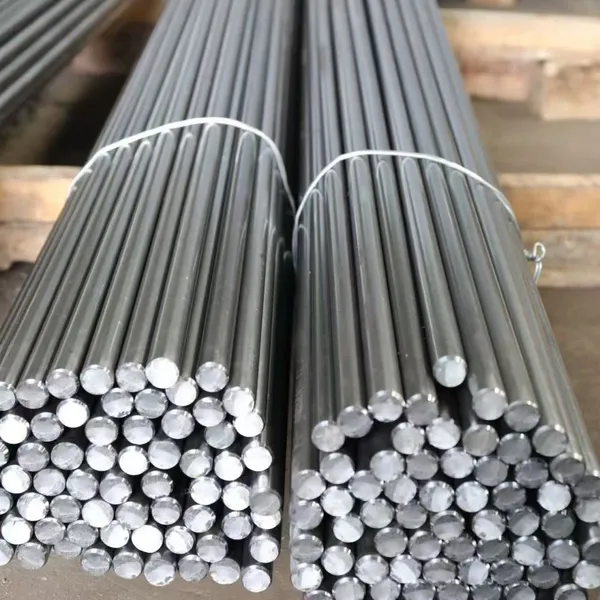
DT4C Super Grade Electromagnetic Pure Iron Bright Bar With Bundle Weight 30-100kg for Easy TransportationNegotiableMOQ: 1 Ton
-
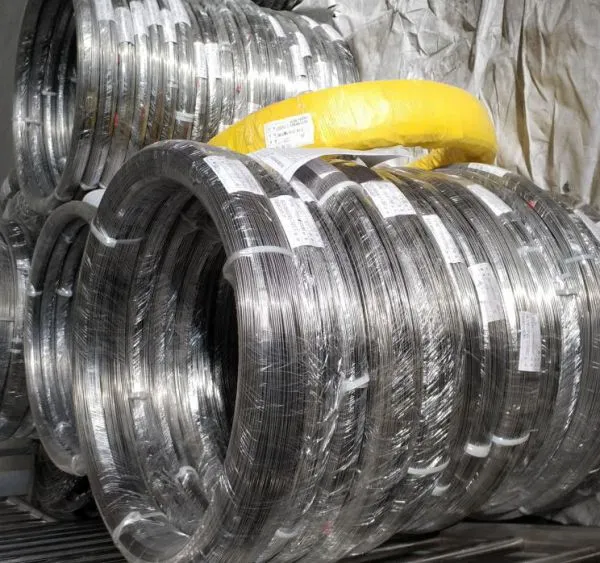
DT4C Electromagnetic Pure Iron Cold-Drawn Wire 0.5mm-6.0mm Diameter for TransformersNegotiableMOQ: 100 Kilograms
-
Industrial Pure Iron Bar for Electromagnetic Relay and Sensor ProductionNegotiableMOQ: 1 Ton
-
Electromagnetic Pure Iron Thin Sheet 0.3mm-0.8mm for Solenoid and Relay ManufacturingNegotiableMOQ: 500 Kilograms
-
Electrical Pure Iron Hot-Rolled Coil for Magnetic Components With Low Iron LossNegotiableMOQ: 1 Ton
-
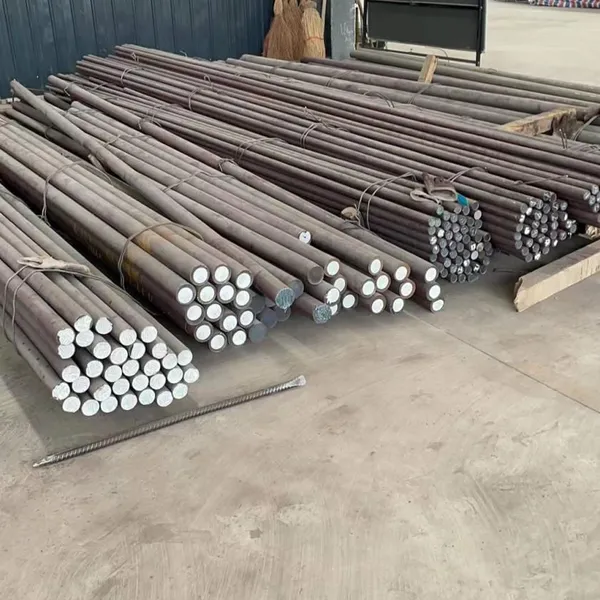
Low Carbon DT4C Pure Iron Round Bar With 99.8% Fe Content for Electrical ApplicationsNegotiableMOQ: 1 Ton
-
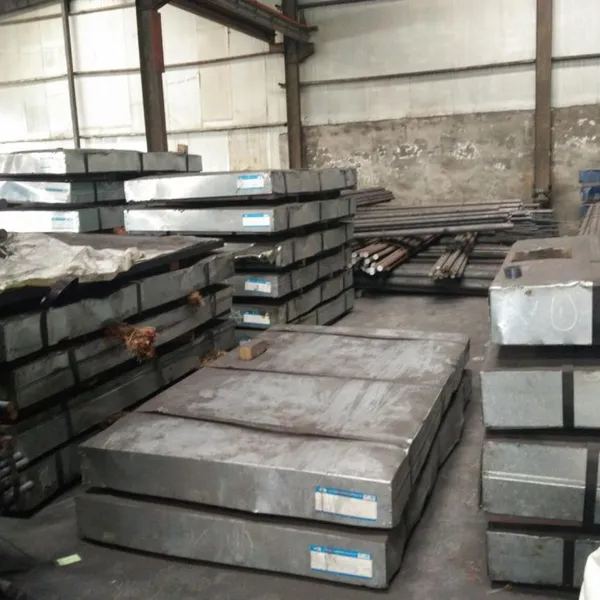
Cold Rolled Pure Iron Slit Coil DT4C Grade Ultra Low Carbon ≤0.004% for Magnetic ComponentsNegotiableMOQ: 1 Ton
-
Low Iron Loss Electromagnetic Pure Iron Hot-Rolled Coil DT4C for Transformer CoresNegotiableMOQ: 1 Ton
-
Soft Magnetic Pure Iron Sheet With Minimum Iron Loss for High-Efficiency MotorsNegotiableMOQ: 1 Ton
-
Electromagnetic Pure Iron Cold Rolled Coil DT4C for High Magnetic Permeability ApplicationsNegotiableMOQ: 1 Ton
-
Industrial Pure Iron Tube Superior Surface Quality Electromagnetic Pure Iron Tube for Welding and Plating ProcessesNegotiableMOQ: 1 Ton
-
DT4 Seamless Pure Iron Tubing for High-Performance Electrical Equipment ApplicationsNegotiableMOQ: 1 Ton
-
DT4C Iron Wire Rod for Precision Magnetic Shielding ApplicationsNegotiableMOQ: 100 Kilograms
-
Industrial Pure Iron Fittings DT4 Pure Iron Seamless Tube With Low Hysteresis Loss for Electromagnetic SystemsNegotiableMOQ: 1 Ton
-
DT4C Cold Rolled Coil Slitting for Electrical Enclosure ManufacturingNegotiableMOQ: 1 Ton
-
Anti Rust Coated Pure Iron Square Bar Low Carbon Raw Material for Welding and Forging Magnetic PartsNegotiableMOQ: 100 Kilograms
-
DT4 Pure Iron Cold-Drawn Wire 0.5mm-6.0mm Diameter for Precision EngineeringNegotiableMOQ: 500 Kilograms