
 Business License

Pure Iron Annealing: Process Guide for Maximum Magnetic Performance
Upon the delivery of the initial batch of DT4C pure iron flux return components by the fabrication team at Precision Magnetic Systems, the quality control report sounded an emergency alarm. The coercivity had soared from the expected 32 A/m to 78 A/m—a twelve-hour doubling. The project engineer was compelled to make a hard choice: $85,000 worth of reworking or bringing the magnetic properties back somehow. The resort was hydrogen annealing: eight hours in the atmosphere-controlled heat-treatment gave a coercivity level of 26 A/m, very much inside specification. So the components trickled out on their own accord, as the humble lesson was added into company policy that states every cold-worked pure iron parts must be annealed before the final inspection.Find more info now.
This exemplifies an astounding realization within electromagnetic materials engineering, one that is quite overlooked: post-process annealing of just-iron is not an optional step—it is a mandatory step that will determine as to whether your magnetic part will work as designed.
The guide explains how pure-iron annealing works scientifically, covers the constraints that may influence maximum admissible magnetic performance, how annealing is incorporated into the fabrication processes for an unequivocally reliable and predictable result.
Why Annealing Is Critical for Pure Iron
The Cold Working Problem
The unique magnetic properties of pure iron, characterized by high permeability and low coercitivity accompanied by minimum loss of hysteresis, are a function of the definite microstructure. This microstructure comprises large grains that are free of stress and minimally polymerized. This allows a domain of magnets to move practically freely, permitting instant magnetization and demagnetization cycles.
For the most part, cold work alters this microstructure through three possible mechanisms:
Dislocation multiplication: During plastic deformation, dislocations in a linear array form in the crystal lattice that serve to hinder the movement of magnetic domain walls, which result in greater energy required to magnetize the material.
Grain distortion: Cold working alters the equiaxed grain structure of preferably annealed pure iron to an altered elongated and partly fragmented grain structure. It results in different magnetic properties over a range of directions.
Residual Stress: Cold working gives rise to residual compressive and tensile stresses throughout the material. These stresses pin magnetic domain walls, thereby enhancing coercivity and reducing permeability.
There is a remarkable effect of the magnitude of 200-300% rise in coercivity in cold-worked DT4c iron when compared with the same annealed properly. In the case of a component designed to operate at 32 A/m, this would drive actual performance to 64-96 A/m; and now it is impermissible for applications seeking very high electromagnetic precision.
Magnetic Property Recovery Through Annealing
Proper annealing reverses cold working damage through recrystallization—the formation of new, strain-free grains that replace the deformed structure. The transformation produces measurable improvements:
| Property | Before Annealing | After Annealing | Improvement |
|---|---|---|---|
| Coercivity (Hc) | 64–96 A/m | ≤32 A/m | 67–200% reduction |
| Max Permeability (μmax) | 8–10 mH/m | ≥15 mH/m | 50–87% increase |
| Hysteresis Loss | High | Minimal | 60–80% reduction |
| Remanence (Br) | Elevated | ≤0.4 T | Stable, predictable |
Greater than directly plugged these modifications into functions. While low coercivity in transformer cores results in lower magnetization losses, high permeability leads to a quick response in relay systems. Moreover, in the field of magnetic shielding, reduced pegging of properties results in uniform field attenuation.
Economic Impact of Proper Annealing
The cost of annealing is nominal when compared with the consequences from the use of unannealed material:
Annealing cost: On average, yearly annealing costs range from 0.50-2.00 Rp per kilogram, production lot size, and atmospheric conditions.
Rework cost: Repairing annealed material takes 100 to 300% more in terms of the costs associated with producing the original part if a failure occurs during inspection.
System inefficiency: Additional core losses can range from 50 to 200 per year per low-voltage transformer in electrical energy waste.
Reputation damage: Time losses associated with retrial delays could mean contracting losses.
For most applications, proper annealing pays for itself many times over through improved performance, reduced rejection rates, and extended service life.
The Science of Pure Iron Annealing
Recrystallization Mechanism
Recrystallization is a solid-state phase transformation driven by thermally activated atomic mobility. When pure iron is heated above a critical temperature, deformed grains are consumed by new and strain-free grains that nucleate and grow in the entire material.
Temperature Threshold: Recrystallization begins around 450°C for pure iron, yet the process speeds up considerably around 600°C. Generally, the temperature ranges between 800°C and 950°C for comprehensive recrystallization, which arises from magnetic softening.
Time-Temperature Relationship: It follows the Arrhenius relationship, with higher temperatures taking less time to reach full recrystallization. For 850°C, the completion of recrystallization needed about 2–3 hr in real time, but the same transformation needed 6–8 hr at 750°C.
Grain Size Control: The ultimate grain size that will arise depends upon: heating rate, peak temperature, and amount of previous strain. Generally the larger the grains, the better the magnetic properties. However, excessive grain growth will reduce tensile and yield strengths. In the case of pure iron quality DT4C, the ASTM size of grains (4-6) (approximately 50-90 µm) seems to give the best magnetic performance.
Magnetic Domain Restoration
Magnetic domain structure is restored by annealing to enable soft magnetic behavior, which is characterized by:
Domain Wall Mobility: In annealed pure iron, domain walls move freely in response to applied magnetic fields. This mobility enables the material to have high permeability and low coercivity. On the other hand, cold working creates pinning sites to pin the walls, impeding wall movement.
Domain Structure: Annealing produces very large "domains". These domains are like islands in the sea of the material, where crystal orientations deviate from easy azimuth directions. This structure with a reduced magnitude of magnetocrystalline anisotropy energy provides the possibility of efficient magnetizing.
Stress Relief: When cold work is done, this can introduce stresses to the metal. These residual stresses create local magnetic anisotropy. Annealing is able to relieve the internal stresses and bring the magnetism back to the isotropic region. Thus, performance can be predicted as every cold work must undergo proper annealing.
Phase Transformations
Pure iron undergoes phase transformations during heating that must be considered in annealing cycle design:
| Phase | Temperature Range | Crystal Structure | Magnetic State |
|---|---|---|---|
| Alpha (α) | Room temp – 912°C | BCC | Ferromagnetic |
| Gamma (γ) | 912–1394°C | FCC | Paramagnetic |
| Delta (δ) | 1394–1538°C | BCC | Paramagnetic |
Major Concern: Aside from other considerations, the alpha-gamma transformation at 912°C may result in coarse grain formation and oxidation, if there are any slips in control. This is a scenario mainly for soft magnetic application; the annealing is performed in the alpha phase (below 912°C) so that the phase change does not overlap in the work.
Annealing Process Parameters
Temperature Control
The annealing cycle consists of three distinct temperature-controlled stages:
| Stage | Temperature | Purpose | Hold Time | Critical Factors |
|---|---|---|---|---|
| Heating | Room temp → 600°C | Stress relief, preheating | — | Rate ≤150°C/hour to avoid thermal shock |
| Soaking | 800–950°C | Recrystallization | 2–4 hours | Temperature uniformity ±10°C |
| Cooling | 950°C → 200°C | Property stabilization | 4–8 hours | Rate ≤100°C/hour to avoid residual stress |
Standard Anneal (General Purpose):
Peak temperature: 800–850 °C
Hold time: 2–3 hours
Atmosphere: Hydrogen or ammonia dissociated
Specified: hc ≤32 A/m, μmax ≥12 mH/m
Precision Anneal (Maximum Performance):
Peak temperature: 850–950 °C
Hold time: 3–4 hours
Atmosphere: Pure hydrogen (dew point
Specified: hc ≤ 28A/m, μmax ≥15 mH/m
The high temperatures and long hold times of precision anneal produce greater grain size and favours full stress relaxation, which gives rise to an excellent magnetic property for precise application.
Atmosphere Selection
The annealing atmosphere has two critical functions, protection from oxidation and control of the surface chemistry. The common three types of atmospheres used for pure iron are as follows:
Hydrogen Annealing (for the best results):
Advantages: It is a reducing atmosphere that removes surface oxides, producing the brightest, cleanest surfaces, providing optimal magnetic properties.
Applications: High-performance electromagnetic components, precision instruments
The atmosphere tools to be used in annealing and the purity of the gases; more simple but high-quality in the detail, the better.
Cost: The Highest
Vacuum Annealing (The Clean Vacuum):
Pressure: 10⁻³ to 10⁻⁵ mbar
Advantages: Practically devoid of all atmosphere contamination - very good for complex geometries with no hydrogen-induced embrittlement risks
Disadvantages: Lesser heat transfer; partial oxide reduction
Applications: Complex fabricated assemblies, very critical clean component characteristics
Cost: Medium-High
Nitrogen Annealing (The Cost-Effective Version):
Composition: High purity nitrogen with traces of hydrogen
Merits: Lower cost compared to hydrogenation; usefulness for many applications; safe handling.
Demerits: Not reducing-surface oxides remain; slightly inferior magnetic properties.
Applications: General-purpose components-sensitive assemblies based on costs.
Cost: Lowest
| Atmosphere | Relative Cost | Magnetic Quality | Surface Finish | Best For |
|---|---|---|---|---|
| Hydrogen | 100% (baseline) | Excellent | Bright, oxide-free | High-performance cores |
| Vacuum | 80–90% | Very Good | Clean, slight oxide | Complex geometries |
| Nitrogen | 60–70% | Good | Slight discoloration | General applications |
Critical Control Points
Many process parameters for successful regulation for desired outcomes are:
Warm-up speed: High warm-up might induct stresses resulting in thermal shock, warping, and cracking. This has particularly been observed in pure iron components with very different section thicknesses; the rate of heating should not exceed 150°C per hour.
Temperature-uniformity maintenance: Work-furnace must also provide temperature uniformity all over the workload. Higher temperature at some particular hot spots would prompt more grain growth; lower temperature at some cold spots might leave a section of the material unrecrystallized. This should nominally be in a range of ± 10°C of absolute maximum variation.
Control of dewing: Moisture content must be strictly enforced in hydrogen atmospheres. The presence of dew points of the air above -20°C can even cause surface oxidation using hydrogen. It is, in particular, a prescribed norm for the best end product:
Cooling rate: Residual stresses can easily be integrated into the system with swift cooling and will reduce magnetic softness. Cooling from furnace cooling is standard since this process-cooling is natural. Hard cooling is not envisioned for pure iron components.
Post-Fabrication Annealing
After Welding
Welding itself may pose a special challenge in the pure iron components. Thermal cycles during the welding process affect magnetic properties in both weld metal and HAZ:
The Welding Problem:
This high-coercivity structure arises from rapid heating and cooling.
The HAZ extends over a distance of 5-20 mm from the weld centreline.
Thermal contraction-produced residual stresses
Carbon contamination from filler or other contaminants
Post-Weld Heat Treatment (PWT) Requirements:
A large magnetic shielding box using-iron DT4C materials was produced by a certain European research lab, however coercivity in the order of 3 times the intended value was found in the welded corners as revealed by magnetic testing. The fabricator had decided against the required annealing step in order to save time. After a hydrogen anneal was carried out under emergency conditions at 850°C for 3 hours, the coercivity dropped from 96 A/m to 28 A/m. The lesson learned was that welding, especially if not followed by annealing, could increase coercive force by 200-300%, in essence converting DT4C from a high order to a moderate material.
These guidelines are recommended as the PWHT for pure iron welding:
Slowly take 600 degrees heat to 100°C/hr
Keep it at 600 degrees for 1 hour (stress relief)
Slow Charge to 850 degrees with 150 degrees/hr
keep 850 degrees for 2–3 hours (Recrystallization)
Furnace cool to 200°C
Air cool to room temperature
Stuff to keep in mind: Welds should use filler DT4C. When different fillers are used, there can be galvanic cells and thus magnetic losses.
After Machining and Cold Working
Most forms of fabrication undergo some degree of cold working, and this invariably impacts the magnetic properties negatively:
Examples of processes necessitating anneal:
Cold-drawing (wire, bar)
Cold-rolling (sheet, strip)
Machining (turning, milling, drilling)
Slitting (sheet cutting)
Bending and forming
When Annealing Is Mandatory vs. Optional:
| Application | Cold Work Level | Annealing Required? | Rationale |
|---|---|---|---|
| High-precision transformer core | Light machining | Yes | Every A/m of coercivity matters |
| General relay component | Moderate forming | Recommended | Ensures consistent performance |
| Structural flux return path | Heavy forming | Yes | Significant property degradation |
| Low-duty magnetic shield | Light handling | Optional | Cost-benefit may favor as-fabricated |
In-Process Annealing: For complex parts requiring multiple forming operations, intermediate annealing between stages prevents cumulative work hardening. This approach maintains formability while achieving final dimensional accuracy.
Special Considerations for Thin Sections
Very low thickness steel keeps
Increased heating: Less mass allows faster heating rates (≤200°C/hour)
Reduced holding times: 1–2 hours are actually sufficient for full recrystallization
Support fixtures: When at high temperatures would decrease the chance for warping or sagging
Bulk remains: Low-thickness material tends to oxidize easily
Quality Verification
Magnetic Property Testing
The checked magnetic properties certify that the annealing treatment was effective. The two parameters associated with the proper annealing are stated as:
Coercivity (Hc) Measurements:
Related Test: By DC Hysteresisgraph as per GB/T 3656
Samples: A lumped section from the annealed lot representative
Acceptance Criteria for DT4C: ≤32 A/m (standard anneal) , ≤28 A/m (precision anneal)
Sampling: 100% of batch production
Maximum Permeability (μmax) Measurement:
The same hysteresisgraph measurement
Acceptance Criteria for DT4C: ≥12 mH/m (standard), and ≥15 mH/m (precision)
Relation: A higher μmax corresponds to more mobility in the domain walls.
Acceptance Criteria Table:
| Grade | Anneal Type | Max Hc | Min μmax | Max Br |
|---|---|---|---|---|
| DT4 | Standard | ≤48 A/m | ≥10 mH/m | ≤0.6 T |
| DT4A | Standard | ≤40 A/m | ≥12 mH/m | ≤0.5 T |
| DT4E | Standard | ≤36 A/m | ≥13 mH/m | ≤0.5 T |
| DT4C | Standard | ≤32 A/m | ≥15 mH/m | ≤0.4 T |
| DT4C | Precision | ≤28 A/m | ≥18 mH/m | ≤0.35 T |
Visual Inspection
Visual inspection gives fast quality clues even with magnetic tests being almost final.
Surface appearance:
Hydrogen annealed surface should be bright and silvery, and show no oxide
Vacuum annealed surfaces are clean but can have slight discoloration.
Nitrogen-annealed colors are acceptable if they show a slight straw or gray tint.
Reject: Heavy scale, blueing, or black oxide should not show; they are indicative of atmosphere problems.
Dimensional stability is a measure of critical dimensions before and after annealing.
Expect 0.1%–0.3% shrinkage from stress relief.
Distortions and warpage only point to wrong fixturing or high heating rate.
Every annealing batch should have the following documentation:
Furnace chart (temperature vs. time)
Atmosphere dew point log
Magnetic test certificate
Material traceability (heat number, batch number)
Pure Iron Annealing Services from Jurun
Capabilities Overview
Shanxi Jurun Technology has operational, large-scale annealing facilities built specifically for electromagnetic pure iron materials.
Furnace Specs are as follows:
Box furnaces: Internal dimensions should run at 500 mm×400 mm×300 mm, hydrogen atmosphere, batch to 50 kg.
Continuous tube furnace processing up to 3 meters long for wire and bar types.
Vacuum furnaces with expertise in complex geometry (10⁻⁴ mbar capability)
Temperature uniformity: ± 5°C over the work-piece zone
Grades processed: DT3, DT4, DT4A, DT4E, DT4C (most commonly processed)
DT8, DT9 (specialty ultra-pure grades)
Custom specifications are able for processing
Processing Options:
Standard annealing-800C to 850C;
Precision annealing-850 to 950C;
Stress relief only-500 to 600C;
Post-weld heat treatment;
In-process Intermediate annealing.
Value-Added Services
Pre-Anneal Preparation:
Degreasing and cleaning
Surface inspection
Quality control of thrice-dimensions
Fixturing for complex parts
Post-Anneal Processing:
Magnetic property testing with certificate
Instant dimensional inspection
Preventive packing (VCI paper, papers, nitrogen-filled bags)
Coordinate expedited shipping
Integration with Fabrication:
We can have an integrated processing model; which could significantly shorten the time span of our workflow, from:
Raw Material Supply → DT4C coil, bar, or tube
Processing → Slitting, cutting, machining, welding
Annealing → Restore magnetic properties
Final Inspection → Magnetic and dimensional verification
Delivery → Ready-to-use components
The single-source solution allows you to concentrate on the good performance, rather than ordinary supplier hassles.
Request a quotation for an annealing service. Be sure to present your material grade, component dimensions, and quantity. Our engineers will specify the optimal cycle for your application requirements.
Frequently Asked Question
What should be the annealing temperature of pure iron for electromagnet application?
For electromagnet applications of pure iron, the annealing temperature shall lie between 1200-1742°F but can be varied widely with grade and performance. The full magnetic development for the DT4C grade falls between 1562-1742°F. For DT4 standard grades, the correct property junction can be realized between 1472-1562°F. The two to four hours are essential to be held at set temperature for recrystallization to be completed from end-to-end a cross-section of the material.
How long does it take a steel annealing process for pure iron?
It typically needs 12-18 hours of heating -soaking-controlled cooling cycles to complete the annealing cycle for pure iron. This soaking phase at the peak temperature requires 2-4 hours for proper recrystallization. This cooling phase must be carefully controlled (4-8 hours) to assure residual stresses are not reintroduced. t end rushes often last at the price of quality; a shorter soak time or rapid cooling will not get you full magnetic property recovery.
Is it possible to anneal pure iron after welding?
Yes for magnetic applications, indeed it is of paramount importance. Welding will make a heat-affected zone that contains degraded magnetic properties. Post-weld annealing for 850°C for 2-3 hours will bring back the low coercivity and high permeability of the parent material. Welded pure iron parts can have a coercivity 200%-300% above specification without annealing, making them unsuitable for precision electromagnetics.
What are the differences between hydrogen and vacuum annealing?
The hydrogen anneals involve the treatment in a reducing atmosphere so as to remove the surface oxides, producing the most beneficial magnetic characteristics, but this need of operation in a vicinity of safety rules in the presence of a flammable gas. Vacuum annealings, on the other hand, do not produce oxide from inside, so it maintains an organized structure of oxide-free base material. The method is very appropriate for complex geometries and tends to produce some low-temperature vacuum annealing slightly inferior magnetic properties than hydrogen annealing; however, the vacuum process has less oxide reduction than hydrogen. Hydrogen will give better performance; go for vacuum when safety-critical or complex applications take precedence.
Will pure oxygen annealing cause any alteration in the dimensions of iron parts?
Annealing usually causes 0.1% -0.3% of its shrinkage in view of stress relief. There might arise mild distortion in not well-supported parts during the heating process. It is recommended that any finish machining should be made to precision parts after the annealing process. Fixture thin parts or complex shapes to avoid sagging during heating. The material for annealing must be purchased by specifying appropriate dimensional tolerances to allow for final finishing: too much warping can take place otherwise.
Recently Posted
-
Shanxi Jurun Technology: Your Electromagnetic Pure Iron Partner from Taiyuan, China's Pure Iron Prod
August 14, 2026When an international buyer searches for electromagnetic pure iron, they are not just looking for a material. They are looking for Read More
 -
Cold Drawing Process for Electromagnetic Pure Iron Wire: How Wire Rod Becomes Precision Cold-Drawn W
August 13, 2026Not long ago, a solenoid valve manufacturer in Italy received a shipment of 5.5 mm electromagnetic pure iron cold-drawn wire inten Read More
 -
How to Choose a Food Vacuum Sealer Supplier in China: 8 Evaluation Criteria
August 13, 2026An e-commerce brand owner in the UK contacted us some time ago after a supplier relationship fell apart. They had sourced roughly Read More
 -
Electromagnetic Pure Iron for Relay Manufacturing: Material Requirements, Grade Selection, and Case
August 13, 2026Some time ago, a relay production line in Zhejiang province began experiencing a puzzling failure pattern. Roughly 3 out of every
Read More

Contact Us
Recommended Products
-
 Seamless Tube With Good Cold Electrical Pure Iron Fittings Hot Workability for Forming Fittings and ConduitsNegotiableMOQ: 1 Ton
 -
Electromagnetic Pure Iron Forging for Automotive Sensor ManufacturingNegotiableMOQ: 100 Kilograms
-
Precision Cut Pure Iron Square Bar High Saturation Induction Raw Material for Generator and RotorNegotiableMOQ: 100 Kilograms
-
DT4C Super Grade Electromagnetic Pure Iron Bright Bar With Bundle Weight 30-100kg for Easy TransportationNegotiableMOQ: 1 Ton
-
DT4C Electromagnetic Pure Iron Cold-Drawn Wire 0.5mm-6.0mm Diameter for TransformersNegotiableMOQ: 100 Kilograms
-
Industrial Pure Iron Bar for Electromagnetic Relay and Sensor ProductionNegotiableMOQ: 1 Ton
-
Electromagnetic Pure Iron Thin Sheet 0.3mm-0.8mm for Solenoid and Relay ManufacturingNegotiableMOQ: 500 Kilograms
-
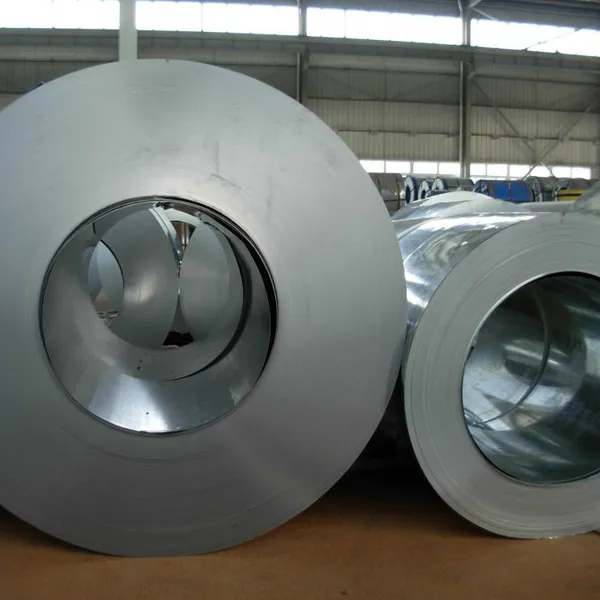
Electrical Pure Iron Hot-Rolled Coil for Magnetic Components With Low Iron LossNegotiableMOQ: 1 Ton
-
Low Carbon DT4C Pure Iron Round Bar With 99.8% Fe Content for Electrical ApplicationsNegotiableMOQ: 1 Ton
-
Cold Rolled Pure Iron Slit Coil DT4C Grade Ultra Low Carbon ≤0.004% for Magnetic ComponentsNegotiableMOQ: 1 Ton
-
Low Iron Loss Electromagnetic Pure Iron Hot-Rolled Coil DT4C for Transformer CoresNegotiableMOQ: 1 Ton
-
Soft Magnetic Pure Iron Sheet With Minimum Iron Loss for High-Efficiency MotorsNegotiableMOQ: 1 Ton
-
Electromagnetic Pure Iron Cold Rolled Coil DT4C for High Magnetic Permeability ApplicationsNegotiableMOQ: 1 Ton
-
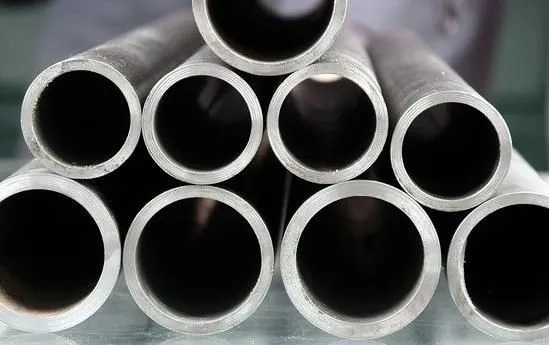
Industrial Pure Iron Tube Superior Surface Quality Electromagnetic Pure Iron Tube for Welding and Plating ProcessesNegotiableMOQ: 1 Ton
-
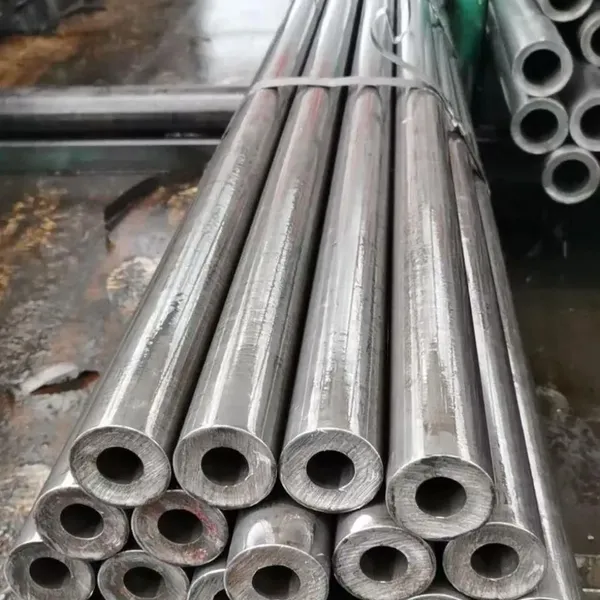
DT4 Seamless Pure Iron Tubing for High-Performance Electrical Equipment ApplicationsNegotiableMOQ: 1 Ton
-
DT4C Iron Wire Rod for Precision Magnetic Shielding ApplicationsNegotiableMOQ: 100 Kilograms
-
Industrial Pure Iron Fittings DT4 Pure Iron Seamless Tube With Low Hysteresis Loss for Electromagnetic SystemsNegotiableMOQ: 1 Ton
-
DT4C Cold Rolled Coil Slitting for Electrical Enclosure ManufacturingNegotiableMOQ: 1 Ton
-
Anti Rust Coated Pure Iron Square Bar Low Carbon Raw Material for Welding and Forging Magnetic PartsNegotiableMOQ: 100 Kilograms
-
DT4 Pure Iron Cold-Drawn Wire 0.5mm-6.0mm Diameter for Precision EngineeringNegotiableMOQ: 500 Kilograms