
 Business License

Impact of Cold Drawing on the Magnetic Flux Density of Pure Iron: What Engineers Must Know
A precision relay manufacturer in Shenzhen once ordered 500 kilograms of cold-drawn DT4C pure iron wire for a new solenoid valve line. The dimensions were perfect. The surface finish was flawless.
But when the first batch of valves reached testing, the armatures stuck. Coercivity had tripled. The magnetic hysteresis loop had widened dramatically. The culprit? The wire had never been magnetic-annealed after cold drawing.
If you specify cold-drawn pure iron for electromagnetic components, you already value dimensional accuracy and surface quality. But the effect of cold drawing on magnetic flux density of pure iron is one of the most misunderstood trade-offs in soft magnetic material engineering. Cold drawing delivers mechanical precision at a magnetic cost — unless you know how to recover those properties afterward.
In this guide, you will learn exactly how cold drawing changes the microstructure of pure iron, which magnetic properties degrade and by how much, and the specific annealing protocol that restores optimal flux density, coercivity, and permeability. Whether you design relays, transformer cores, or DC motor housings, this knowledge will help you specify material that performs — not just fits.
Need cold-drawn pure iron that already meets magnetic specifications? Shanxi Jurun Technology supplies DT4C wire rod, bars, and tubes with post-drawing magnetic annealing performed in-house, so your material arrives ready for precision electromagnetic applications. Explore our cold-drawn pure iron range →
What Is Cold Drawing and Why Is It Used for Pure Iron?
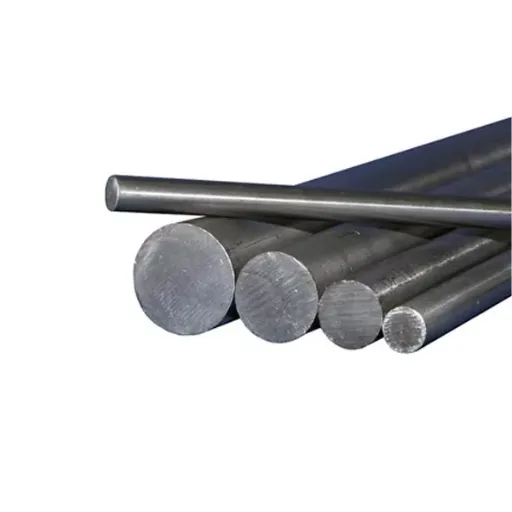
Cold drawing is a metal-forming process where a hot-rolled wire or bar is pulled through a die at room temperature. The die reduces the cross-sectional diameter while elongating the material. No heat is applied during deformation, which distinguishes cold drawing from hot rolling or warm forming.
For pure iron, cold drawing serves three critical manufacturing needs. First, it achieves tight dimensional tolerances — often within ±0.03 mm — that hot rolling cannot match. Second, it produces a bright, smooth surface finish (Ra values as low as 0.8 µm) ideal for components that must slide, seal, or accept plating. Third, it increases yield strength and hardness, which helps thin wire sections maintain shape during winding or handling.
These mechanical benefits make cold-drawn pure iron indispensable for relay cores, solenoid plungers, instrument transformer windings, and magnetic shielding tubes. But every advantage comes with a hidden magnetic price tag. To understand that cost, you must first appreciate what makes pure iron special as a soft magnetic material.
Understanding Pure Iron as a Soft Magnetic Material
Pure iron — specifically electromagnetic grades like DT4C with iron content exceeding 99.8% and carbon below 0.004% — represents the benchmark for soft magnetic performance. Its saturation magnetic flux density reaches approximately 2.15 tesla, the highest of any practical soft magnetic material. This means pure iron can carry more magnetic flux per unit area than silicon steel, nickel-iron alloys, or ferrites.
Magnetic properties fall into two categories: structure-insensitive and structure-sensitive. Saturation flux density and Curie temperature are structure-insensitive. They depend almost entirely on chemical composition and crystal structure, not on grain size, dislocations, or residual stress. Cold drawing does not significantly alter the saturation flux density of pure iron because the bcc (body-centered cubic) iron lattice remains intact and the iron content stays unchanged.
Structure-sensitive properties — coercivity, magnetic permeability, and hysteresis loss — behave very differently. These properties depend on how easily magnetic domain walls can move through the crystal lattice. Anything that obstructs domain wall motion degrades soft magnetic performance. And cold drawing introduces exactly those obstructions.
How Cold Drawing Affects Magnetic Properties: The Science
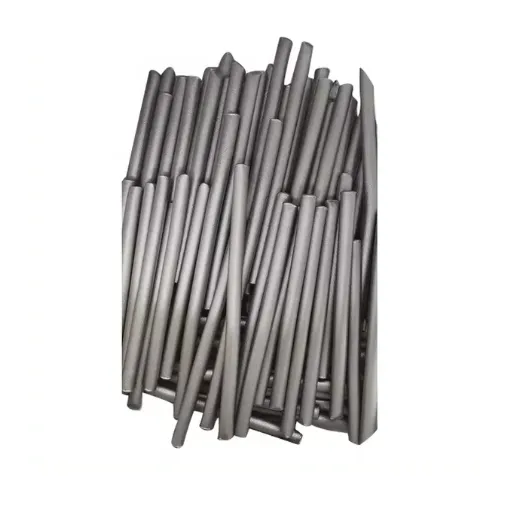
When pure iron is pulled through a drawing die, the plastic deformation generates a massive increase in dislocation density. In an annealed crystal, dislocations are sparse and domain walls move freely. In cold-drawn iron, dislocations tangle into networks that physically block domain boundary motion. The result is domain wall pinning, and its consequences are measurable across every structure-sensitive property.
Coercivity Increases Two- to Three-Fold
Coercivity (Hc) measures the magnetic field strength required to demagnetize a material. For soft magnetic applications, lower coercivity means faster switching response and lower drive energy.
GB/T 6983-2008 specifies DT4C coercivity at ≤32 A/m in the properly annealed condition. Cold-drawn pure iron typically exhibits 96–200 A/m or higher — a two- to six-fold increase depending on the deformation ratio. That is the difference between a responsive relay and one that sticks.
A study published in MDPI Metals on 0.5 mm electromagnetic pure iron cold-rolled strip found coercivity at 200 A/m in the as-rolled state. After recrystallization annealing at 900°C, it dropped to ~43 A/m — a reduction of roughly 78.5%. The researchers attributed this dramatic recovery to the elimination of dislocation structures and the growth of strain-free equiaxed grains. Read the full recrystallization study →
Permeability Drops Significantly
Magnetic permeability measures how easily a material magnetizes. Maximum permeability (μm) for annealed DT4C reaches ≥0.0151 H/m (relative permeability ~12,000). Cold work reduces this value because pinned domain walls require stronger applied fields to move. The PMC/NIH study on cold-rolled pure iron for magnetic shielding reported maximum relative permeability of 7,818 after controlled rolling and annealing — respectable, but below the theoretical ceiling achievable with optimal grain structure.
Hysteresis Loss Widens
Hysteresis loss is the energy dissipated as heat during each magnetization cycle. It is proportional to the area inside the B-H loop. Cold-worked iron produces a fatter loop because higher coercivity stretches the loop horizontally. For AC applications — even at line frequency — this translates directly into component heating and reduced efficiency.
Magnetic Flux Density at Saturation: The Exception
Here is where many engineers breathe a sigh of relief. The effect of cold drawing on magnetic flux density of pure iron at saturation is minimal. Because saturation flux density is structure-insensitive, cold-drawn iron still approaches ~2.15 T when exposed to strong enough fields.
The problem is not how much flux the material can ultimately carry. It is how much energy and field strength you must expend to get there, and how much flux remains when you remove the field (remanence). Cold-drawn iron demands more ampere-turns and retains more residual magnetism — both undesirable in precision electromagnetic devices.
Kobelco's technical review of soft-magnetic pure iron (grade ELCH2) demonstrated this quantitatively through cold upsetting tests. As work strain increased, magnetic flux density at intermediate field strengths (100–5,000 A/m) decreased measurably, while coercivity climbed from 91 A/m to 228 A/m. At 100 A/m applied field, flux density in the heavily worked sample was essentially zero — the material had become magnetically sluggish. Review Kobelco's magnetic property data →
Mini-Story: The Relay Line That Would Not Switch
Li Wei, a manufacturing engineer at a Guangdong relay factory, received a shipment of cold-drawn DT4C wire rod in March 2025. The 3.2 mm diameter tolerance was within ±0.02 mm — excellent for automatic winding. But pilot production revealed a 15% failure rate in switching speed tests. The armatures hesitated. Li's team discovered the wire's coercivity measured 178 A/m — nearly six times the DT4C specification. After implementing an in-house annealing cycle at 850°C for three hours in dry hydrogen, coercivity dropped to 28 A/m. Switching failures fell to under 1%. The lesson: cold drawing alone does not make electromagnetic pure iron ready for duty.
Quantitative Comparison: As-Drawn vs. Annealed Pure Iron
Understanding the magnitude of property changes helps engineers make informed procurement decisions. The table below synthesizes data from multiple peer-reviewed and industrial sources to illustrate typical ranges.
Property | Annealed DT4C | Cold-Drawn (No Anneal) | Change |
|---|---|---|---|
Coercivity (Hc) | ≤32 A/m | 96–200+ A/m | +200–525% |
Max. Permeability (μm) | ≥0.0151 H/m | ~0.005–0.008 H/m | −45–65% |
Saturation Flux Density (Bs) | ~2.15 T | ~2.12–2.15 T | Minimal |
Remanence (Br) | Low | Elevated | Wider loop |
Hysteresis Loss | Low | Elevated | Higher |
Hardness (HV) | ~70–80 | ~130–150 | +70–90% |
Residual Stress | Negligible | High | Significant |
The PMC/NIH cold rolling study provides a concrete data point from a closely related severe plastic deformation process. Researchers manufactured pure iron by cold rolling with intermediate annealing, achieving a maximum flux density of 1.74 T and remanent flux density of 1.14 T. While this falls slightly below the absolute saturation of premium grades, it demonstrates the practical performance window achievable when cold work is combined with controlled heat treatment. View the cold rolling and shielding study →
The MDPI recrystallization study offers even more granularity. Magnetic induction at 10,000 A/m (B₁₀₀₀₀) increased from 1.819 T before annealing to 1.864 T after full grain growth. This modest but meaningful improvement underscores that annealing does not merely restore properties — it can optimize them beyond the as-deformed baseline by promoting favorable crystallographic texture.
Are your cold-drawn pure iron components underperforming magnetically? The issue is almost certainly inadequate or missing post-drawing heat treatment. Jurun supplies DT4C cold-drawn wire, bar, and tube with full magnetic annealing, ensuring every delivery meets GB/T 6983-2008 specifications. Request a technical datasheet →
The Critical Role of Magnetic Annealing
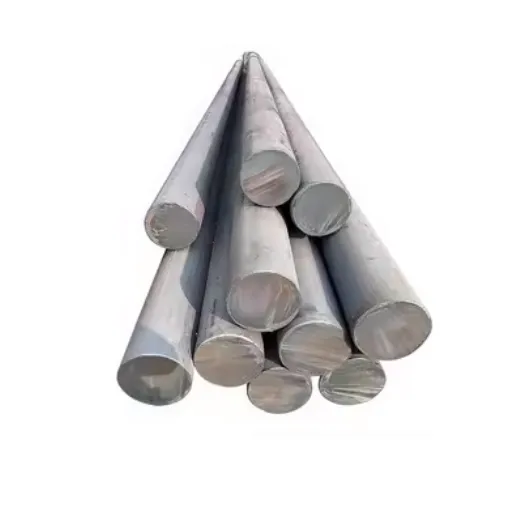
Magnetic annealing is a controlled heat treatment specifically designed to restore and enhance the soft magnetic properties of cold-worked pure iron. Unlike simple stress relief, magnetic annealing targets the microstructural defects that directly impede domain wall motion.
How Annealing Reverses Cold-Work Damage
The process unfolds in three metallurgical stages. Recovery occurs first, beginning around 250–400°C, where dislocations begin to rearrange and annihilate. Recrystallization follows at higher temperatures, typically 600–800°C for pure iron, where new strain-free grains nucleate and consume the deformed matrix. Grain growth happens if the hold temperature and time are sufficient, producing larger grains with fewer grain boundaries — and therefore fewer obstacles to domain wall motion.
The MDPI study on 0.5 mm electromagnetic pure iron showed that recrystallization at 900°C initiated in just ~7 seconds at shear bands and completed within ~25 seconds, producing equiaxed grains averaging 27.5 µm. Extended annealing to 180 seconds drove grain coarsening to ~64 µm and shifted grain boundaries from low-angle to high-angle types (>90% HAGBs). Both effects correlate with improved magnetic softness.
Texture Evolution: The Hidden Benefit
Perhaps the most fascinating aspect of annealing is crystallographic texture evolution. During cold drawing, iron develops deformation texture dominated by {hkl}<110> components. During annealing, this α-fiber attenuates while the {110}<001> Goss texture emerges — particularly during grain coarsening.
The Goss orientation aligns the <001> easy magnetization axis with the drawing direction, which directly enhances permeability and flux density along the working axis. The MDPI researchers measured Goss texture intensity rising from <1% to ~14% during grain growth.
Recommended Magnetic Annealing Protocol
For cold-drawn pure iron components requiring optimal electromagnetic performance, the following parameters represent industry best practice:
Temperature: 700–900°C (higher temperatures promote larger grains and stronger Goss texture)
Hold Time: 2–4 hours at temperature (sufficient for full recrystallization and moderate grain growth)
Heating Rate: Moderate (50–150°C/hour) to avoid thermal shock
Cooling Rate: ≤50°C/hour from peak temperature down to ~300°C (slow cooling prevents reintroduction of thermal stresses)
Atmosphere: Dry hydrogen or high vacuum (prevents oxidation and can decarburize surface layers, further reducing coercivity)
Post-Anneal Handling: Avoid mechanical shock, bending, or machining after annealing — any cold work reintroduces domain wall pinning
Industrial magnetic annealing services, such as those described by Aalberts Surface Treatment, emphasize that the combination of temperature, atmosphere, and cooling profile must be precisely controlled to achieve consistent results across batches. Learn about industrial magnetic annealing processes →
Mini-Story: The Transformer Core Supplier Who Cut Losses by 22%
Chen Manufacturing in Jiangsu stamped laminations from cold-rolled pure iron sheet for small instrument transformers. For years they accepted the standard delivery condition without a final magnetic anneal, assuming the mill's "softened" state was sufficient. In 2024, they experimented with a proprietary annealing cycle at 880°C in a hydrogen atmosphere for 2.5 hours, followed by controlled cooling. Core loss testing at 1.5 T, 50 Hz showed a 22% reduction in hysteresis loss compared to non-annealed batches. The improved efficiency allowed them to win a contract for precision current transformers requiring IEC 61869-2 compliance. Annealing had transformed a commodity material into a performance differentiator.
Practical Implications for Engineers and Manufacturers
The relationship between cold drawing and magnetic performance carries direct procurement and design consequences. Here is how to apply this knowledge in practice.
When Cold Drawing Alone Is Acceptable
If your application does not depend on rapid magnetization-demagnetization cycles or low energy loss, as-drawn pure iron may suffice. Structural magnetic shielding housings, non-switching DC flux paths, and mechanical fixtures with incidental magnetic function can often tolerate elevated coercivity. Even then, a light stress-relief anneal at 400–500°C improves dimensional stability without the full cost of magnetic annealing.
When Magnetic Annealing Is Mandatory
For switching relays, solenoid valves, audio-frequency transformers, meter movements, and any component where hysteresis loss or remanence affects performance, magnetic annealing after cold drawing is non-negotiable. GB/T 6983-2008 properties are measured and specified in the annealed condition. Cold-drawn DT4C delivered straight from the die does not meet the standard — and should not be expected to.
Delivery Condition vs. Final Performance
This distinction trips up many procurement teams. Suppliers often deliver cold-drawn pure iron in a "softened" condition — meaning it has received an intermediate anneal between drawing passes to prevent cracking, not a full magnetic anneal. This softened state is workable and machinable, but it is not magnetically optimized. If your component requires GB/T 6983-2008 magnetic properties, you must either:
Specify magnetic annealing as a final processing step from your supplier
Perform magnetic annealing in-house after all forming and machining
Purchase material already in the fully annealed condition (with the understanding that final forming will degrade properties, requiring yet another anneal)
Cost-Benefit Analysis
Cold drawing plus magnetic annealing costs more than as-rolled or as-forged material. But for precision electromagnetic components, the alternative is often expensive failure in the field.
A relay armature that sticks because of high coercivity can damage an entire control system. A transformer with excessive core loss can overheat and fail prematurely. When you factor in warranty claims, recalls, and reputation damage, the incremental cost of proper annealing becomes negligible.
ARMCO Telar 57 — a high-purity magnetic iron comparable to DT4C — is explicitly supplied with the recommendation that "grain size and stress in the finished part determine the degree of quality actually attained." The datasheet notes that annealing temperatures must be chosen to produce substantial grain growth and increased permeability. Review ARMCO Telar 57 magnetic iron specifications →
DT4C and GB/T 6983-2008: What the Standard Says
The Chinese national standard GB/T 6983-2008 defines electromagnetic pure iron grades by their magnetic properties measured under standardized conditions. For DT4C — the highest-performance grade in the series — the requirements are stringent:
Property | DT4C Requirement | Test Condition |
|---|---|---|
Coercivity (Hc) | ≤32 A/m | In standard ring sample, DC magnetization |
Max. Permeability (μm) | ≥0.0151 H/m | Same ring sample |
Carbon Content | ≤0.004% | Chemical analysis |
These values are not achievable in the as-cold-drawn condition. They are measured on samples that have undergone magnetic annealing according to the standard's prescribed heat treatment. When you procure cold-drawn DT4C wire rod or bar, you are buying a geometry and a chemistry — not a finished magnetic product.
This is why integrated suppliers matter. Shanxi Jurun Technology, headquartered in Taiyuan — the heart of China's pure iron production region — maintains stock of DT4C in multiple forms and offers both cold drawing and magnetic annealing as sequential in-house processes. Material can be drawn to your exact diameter, annealed to GB/T 6983-2008 magnetic requirements, and delivered with certified test data. Learn about our raw material pure iron bar options →
Mini-Story: The Procurement Manager Who Solved Two Problems at Once
Zhang Min, a procurement manager at a Zhejiang motor manufacturer, used to buy cold-drawn pure iron bar from one supplier and send it to a separate heat treatment shop for magnetic annealing. The logistics added two weeks to lead time. Quality was inconsistent because the heat treater did not understand magnetic requirements. In late 2024, she switched to a supplier offering cold drawing plus magnetic annealing as a single workflow. Lead time dropped to five days. Coercivity consistency improved from ±40% variation to ±8%. And because the supplier understood Goss texture optimization, her DC motor housings achieved 6% higher permeability than before. One integrated process replaced a fragmented chain.
Conclusion
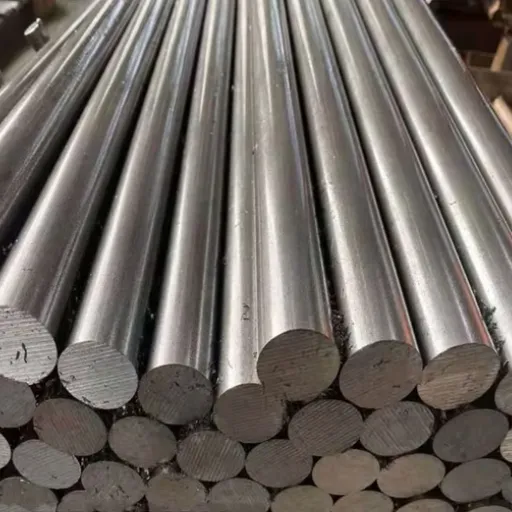
Cold drawing is an indispensable forming process for pure iron. It delivers the dimensional precision, surface quality, and mechanical strength that modern electromagnetic components demand. But the effect of cold drawing on magnetic flux density of pure iron is not the full story. While saturation flux density remains largely unchanged, the structure-sensitive properties — coercivity, permeability, and hysteresis loss — degrade severely in the as-drawn condition.
The science is clear. Cold work introduces dislocations that pin magnetic domain walls. Annealing removes those dislocations through recrystallization and grain growth, restoring low coercivity and high permeability. The Goss texture that develops during annealing can even enhance directional magnetic performance beyond the original baseline.
For engineers and procurement managers, the practical takeaway is equally clear: treat cold-drawn pure iron as a (semi-finished product) for electromagnetic applications. Specify magnetic annealing in your procurement requirements. Verify that your supplier measures magnetic properties on fully annealed test samples.
If your supply chain currently splits forming and heat treatment between separate vendors, consider the lead time, quality, and cost advantages of an integrated supplier.
Key takeaways:
Cold drawing degrades coercivity and permeability but does not significantly reduce saturation flux density
As-drawn DT4C can exhibit coercivity 2–6× higher than the GB/T 6983-2008 specification
Magnetic annealing at 700–900°C restores optimal properties and can develop beneficial Goss texture
Always verify whether "softened" delivery condition means intermediate-process annealing or full magnetic annealing
Integrated cold drawing plus magnetic annealing reduces lead time and improves magnetic consistency
Ready to source cold-drawn and magnetic-annealed DT4C pure iron? Shanxi Jurun Technology supplies precision cold-drawn wire rod, bars, and tubes with full post-drawing heat treatment and certified magnetic property data. Flexible MOQs start at 100 kg for specialty items. Contact our engineering team for a custom quote →
Recently Posted
-
Industrial Pure Iron vs. Armco Iron: Terminology, History, and Modern Equivalents
September 2, 2026Not long ago, a European motor manufacturer opened an aging drawing for a magnetic shielding housing and found the material callou Read More
 -
Shanxi Jurun Technology: Your Electromagnetic Pure Iron Partner from Taiyuan, China's Pure Iron Prod
August 14, 2026When an international buyer searches for electromagnetic pure iron, they are not just looking for a material. They are looking for Read More
 -
Cold Drawing Process for Electromagnetic Pure Iron Wire: How Wire Rod Becomes Precision Cold-Drawn W
August 13, 2026Not long ago, a solenoid valve manufacturer in Italy received a shipment of 5.5 mm electromagnetic pure iron cold-drawn wire inten Read More
 -
How to Choose a Food Vacuum Sealer Supplier in China: 8 Evaluation Criteria
August 13, 2026An e-commerce brand owner in the UK contacted us some time ago after a supplier relationship fell apart. They had sourced roughly Read More

Contact Us
Recommended Products
-
 Seamless Tube With Good Cold Electrical Pure Iron Fittings Hot Workability for Forming Fittings and ConduitsNegotiableMOQ: 1 Ton
 -
Electromagnetic Pure Iron Forging for Automotive Sensor ManufacturingNegotiableMOQ: 100 Kilograms
-
Precision Cut Pure Iron Square Bar High Saturation Induction Raw Material for Generator and RotorNegotiableMOQ: 100 Kilograms
-
DT4C Super Grade Electromagnetic Pure Iron Bright Bar With Bundle Weight 30-100kg for Easy TransportationNegotiableMOQ: 1 Ton
-
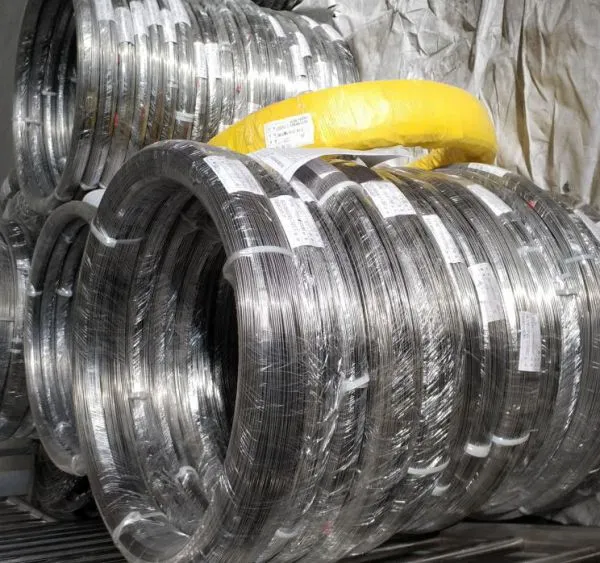
DT4C Electromagnetic Pure Iron Cold-Drawn Wire 0.5mm-6.0mm Diameter for TransformersNegotiableMOQ: 100 Kilograms
-
Industrial Pure Iron Bar for Electromagnetic Relay and Sensor ProductionNegotiableMOQ: 1 Ton
-
Electromagnetic Pure Iron Thin Sheet 0.3mm-0.8mm for Solenoid and Relay ManufacturingNegotiableMOQ: 500 Kilograms
-
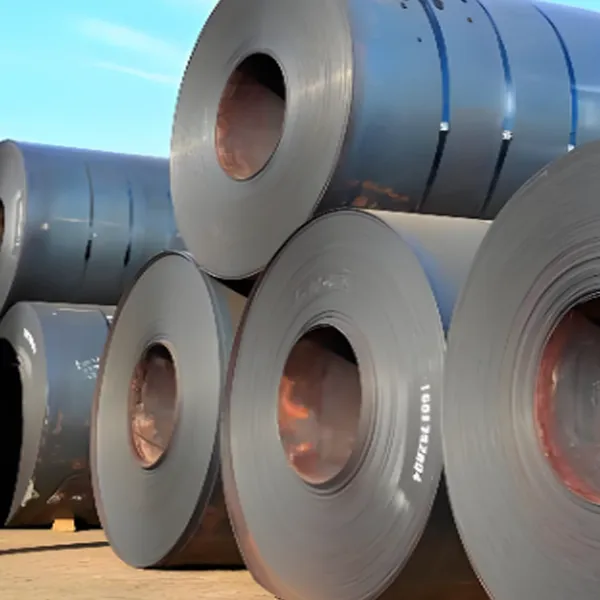
Electrical Pure Iron Hot-Rolled Coil for Magnetic Components With Low Iron LossNegotiableMOQ: 1 Ton
-
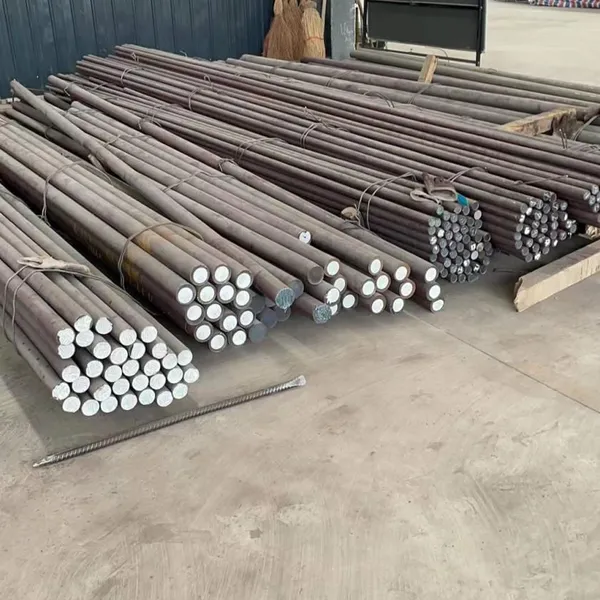
Low Carbon DT4C Pure Iron Round Bar With 99.8% Fe Content for Electrical ApplicationsNegotiableMOQ: 1 Ton
-
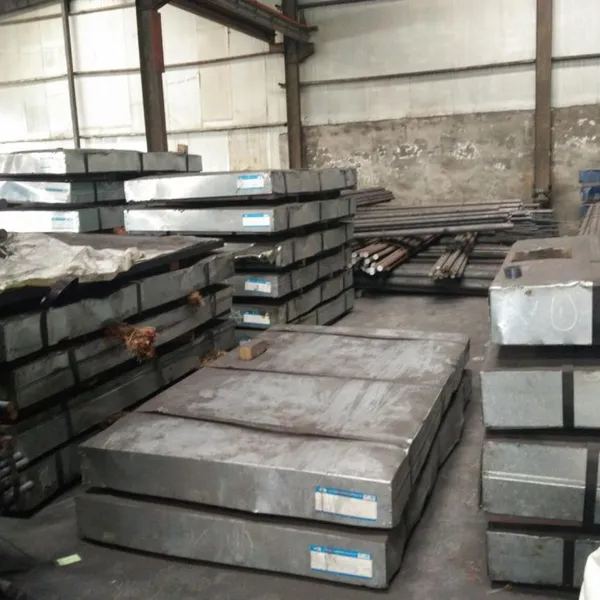
Cold Rolled Pure Iron Slit Coil DT4C Grade Ultra Low Carbon ≤0.004% for Magnetic ComponentsNegotiableMOQ: 1 Ton
-
Low Iron Loss Electromagnetic Pure Iron Hot-Rolled Coil DT4C for Transformer CoresNegotiableMOQ: 1 Ton
-
Soft Magnetic Pure Iron Sheet With Minimum Iron Loss for High-Efficiency MotorsNegotiableMOQ: 1 Ton
-
Electromagnetic Pure Iron Cold Rolled Coil DT4C for High Magnetic Permeability ApplicationsNegotiableMOQ: 1 Ton
-
Industrial Pure Iron Tube Superior Surface Quality Electromagnetic Pure Iron Tube for Welding and Plating ProcessesNegotiableMOQ: 1 Ton
-
DT4 Seamless Pure Iron Tubing for High-Performance Electrical Equipment ApplicationsNegotiableMOQ: 1 Ton
-
DT4C Iron Wire Rod for Precision Magnetic Shielding ApplicationsNegotiableMOQ: 100 Kilograms
-
Industrial Pure Iron Fittings DT4 Pure Iron Seamless Tube With Low Hysteresis Loss for Electromagnetic SystemsNegotiableMOQ: 1 Ton
-
DT4C Cold Rolled Coil Slitting for Electrical Enclosure ManufacturingNegotiableMOQ: 1 Ton
-
Anti Rust Coated Pure Iron Square Bar Low Carbon Raw Material for Welding and Forging Magnetic PartsNegotiableMOQ: 100 Kilograms
-
DT4 Pure Iron Cold-Drawn Wire 0.5mm-6.0mm Diameter for Precision EngineeringNegotiableMOQ: 500 Kilograms