
 Business License

Quality Control Standards for Export-Grade Pure Iron Products: A Complete Guide
Marcus Chen still remembers the Tuesday morning his production line ground to a halt. The relay cores his team had stamped from a fresh shipment of "DT4C-grade" pure iron were testing at three times the expected hysteresis loss. By the time the lab confirmed the material was closer to standard DT4, Marcus had 10,000 scrap units and a $15,000 hole in his quarterly budget. His supplier's documentation? A single weight ticket and a handshake promise.
If you import pure iron for transformers, relays, sensors, or precision magnetic components, Marcus's story should make you uncomfortable. Quality control standards for export grade pure iron products are not bureaucratic extras. They are the only barrier between your production line and a very expensive mistake.
This guide will show you exactly which standards govern export-grade pure iron, what tests and documents you should demand from every supplier, and how to verify that your material meets specification before it enters your machines. You will learn the difference between a generic mill test certificate and the magnetic property data that actually matters. You will understand why Chinese GB/T 6983 grades, ASTM specifications, and IEC testing methods all play a role in your procurement decisions. And you will walk away with a practical checklist you can use on your next purchase.
Want to see how a transparent supplier handles QC from raw material to pre-shipment? Browse our [DT4C electromagnetic pure iron] product range to see the documentation we include with every coil and bar.
Why Quality Control Is Non-Negotiable for Pure Iron Imports
The Hidden Cost of Off-Spec Material
Pure iron is not commodity steel. A few hundredths of a percent difference in carbon content or a small shift in magnetic annealing parameters can transform a high-performance transformer core into an energy-wasting liability. When buyers treat pure iron procurement like standard steel purchasing, they miss the electromagnetic property verification that actually determines performance.
The financial impact extends beyond scrap rates. Off-spec pure iron increases core losses, reduces efficiency, and can cause field failures in critical applications like medical imaging equipment or aerospace instrumentation. For manufacturers building components for regulated industries, the compliance risk alone justifies rigorous incoming inspection.
Magnetic Performance vs. Chemical Composition
Here is a common misconception: buyers often assume that if the chemical composition checks out, the magnetic properties will too. That assumption is dangerous. Pure iron's magnetic performance depends heavily on processing history, grain structure, and heat treatment, not just chemistry.
Two samples with identical carbon and silicon levels can exhibit vastly different coercivity and permeability values depending on how they were rolled and annealed. This is why GB/T 6983 and ASTM A1126 both specify magnetic property limits alongside chemical composition requirements. The certificate of analysis is a starting point, not the finish line.
Application-Specific Risks
A transformer manufacturer can tolerate slightly higher coercivity in a distribution core designed for 50 Hz operation. A relay manufacturer stamping armatures for high-frequency switching cannot. A sensor producer building EV motor position sensors needs batch-to-batch consistency that general steel QC simply does not address.
Your application determines which quality control standards matter most. Understanding those standards before you place an order is the single most effective way to protect your production schedule and your margins.
International and Chinese Standards for Pure Iron
GB/T 6983-2008: China's Electromagnetic Pure Iron Standard
GB/T 6983-2008 is the Chinese national standard that defines electromagnetic pure iron grades and their requirements. If you source pure iron from China, this standard governs the material your supplier produces. Understanding it is essential for intelligent procurement.
The standard classifies electromagnetic pure iron into four performance grades:
Grade | Performance Level | Max Coercivity Hc | Min Max Permeability μmax |
|---|---|---|---|
DT4 | Ordinary | ≤ 96 A/m | ≥ 0.0075 H/m |
DT4A | High-grade | ≤ 72 A/m | ≥ 0.0100 H/m |
DT4E | Superior | ≤ 48 A/m | ≥ 0.0125 H/m |
DT4C | Super | ≤ 32 A/m | ≥ 0.0151 H/m |
The "DT" designation stands for electromagnetic pure iron. The number indicates the series, and the suffix letter denotes magnetic performance class. DT4C represents the highest performance material in the standard, with the lowest coercivity and highest permeability.
Chemical composition limits under GB/T 6983-2008 are equally specific:
Element | Standard Maximum |
|---|---|
Carbon (C) | ≤ 0.010% |
Silicon (Si) | ≤ 0.100% |
Manganese (Mn) | ≤ 0.250% |
Phosphorus (P) | ≤ 0.015% |
Sulfur (S) | ≤ 0.010% |
Aluminum (Al) | 0.20 - 0.80% |
Chromium (Cr) | ≤ 0.100% |
Nickel (Ni) | ≤ 0.050% |
Copper (Cu) | ≤ 0.050% |
High-quality production routinely exceeds these minimums. Premium DT4C material from top-tier mills often achieves carbon levels below 0.003%, with silicon under 0.010% and sulfur below 0.002%.
ASTM A1126-23: Magnetic Pure Iron for the Global Market
ASTM A1126-23 is the current American standard for magnetic pure iron. It covers both mill-cast and wrought forms, with carbon content limited to no more than 0.0060%. The standard specifies total iron content requirements and mechanical property benchmarks that align with international expectations.
For buyers in North America or those supplying North American OEMs, ASTM compliance provides a familiar reference point. Many Chinese suppliers can certify material to ASTM specifications in addition to GB/T 6983, giving buyers dual-standard traceability.
IEC 60404-4: How Magnetic Properties Are Measured
IEC 60404-4 defines the methods for measuring DC magnetic properties of magnetically soft materials, including pure iron. This standard matters because it ensures that when your supplier reports a coercivity of 32 A/m for DT4C material, that number was measured the same way a European lab would measure it.
The standard specifies toroidal ring specimen preparation, magnetometer calibration, and test procedures. When evaluating supplier test reports, look for references to IEC 60404-4 compliance. A magnetic property test performed to this standard carries weight in any market.
EN 10204: Mill Test Certificate Standards
EN 10204 defines the types of inspection documents that steel and metal suppliers can issue. For pure iron buyers, the distinction between certificate types determines how much trust you can place in the documentation accompanying your shipment.
Type 2.1 is a declaration of compliance with the order, issued by the manufacturer without independent test results. It offers minimal verification value.
Type 3.1 is the most common certificate for standard exports. It includes actual test results from the manufacturer's own quality department, signed by an authorized inspector. For most pure iron purchases, a 3.1 certificate with chemical and magnetic data provides adequate verification.
Type 3.2 requires the manufacturer's quality department AND an independent third-party inspector to review and sign off on the test results. It commands a premium price but delivers the highest confidence level. Buyers in regulated industries or those supplying audited supply chains often require 3.2 certificates.
Need material with full third-party verification? Contact our team to discuss EN 10204 3.2 certification for your next pure iron order.
The Pure Iron Quality Control Process: Step by Step
Stage 1: Raw Material Verification
Quality control begins before any iron enters the furnace. Reputable suppliers verify incoming raw material chemistry using optical emission spectrometry (OES) or inductively coupled plasma optical emission spectrometry (ICP-OES). These methods detect trace elements at the parts-per-million level, ensuring the starting material can achieve the required purity.
Traceability at this stage is critical. Each incoming batch should carry a material identification number that links back to the source mill. When a supplier cannot trace raw material to its origin, consistency becomes impossible to guarantee.
At Shanxi Jurun, raw material enters our facility from TISCO and Baosteel, the premier producers in China's pure iron heartland. Every coil and bar carries a heat number that follows it through every subsequent process.
Stage 2: In-Process Quality Control
Smelting and Casting Monitoring
During smelting, temperature and atmosphere are monitored continuously. Deoxidizing agents, typically aluminum, are added in precise amounts to reduce oxygen content. The goal is fully killed steel with dense, uniform internal structure and minimal gas content.
Controlled cooling after casting prevents internal stress and ensures uniform grain structure. Rapid or uneven cooling creates hard spots and grain boundaries that degrade magnetic performance.
Hot Rolling and Cold Rolling Checks
Dimensional tolerances are checked at multiple points during rolling. For cold-rolled pure iron sheets, thickness variation across the coil width must stay within tight limits. Width, flatness, and edge quality are verified before material moves to the next stage.
Surface inspection during rolling catches scratches, roll marks, and contamination that could affect plating or welding performance downstream.
Magnetic Annealing Process Control
This is the step that separates average suppliers from excellent ones. Magnetic annealing relieves internal stresses introduced during rolling and develops the soft magnetic properties that make pure iron valuable.
The process typically involves heating material to approximately 850°C in a controlled hydrogen or argon atmosphere, holding for several hours, then slow cooling. Temperature uniformity, atmosphere purity, and cooling rate all affect the final magnetic properties.
Because of this sensitivity, production batches of identical starting material can end up with magnetic properties differing by two or three grade levels after processing. True DT4C-grade yield is relatively low in the industry, which is why magnetic property testing after annealing is non-negotiable.
Stage 3: Final Product Testing
Chemical Composition Verification
A final spectrometric analysis confirms that carbon, sulfur, phosphorus, and other critical elements remain within specification. For electromagnetic grades, carbon is the element that receives the most scrutiny. Even at 0.010%, carbon limits magnetic permeability. At 0.003%, the material becomes genuinely exceptional.
Magnetic Property Testing
This is the test that matters most and appears least often on generic mill test certificates. Coercivity (Hc) and maximum permeability (μmax) are measured using toroidal ring specimens and magnetometers, following IEC 60404-4 procedures.
The test requires careful sample preparation. The toroidal ring must be wound with primary and secondary excitation windings, then magnetized under controlled conditions. The resulting hysteresis loop reveals coercivity, permeability, and saturation flux density.
Without this data, you cannot verify that your "DT4C" material actually meets DT4C magnetic standards. A supplier who ships electromagnetic pure iron without magnetic property test results is asking you to trust, not verify.
Mechanical Property Testing
Tensile strength, yield strength, elongation, and hardness are measured to confirm the material meets mechanical specifications. Typical values for electromagnetic pure iron include:
Density: 7.85 g/cm³
Tensile strength: 176 - 274 MPa
Elongation: 30% - 50%
Surface hardness: HV5 ≤ 195
These properties matter for machinability, forming, and structural integrity in your end application.
Dimensional and Surface Inspection
Thickness, width, length, flatness, and straightness are verified against order requirements. Surface finish is inspected for roughness, scratches, scale, and contamination. For cold-rolled sheets intended for stamping, surface quality directly affects die life and part consistency.
Stage 4: Non-Destructive Testing
Ultrasonic Testing (UT)
Ultrasonic testing detects internal discontinuities like cracks, voids, and inclusions. A high-frequency sound wave is transmitted through the material, and reflected signals reveal defects that would compromise structural or magnetic performance.
For forged rounds and bars used in critical applications, UT is standard practice. It finds problems that surface inspection and chemistry tests cannot detect.
Magnetic Particle Inspection (MPI)
MPI identifies surface and near-surface defects in ferromagnetic materials. The pure iron workpiece is magnetized, and fine iron powder particles are applied. Particles cluster at discontinuities, making cracks and seams visible under appropriate lighting.
This method is particularly valuable for detecting fatigue cracks and stress risers that could propagate during machining or service.
Eddy Current Testing
Eddy current testing detects small surface cracks and measures conductivity variations. It is fast, non-contact, and well-suited to continuous inspection of bars and wire. While less common than UT or MPI for bulk pure iron, it provides valuable supplemental data for surface-sensitive applications.
Export Documentation: What Buyers Should Receive
Mill Test Certificate (MTC) / Certificate of Analysis (COA)
Every shipment of export-grade pure iron should include a mill test certificate showing actual test results for the specific batch you received. Generic certificates without heat numbers or batch references are worthless. Insist on documentation that links test data to your specific material.
A complete MTC for electromagnetic pure iron should include:
Heat or batch number
Chemical composition with actual measured values
Magnetic property test results (Hc, μmax, Bs)
Mechanical property data
Dimensional verification
Standard compliance statement (GB/T 6983, ASTM A1126, or both)
Magnetic Property Test Reports
Separate from the MTC, a dedicated magnetic property test report should show the test method (IEC 60404-4), instrument calibration, and the complete hysteresis loop or tabulated data. This report is your only objective evidence that the material will perform as specified in your magnetic circuit.
Dimensional Inspection Reports
For custom-processed material, dimensional reports confirm that slitting, cutting, or drawing operations met your tolerances. These reports should include actual measurements, not just pass/fail statements.
Heat Treatment Records
Because magnetic annealing determines final performance, heat treatment records provide valuable process traceability. The record should show annealing temperature, atmosphere composition, hold time, and cooling rate.
Pre-Shipment Inspection Certificates
For exports from China, SN/T 5400-2021 governs inspection of iron and non-alloy steel primary products. While not all shipments require formal pre-shipment inspection, buyers should verify that packaging, labeling, and documentation meet customs requirements for the destination country.
Certificate of Origin
A certificate of origin confirms the country where the material was manufactured. For pure iron from China, this document supports customs clearance and may affect tariff classification depending on trade agreements in force.
Request a sample documentation package from Jurun to see what complete export paperwork looks like for pure iron shipments.
Packaging and Preservation for Export
Anti-Corrosion Requirements
Pure iron is highly susceptible to rust during ocean transit. Export packaging must include vapor phase inhibitors (VCI) or anti-rust oil coatings. Bare material exposed to salt air for even a few days can develop surface corrosion that affects stamping, welding, and plating.
Moisture Control
Silica gel desiccants should be placed inside packaging to maintain humidity below 5% relative humidity. Some suppliers include humidity indicator cards that change color if moisture levels rise during transit. This simple addition can prevent costly surface degradation.
Seaworthy Packaging Standards
Wooden crates or steel frames should be built to withstand container handling, stacking, and vibration. Internal bracing prevents movement that causes mechanical damage. For coils, eye-to-sky orientation with proper saddles prevents edge damage and deformation.
Labeling and Batch Traceability
Every package should carry a label showing heat number, grade, dimensions, weight, and handling instructions. Batch traceability ensures that if a quality issue arises after delivery, the supplier can identify the production parameters and implement corrective action.
Red Flags: How to Spot a Supplier with Weak QC
Vague or Missing Test Reports
A supplier who provides only a generic compliance letter without actual test values is not running adequate quality control. Similarly, a certificate that shows chemical composition but omits magnetic property data for electromagnetic grades should raise immediate concern.
No Batch Traceability
If your supplier cannot tell you which heat number corresponds to which coil or bar in your shipment, they are not tracking quality at the batch level. Traceability is fundamental to quality management. Without it, corrective action is impossible when problems occur.
Inability to Explain Magnetic Annealing
Ask your supplier about their annealing process. A knowledgeable supplier will describe temperature, atmosphere, and cooling parameters without hesitation. A supplier who cannot explain how they develop magnetic properties likely does not control them.
Missing Standard References on Documentation
Test reports and certificates should reference the specific standards they claim to meet. A "quality certificate" without mention of GB/T 6983, ASTM A1126, or IEC 60404-4 is not worth the paper it is printed on.
Conclusion
Quality control standards for export grade pure iron products exist to protect buyers from the expensive gap between promised and delivered performance. The standards, GB/T 6983, ASTM A1126-23, and IEC 60404-4, provide the framework. Chemical analysis, magnetic property testing, non-destructive examination, and proper documentation provide the verification.
Here is what to remember on your next procurement:
Demand magnetic property data, not just chemistry. Coercivity and permeability determine how your material performs in application.
Verify documentation authenticity. Ensure test reports link to your specific batch via heat numbers.
Ask about annealing. Magnetic properties are made in the furnace, not just the melt shop.
Inspect packaging. Ocean transit without proper corrosion protection can ruin precision material before it reaches your floor.
Start with a qualified supplier. Gold Supplier verification, manufacturing certifications, and transparent QC processes separate professional suppliers from traders.
At Shanxi Jurun Technology Co., Ltd., every coil of DT4C electromagnetic pure iron, every bar of DT8 precision material, and every custom-cut component ships with complete test documentation and full batch traceability. We operate from Taiyuan, Shanxi, the heart of China's pure iron production region, and we maintain QC gates at every stage from raw material receipt through slitting, cutting, drawing, and final inspection.
Ready to source pure iron with confidence? Contact our engineering team today for a quote, sample documentation, or technical consultation on the right grade for your application.
Recently Posted
-
Shanxi Jurun Technology: Your Electromagnetic Pure Iron Partner from Taiyuan, China's Pure Iron Prod
August 14, 2026When an international buyer searches for electromagnetic pure iron, they are not just looking for a material. They are looking for Read More
 -
Cold Drawing Process for Electromagnetic Pure Iron Wire: How Wire Rod Becomes Precision Cold-Drawn W
August 13, 2026Not long ago, a solenoid valve manufacturer in Italy received a shipment of 5.5 mm electromagnetic pure iron cold-drawn wire inten Read More
 -
How to Choose a Food Vacuum Sealer Supplier in China: 8 Evaluation Criteria
August 13, 2026An e-commerce brand owner in the UK contacted us some time ago after a supplier relationship fell apart. They had sourced roughly Read More
 -
Electromagnetic Pure Iron for Relay Manufacturing: Material Requirements, Grade Selection, and Case
August 13, 2026Some time ago, a relay production line in Zhejiang province began experiencing a puzzling failure pattern. Roughly 3 out of every
Read More

Contact Us
Recommended Products
-
 Seamless Tube With Good Cold Electrical Pure Iron Fittings Hot Workability for Forming Fittings and ConduitsNegotiableMOQ: 1 Ton
 -
Electromagnetic Pure Iron Forging for Automotive Sensor ManufacturingNegotiableMOQ: 100 Kilograms
-
Precision Cut Pure Iron Square Bar High Saturation Induction Raw Material for Generator and RotorNegotiableMOQ: 100 Kilograms
-
DT4C Super Grade Electromagnetic Pure Iron Bright Bar With Bundle Weight 30-100kg for Easy TransportationNegotiableMOQ: 1 Ton
-
DT4C Electromagnetic Pure Iron Cold-Drawn Wire 0.5mm-6.0mm Diameter for TransformersNegotiableMOQ: 100 Kilograms
-
Industrial Pure Iron Bar for Electromagnetic Relay and Sensor ProductionNegotiableMOQ: 1 Ton
-
Electromagnetic Pure Iron Thin Sheet 0.3mm-0.8mm for Solenoid and Relay ManufacturingNegotiableMOQ: 500 Kilograms
-
Electrical Pure Iron Hot-Rolled Coil for Magnetic Components With Low Iron LossNegotiableMOQ: 1 Ton
-
Low Carbon DT4C Pure Iron Round Bar With 99.8% Fe Content for Electrical ApplicationsNegotiableMOQ: 1 Ton
-
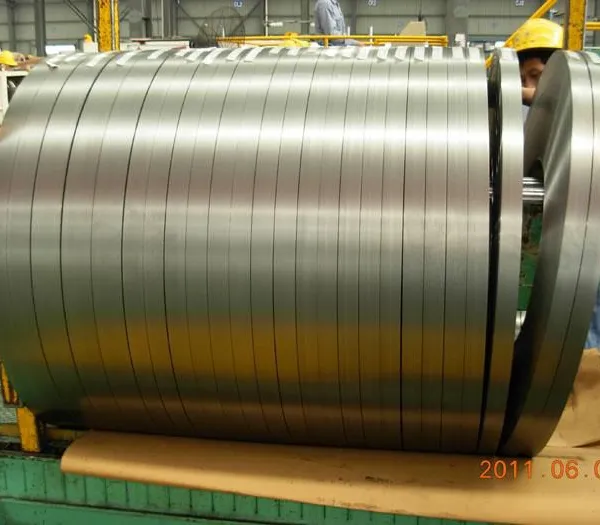
Cold Rolled Pure Iron Slit Coil DT4C Grade Ultra Low Carbon ≤0.004% for Magnetic ComponentsNegotiableMOQ: 1 Ton
-
Low Iron Loss Electromagnetic Pure Iron Hot-Rolled Coil DT4C for Transformer CoresNegotiableMOQ: 1 Ton
-
Soft Magnetic Pure Iron Sheet With Minimum Iron Loss for High-Efficiency MotorsNegotiableMOQ: 1 Ton
-
Electromagnetic Pure Iron Cold Rolled Coil DT4C for High Magnetic Permeability ApplicationsNegotiableMOQ: 1 Ton
-
Industrial Pure Iron Tube Superior Surface Quality Electromagnetic Pure Iron Tube for Welding and Plating ProcessesNegotiableMOQ: 1 Ton
-
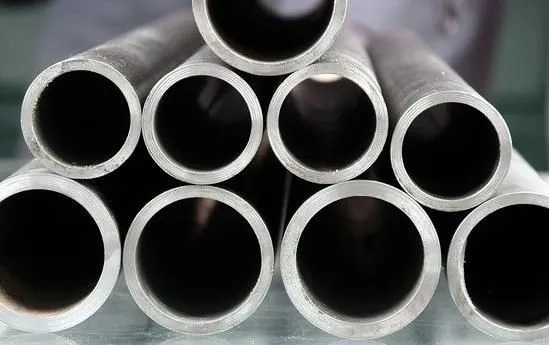
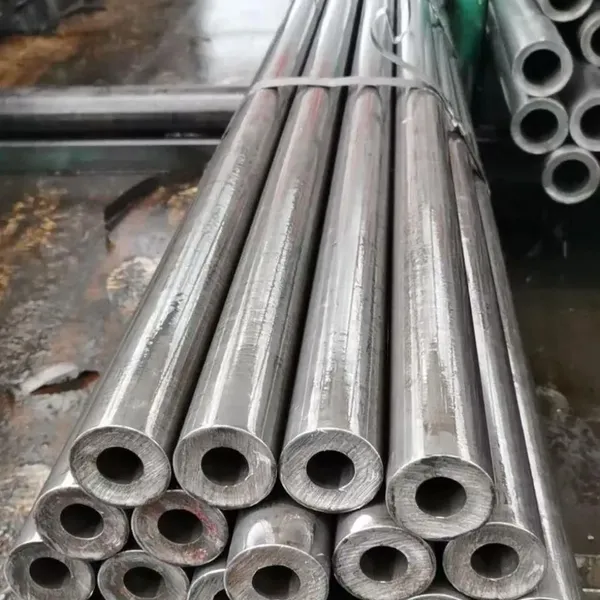
DT4 Seamless Pure Iron Tubing for High-Performance Electrical Equipment ApplicationsNegotiableMOQ: 1 Ton
-
DT4C Iron Wire Rod for Precision Magnetic Shielding ApplicationsNegotiableMOQ: 100 Kilograms
-
Industrial Pure Iron Fittings DT4 Pure Iron Seamless Tube With Low Hysteresis Loss for Electromagnetic SystemsNegotiableMOQ: 1 Ton
-
DT4C Cold Rolled Coil Slitting for Electrical Enclosure ManufacturingNegotiableMOQ: 1 Ton
-
Anti Rust Coated Pure Iron Square Bar Low Carbon Raw Material for Welding and Forging Magnetic PartsNegotiableMOQ: 100 Kilograms
-
DT4 Pure Iron Cold-Drawn Wire 0.5mm-6.0mm Diameter for Precision EngineeringNegotiableMOQ: 500 Kilograms