
 Business License

Magnetic Anisotropy in Pure Iron: What Manufacturers Need to Know
Why can two identical-looking sheets of pure iron deliver completely different magnetic performance? The answer usually lies in magnetic anisotropy—the directional dependence of a material's magnetic response. If you design transformers, motors, relays, or sensors, understanding this property helps you cut losses, reduce scrap, and choose the right grade before production begins.
You already know that magnetic materials are not interchangeable. This guide explains what magnetic anisotropy is, why it forms in pure iron, and how it influences real-world component performance. You will also learn how grades like DT4C pure iron and controlled processing can help you manage directional magnetic behavior for better results.
What Is Magnetic Anisotropy and Why Does It Matter?
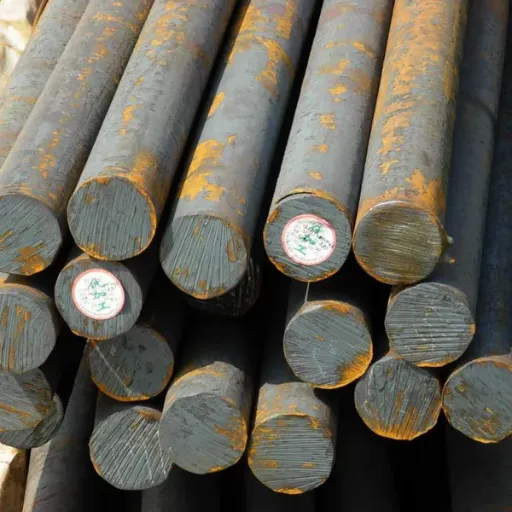
Magnetic anisotropy means that a material's magnetic properties—permeability, coercivity, remanence, and iron loss—change depending on the direction of the applied magnetic field. In other words, pure iron does not behave the same when magnetized parallel to its rolling direction as it does when magnetized at an angle to it.
According to Britannica, magnetic anisotropy is the "exhibition of different magnetic properties when measured along axes in different directions." This directional behavior comes from several sources. The most important for pure iron are:
Magnetocrystalline anisotropy: the crystal lattice itself has preferred directions for magnetization.
Shape anisotropy: the geometry of the part influences how magnetic domains align.
Stress or strain anisotropy: residual stress from rolling, drawing, or machining can lock in directional behavior.
Induced anisotropy: heat treatment in a magnetic field can create a preferred direction.
For manufacturers, magnetic anisotropy is not an abstract physics concept. It directly affects core loss, efficiency, heat generation, and noise in electrical components. Ignoring it can mean specifying the right grade but getting the wrong performance.
Want to see how material selection shapes electrical component design? Explore our guide to electrical pure iron applications in transformers, motors, and power systems.
How Magnetic Anisotropy Forms in Pure Iron
Pure iron has a body-centered cubic (BCC) crystal structure. In this lattice, the cube-edge directions—called the ⟨100⟩ directions—are the "easy" axes of magnetization. The body-diagonal ⟨111⟩ directions are the "hard" axes. It takes less energy to align magnetic domains along an easy axis than along a hard axis.
This magnetocrystalline anisotropy is described by anisotropy constants, usually labeled K₁ and K₂. For pure iron at room temperature, K₁ is approximately +4.8 × 10⁴ J/m³. The positive sign tells engineers that the ⟨100⟩ directions are easy. ScienceDirect's overview of magnetocrystalline anisotropy provides a deeper technical discussion of these constants and their temperature dependence.
In practice, however, a raw pure iron ingot is rarely used as-is. It is rolled into sheets, drawn into wire, forged into bars, or stamped into laminations. Each step can rotate or align grains, creating a texture. A strong crystallographic texture means many grains point the same way, so the bulk material shows stronger directional magnetic behavior.
Heat treatment also plays a major role. A final anneal can relieve residual stress and remove some texture, making the material more isotropic. On the other hand, annealing in a magnetic field can deliberately induce anisotropy to improve performance along one specific axis.
Key takeaway: Magnetic anisotropy in pure iron starts at the atomic level, but processing decisions determine how strongly it appears in your finished part.
Magnetic Anisotropy vs. Isotropy: Key Differences for Engineers
Engineers often face a simple but important choice: should the material be anisotropic or isotropic? The right answer depends on the magnetic flux path in the final component.
| Property | Anisotropic Material | Isotropic Material |
|---|---|---|
| Magnetic behavior | Strongly directional | Similar in all directions |
| Best application | Transformers with fixed flux direction | Rotating machines, motors, generators |
| Typical material | Grain-oriented silicon steel | Non-oriented electrical steel, well-annealed pure iron |
| Core loss | Lowest along the easy/rolling direction | Higher but consistent across directions |
| Cost | Usually higher due to controlled processing | Often lower, more flexible |
Anisotropic grades excel when the magnetic field travels in one predictable direction. That is why grain-oriented electrical steel dominates power transformer cores. The rolling direction is aligned with the transformer limb, so flux follows the easy axis and losses drop.
Isotropic or weakly anisotropic materials work better where flux rotates or changes direction. In motors and generators, the magnetic field sweeps around the stator. If the material is too anisotropic, some positions in the rotation will align with hard axes, causing torque ripple, vibration, and extra iron loss.
Pure iron grades such as DT4C can be supplied in conditions ranging from textured cold-rolled sheet to stress-relieved, more isotropic bar or coil. The key is matching the magnetic anisotropy level to the application's flux pattern.
Controlling Magnetic Anisotropy in Electrical Steel and Pure Iron
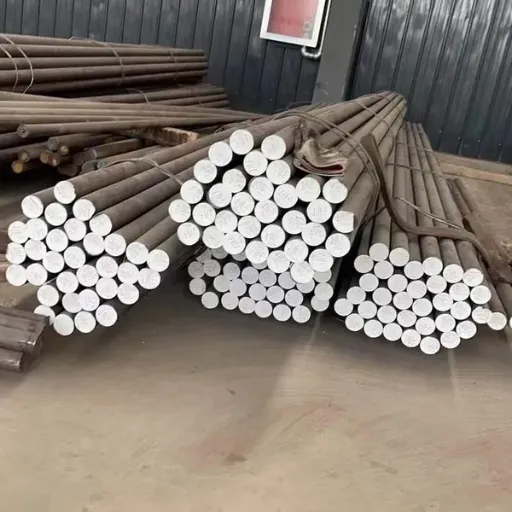
Controlling magnetic anisotropy is one of the main reasons processing matters as much as chemistry. Even with the same base grade, different thermomechanical routes can produce very different magnetic behavior.
Rolling and Texture Development
Cold rolling tends to strengthen crystallographic texture. In grain-oriented silicon steel, manufacturers use careful rolling schedules to create the famous Goss texture, where the {110} planes lie parallel to the sheet surface and the ⟨001⟩ easy axis lies along the rolling direction. Pure iron can develop similar but generally weaker textures depending on reduction ratio and intermediate anneals.
Annealing and Stress Relief
Annealing softens the metal and removes residual stress from rolling or drawing. A well-designed final anneal reduces unwanted anisotropy caused by strain and makes the material more predictable. For components that need isotropic behavior, a box anneal or continuous anneal in a neutral atmosphere is common.
Magnetic Annealing
In some cases, anisotropy is intentionally introduced by annealing in a magnetic field. The field encourages domains to align during cooling, creating an induced easy axis. This technique is more common in specialized alloys than in standard pure iron, but it shows how tightly processing and magnetic anisotropy are linked.
Purity and Chemistry
Impurities such as carbon and nitrogen can pin magnetic domain walls and increase coercivity. Ultra-low carbon grades like DT4C keep carbon at or below 0.004%, which helps domains move freely and gives more stable, reproducible magnetic properties. If you need consistent magnetic anisotropy behavior, starting with a clean chemistry is essential.
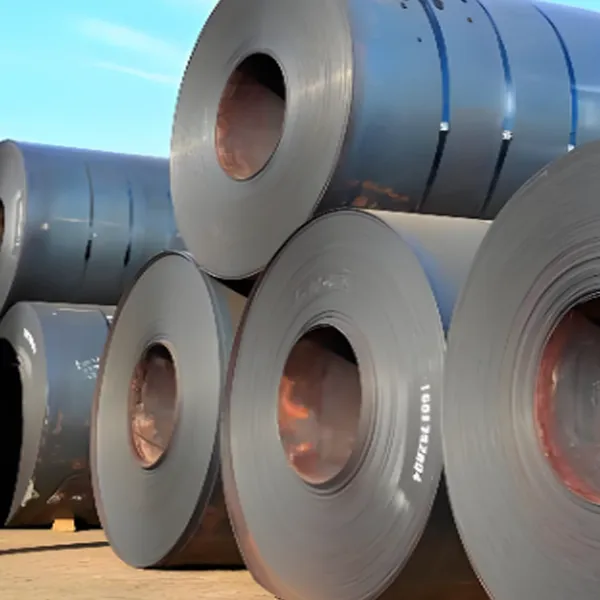
Looking for material that arrives ready for your stamping or winding line? Learn more about our electromagnetic pure iron hot-rolled coil specifications and processing options.
How Magnetic Anisotropy Affects Transformer and Motor Performance
Real components do not exist in a textbook. Their performance depends on how well the material's directional properties match the operating flux path.
Transformers
In a power transformer, the main flux runs back and forth along the core limbs in a single direction. Anisotropic material with the easy axis aligned to the flux path minimizes hysteresis loss and maximizes permeability. That is why grain-oriented steels are standard for large transformers.
For smaller transformers, instrument transformers, or chokes, electromagnetic pure iron is often chosen for its high saturation induction and excellent permeability. If the laminations are cut from cold-rolled sheet, engineers must consider whether the rolling direction follows the flux path. A mismatch can increase core loss by 10–20% or more.
Motors and Generators
Rotating machines experience a rotating magnetic field. Ideally, the material should respond equally well in every direction. Strong magnetic anisotropy causes the magnetic reluctance to vary with rotor position. This leads to:
Torque ripple and cogging
Audible noise and vibration
Additional iron loss at certain rotor angles
Reduced efficiency
Using isotropic or weakly anisotropic pure iron helps maintain smooth torque and lower losses. For high-efficiency motors, especially in EV traction systems, this becomes a major design consideration.
Relays, Solenoids, and Sensors
These components see rapidly changing flux directions. A solenoid plunger may move through a part where flux bends around corners. A sensor core must respond linearly to small field changes. In all these cases, unpredictable magnetic anisotropy can cause inconsistent pull-in voltage, hysteresis, or signal drift.
Choosing a grade like DT4C with controlled processing helps ensure that the material behaves predictably, even when the flux path is complex.
Testing and Measuring Magnetic Anisotropy
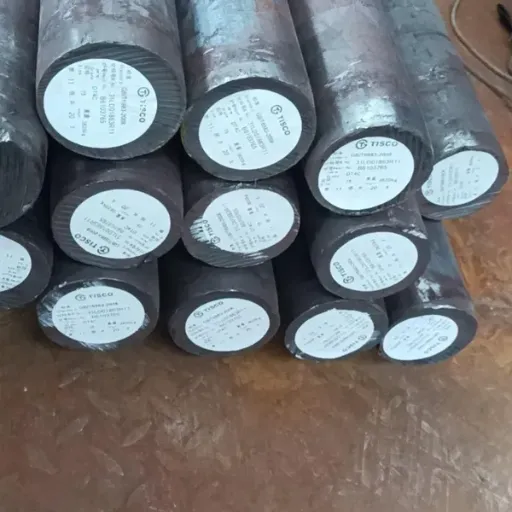
You cannot manage what you do not measure. Several standard techniques help quantify magnetic anisotropy in pure iron and electrical steels.
Torque Magnetometry
A sample is placed in a strong, rotating magnetic field. The torque required to keep the sample stationary varies as the field rotates, revealing the easy and hard axes. This method is direct and widely used for research.
Hysteresis Loop Measurements
By measuring B-H loops along different directions—parallel, transverse, and at 45° to the rolling direction—engineers can compare permeability, coercivity, and core loss. Standards such as IEC 60404 define how these measurements should be performed for electrical steel.
Texture Analysis
X-ray diffraction or electron backscatter diffraction (EBSD) shows the crystallographic orientation distribution. A strong texture confirms that magnetic anisotropy will be present. This is useful for root-cause analysis when magnetic performance does not match expectations.
Ferromagnetic Resonance
This technique measures the resonant absorption of microwave energy in a magnetic field. It is sensitive to anisotropy fields and is often used for thin films and specialized materials.
For most procurement and quality control work, directional B-H testing is the most practical approach. It links directly to the properties that matter in the final component.
Selecting the Right Pure Iron Grade to Manage Anisotropy
The best grade depends on your flux path, processing plan, and performance target. Here is a practical framework for choosing.
When You Need Low, Predictable Anisotropy
Choose a fully annealed, ultra-low carbon grade such as DT4C pure iron. The low carbon content reduces domain-wall pinning, and proper annealing minimizes residual stress. This combination gives stable, near-isotropic behavior suitable for motors, relays, and sensors.
When You Want Directional Advantage
If your component has a fixed flux path and you can align the material's easy axis with it, textured cold-rolled sheet or strip may deliver lower loss. Work with your supplier to specify the rolling direction and any required magnetic heat treatment.
When Geometry Matters
Thin laminations, fine wire, and small stamped parts can all develop shape anisotropy. In these cases, the part geometry may dominate over crystallographic texture. Finite-element magnetic modeling can help predict the combined effect.
When You Need Custom Processing
Slitting, cutting, and forming can reintroduce stress and alter magnetic behavior. A supplier that offers in-house precision slitting and stress-relief annealing can deliver material closer to your final dimensions while preserving the magnetic properties you specified.
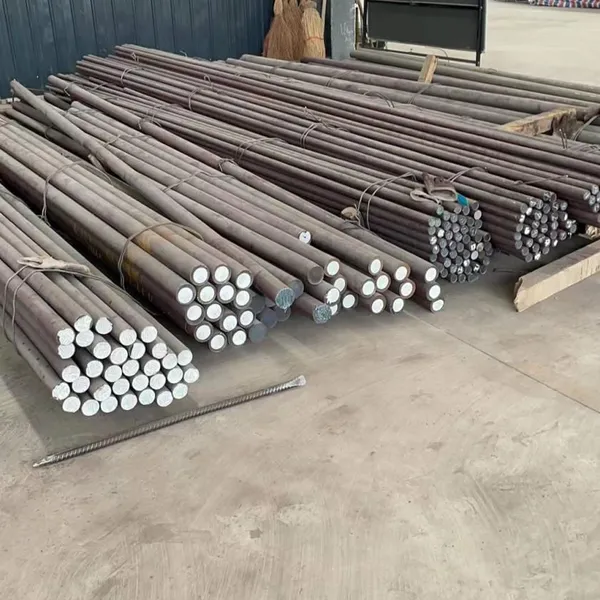
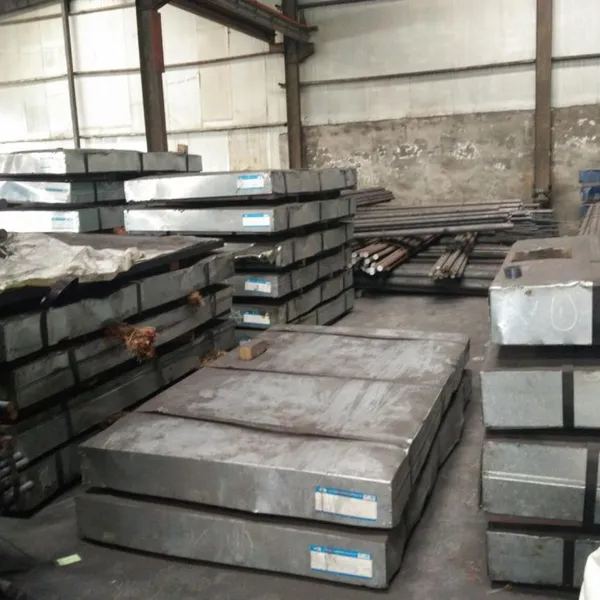
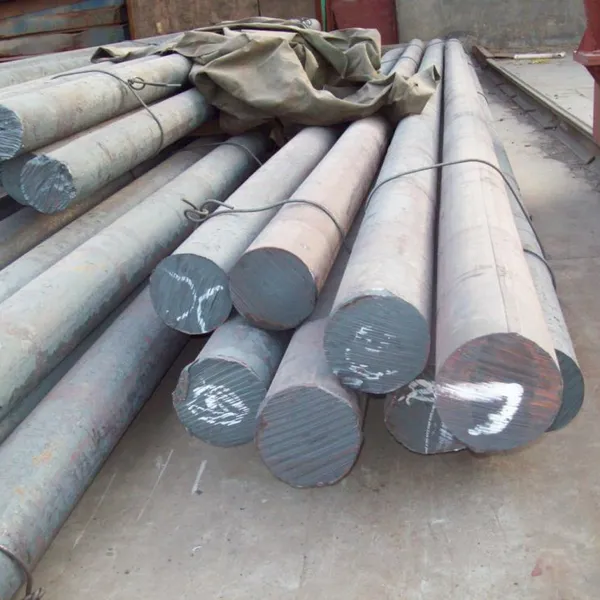
At Shanxi Jurun Technology Co., Ltd., we supply DT4C and related electromagnetic pure iron grades in sheets, coils, bars, wire, and custom-cut forms. We can also slit, cut, and anneal material to help you control magnetic anisotropy from the start.
Need help matching a pure iron grade to your magnetic design? Contact our engineering team for a customized quote and material recommendation.
Real-World Scenarios: When Magnetic Anisotropy Makes or Breaks a Design
Scenario 1: The transformer core that failed quietly
A small transformer manufacturer in Jiangsu ordered cold-rolled electrical pure iron sheets for a new line of 50 Hz distribution transformers. The certificates showed the correct grade and thickness. When the cores were assembled and tested, losses were 18% higher than expected. The problem was that the laminations had been sheared so the rolling direction ran across the core limb instead of along it. Once the supplier marked the rolling direction clearly and the customer adjusted the blanking pattern, losses dropped back into spec. Magnetic anisotropy had turned an acceptable grade into a rejected core.
Scenario 2: The motor that hummed
At a motor winding facility in Shenzhen, engineer Li Wei traced uneven torque ripple in a prototype permanent-magnet motor to the stator laminations. The material had a weak but noticeable texture from cold rolling. In certain rotor positions, flux had to cross harder crystallographic directions, increasing local reluctance. Switching to a fully annealed, lower-anisotropy pure iron grade reduced vibration and improved efficiency by a measurable margin.
Scenario 3: The relay that responded faster
A relay producer in Dongguan switched from generic low-carbon steel to DT4C electromagnetic pure iron with controlled final anneal. The 0.5 mm stamped armature cores showed more consistent magnetic response in all orientations. Pull-in voltage variation dropped, and the design team could use a smaller coil while meeting the same force specification. Managing magnetic anisotropy directly reduced copper cost and improved reliability.
Conclusion: Use Magnetic Anisotropy as a Design Tool, Not a Surprise
Magnetic anisotropy is not a flaw. It is a fundamental property of crystalline magnetic materials like pure iron. The challenge for manufacturers is to predict it, measure it, and align it with the application's needs.
Key takeaways:
Magnetic anisotropy makes pure iron easier or harder to magnetize depending on direction.
Rolling, annealing, chemistry, and part geometry all influence the final directional behavior.
Anisotropic materials suit fixed-flux designs like transformers; isotropic or weakly anisotropic materials work better for rotating machines.
Directional B-H testing and texture analysis help verify that material matches design intent.
Grades like DT4C pure iron, combined with controlled processing, give engineers a reliable starting point.
When you specify pure iron for electromagnetic applications, think beyond the grade name. Ask about rolling direction, annealing condition, and magnetic testing. The right material, oriented the right way, can cut losses, reduce noise, and simplify your production process.
Ready to source electromagnetic pure iron that matches your magnetic design? Request a quote for DT4C sheets, coils, bars, or custom-cut material today.
Recently Posted
-
Shanxi Jurun Technology: Your Electromagnetic Pure Iron Partner from Taiyuan, China's Pure Iron Prod
August 14, 2026When an international buyer searches for electromagnetic pure iron, they are not just looking for a material. They are looking for Read More
 -
Cold Drawing Process for Electromagnetic Pure Iron Wire: How Wire Rod Becomes Precision Cold-Drawn W
August 13, 2026Not long ago, a solenoid valve manufacturer in Italy received a shipment of 5.5 mm electromagnetic pure iron cold-drawn wire inten Read More
 -
How to Choose a Food Vacuum Sealer Supplier in China: 8 Evaluation Criteria
August 13, 2026An e-commerce brand owner in the UK contacted us some time ago after a supplier relationship fell apart. They had sourced roughly Read More
 -
Electromagnetic Pure Iron for Relay Manufacturing: Material Requirements, Grade Selection, and Case
August 13, 2026Some time ago, a relay production line in Zhejiang province began experiencing a puzzling failure pattern. Roughly 3 out of every
Read More

Contact Us
Recommended Products
-
 Seamless Tube With Good Cold Electrical Pure Iron Fittings Hot Workability for Forming Fittings and ConduitsNegotiableMOQ: 1 Ton
 -
Electromagnetic Pure Iron Forging for Automotive Sensor ManufacturingNegotiableMOQ: 100 Kilograms
-
Precision Cut Pure Iron Square Bar High Saturation Induction Raw Material for Generator and RotorNegotiableMOQ: 100 Kilograms
-
DT4C Super Grade Electromagnetic Pure Iron Bright Bar With Bundle Weight 30-100kg for Easy TransportationNegotiableMOQ: 1 Ton
-
DT4C Electromagnetic Pure Iron Cold-Drawn Wire 0.5mm-6.0mm Diameter for TransformersNegotiableMOQ: 100 Kilograms
-
Industrial Pure Iron Bar for Electromagnetic Relay and Sensor ProductionNegotiableMOQ: 1 Ton
-
Electromagnetic Pure Iron Thin Sheet 0.3mm-0.8mm for Solenoid and Relay ManufacturingNegotiableMOQ: 500 Kilograms
-
Electrical Pure Iron Hot-Rolled Coil for Magnetic Components With Low Iron LossNegotiableMOQ: 1 Ton
-
Low Carbon DT4C Pure Iron Round Bar With 99.8% Fe Content for Electrical ApplicationsNegotiableMOQ: 1 Ton
-
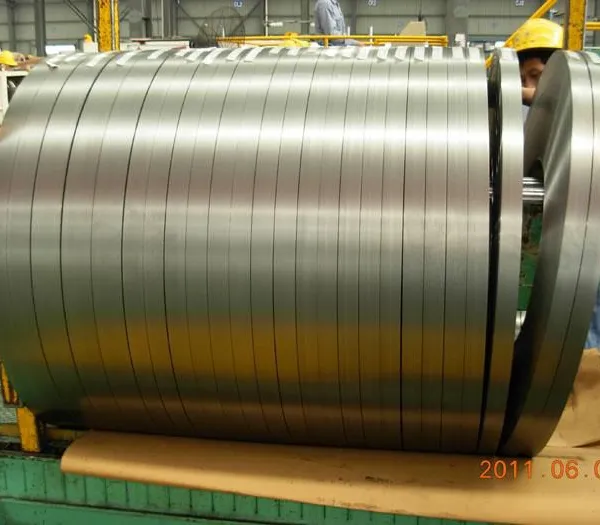
Cold Rolled Pure Iron Slit Coil DT4C Grade Ultra Low Carbon ≤0.004% for Magnetic ComponentsNegotiableMOQ: 1 Ton
-
Low Iron Loss Electromagnetic Pure Iron Hot-Rolled Coil DT4C for Transformer CoresNegotiableMOQ: 1 Ton
-
Soft Magnetic Pure Iron Sheet With Minimum Iron Loss for High-Efficiency MotorsNegotiableMOQ: 1 Ton
-
Electromagnetic Pure Iron Cold Rolled Coil DT4C for High Magnetic Permeability ApplicationsNegotiableMOQ: 1 Ton
-
Industrial Pure Iron Tube Superior Surface Quality Electromagnetic Pure Iron Tube for Welding and Plating ProcessesNegotiableMOQ: 1 Ton
-
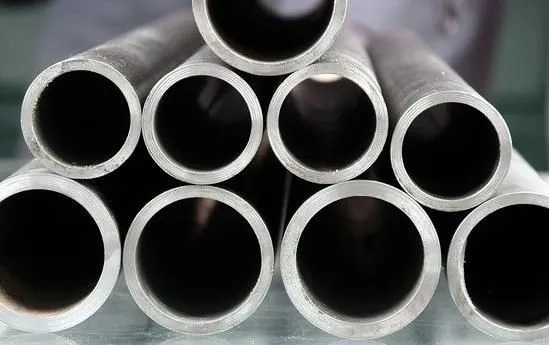
DT4 Seamless Pure Iron Tubing for High-Performance Electrical Equipment ApplicationsNegotiableMOQ: 1 Ton
-
DT4C Iron Wire Rod for Precision Magnetic Shielding ApplicationsNegotiableMOQ: 100 Kilograms
-
Industrial Pure Iron Fittings DT4 Pure Iron Seamless Tube With Low Hysteresis Loss for Electromagnetic SystemsNegotiableMOQ: 1 Ton
-
DT4C Cold Rolled Coil Slitting for Electrical Enclosure ManufacturingNegotiableMOQ: 1 Ton
-
Anti Rust Coated Pure Iron Square Bar Low Carbon Raw Material for Welding and Forging Magnetic PartsNegotiableMOQ: 100 Kilograms
-
DT4 Pure Iron Cold-Drawn Wire 0.5mm-6.0mm Diameter for Precision EngineeringNegotiableMOQ: 500 Kilograms