
 Business License

Eddy Current Loss: How to Minimize Energy Waste in Magnetic Cores
Chen Wei, a senior transformer engineer at a power equipment manufacturer in Shenzhen, spent three months chasing an efficiency problem that should not have existed. His team had designed a new distribution transformer to meet IE4 efficiency standards, yet bench testing revealed an unexpected 8% energy drain that no simulation had predicted. The culprit was not winding resistance, leakage flux, or poor connections. It was eddy current loss silently bleeding power from the magnetic core itself.
If you design, specify, or procure magnetic components for electrical systems, you have probably encountered this same invisible enemy. Eddy current loss robs efficiency, generates unwanted heat, and quietly inflates operating costs across the lifespan of transformers, motors, and inductors. You already know that core material selection matters. What you may not realize is how dramatically the right pure iron grade and core construction method can slash these parasitic losses.
In this guide, you will learn exactly what eddy current loss is, how it interacts with hysteresis loss to form total core loss, which material properties govern its severity, and five proven strategies to minimize it. We will also show you how to select the optimal pure iron grade for your specific application, from high-efficiency transformers to precision solenoids.
What Is Eddy Current Loss and Why It Drains Efficiency
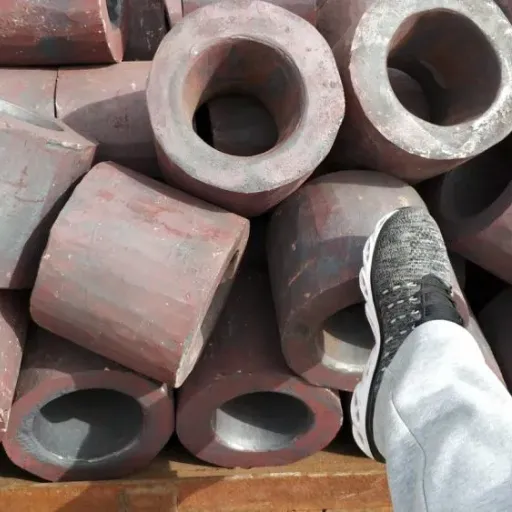
Eddy current loss is the energy dissipated as heat when circulating electrical currents are induced within a conductive magnetic core by a time-varying magnetic field. Whenever alternating current flows through a coil wrapped around a ferromagnetic core, the changing magnetic flux induces small loops of current inside the core material itself. These are eddy currents, and they flow perpendicular to the main magnetic field direction.
Because the core material possesses electrical resistance, these induced currents generate resistive heat. This heat represents pure energy waste. It does no useful work. It simply raises core temperature and demands additional cooling capacity. In large power transformers, unchecked eddy current loss can account for 30% to 50% of total core loss, with the remainder coming primarily from hysteresis loss.
The total core loss in any magnetic component is the sum of two distinct phenomena:
Hysteresis loss: Energy consumed during the cyclic magnetization and demagnetization of the core material, proportional to the area of the B-H hysteresis loop.
Eddy current loss: Energy dissipated by resistive heating from induced circulating currents within the core, proportional to the square of the frequency and the square of the peak flux density.
Both losses matter. Both depend heavily on material choice. But eddy current loss scales particularly aggressively with operating frequency, which makes it the dominant concern in modern high-frequency power electronics, switched-mode power supplies, and variable-frequency motor drives.
The financial impact compounds over time. A transformer core wasting an extra 200 watts to eddy current loss will consume an additional 1,752 kilowatt-hours annually. At industrial electricity rates, that single core can cost hundreds of dollars per year in wasted energy. Multiply that across a fleet of distribution transformers or motor drives, and the numbers become impossible to ignore.
Want to see how core material selection directly impacts transformer performance? Read our detailed guide on electrical pure iron applications in transformers, motors, and power systems to understand why grade selection matters from day one.
How Eddy Current Loss Manifests in Transformers and Motors
Eddy current loss behaves differently depending on component type, core geometry, and operating conditions. Understanding these variations helps engineers target the right mitigation strategy for each application.
Transformer Cores
In power transformers, the core experiences a sinusoidal magnetic flux at line frequency, typically 50 Hz or 60 Hz. At these frequencies, eddy current loss remains significant because core cross-sectional areas are large and flux densities often operate near saturation. Laminated silicon steel and pure iron cores are standard, but the lamination thickness, insulation quality between laminations, and material resistivity all determine how severely eddy currents develop.
A transformer core built from thick, poorly insulated laminations will exhibit high eddy current loss because the circulating currents can flow across larger uninterrupted conductive paths. Modern high-efficiency transformers therefore use thinner laminations, often 0.23 mm to 0.30 mm, with high-resistivity interlaminar insulation. For specialized applications requiring ultra-low loss, cold-rolled pure iron sheets with controlled grain orientation offer superior performance.
Electric Motors and Generators
In rotating machines, eddy current loss appears in both the stator and rotor cores. The stator core experiences the same time-varying flux as a transformer, while the rotor may encounter additional eddy currents induced by relative motion between the rotor and the stator field. Slot harmonics and PWM inverter switching in variable-frequency drives introduce high-frequency components that dramatically amplify eddy current loss.
Motor designers combat this by using thin laminations, optimizing slot geometry, and selecting core materials with high permeability and adequate resistivity. For high-efficiency motors, especially in electric vehicle applications, the choice of soft magnetic pure iron can mean the difference between meeting efficiency targets and falling short.
Inductors and Solenoids
In inductors and solenoid valves, eddy current loss can distort the current waveform, reduce effective inductance, and generate localized hot spots. Powder cores and ferrites dominate high-frequency inductor design because their distributed air gaps dramatically increase effective resistivity. However, for applications requiring high saturation flux density, such as high-power inductors or electromagnetic actuators, solid or laminated pure iron cores remain necessary. In these cases, minimizing eddy current loss requires careful attention to core construction and material grade.
Magnetic Shields
Even in passive magnetic shielding applications, eddy current loss can become relevant when the shielded field varies with time. A conductive shield material will develop eddy currents that oppose the changing field, which is the principle behind eddy current shielding. However, if the shield is part of a larger assembly with tight thermal constraints, the heat generated by these currents must be managed. Choosing a shield material with appropriate conductivity and thickness balances shielding effectiveness against thermal considerations.
The Physics Behind Eddy Current Loss: What Engineers Need to Know
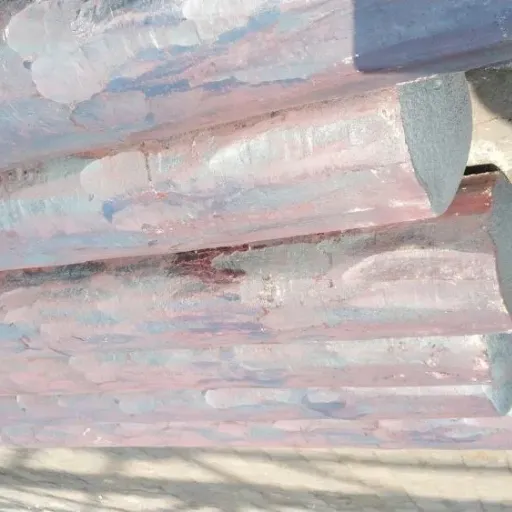
The classical formula for eddy current loss in a thin sheet or lamination under sinusoidal excitation provides the engineering foundation for loss mitigation. For a single lamination of thickness t, resistivity ρ, subjected to peak flux density Bm at frequency f, the eddy current loss per unit volume is approximately:
Pe = (π² * f² * Bm² * t²) / (6ρ)
This equation reveals four critical levers for controlling eddy current loss:
1. Frequency dominates quadratically. Doubling the operating frequency quadruples eddy current loss if all other parameters remain constant. This is why high-frequency magnetic design is so challenging.
2. Flux density also scales with the square. Operating closer to saturation may be necessary for compact designs, but every increase in peak flux density extracts a heavy penalty in eddy current loss.
3. Lamination thickness matters enormously. Because loss scales with the square of thickness, halving lamination thickness reduces eddy current loss by a factor of four. This explains the relentless industry trend toward thinner laminations.
4. Material resistivity is inversely proportional to loss. Higher resistivity suppresses eddy currents by making it harder for them to flow. Silicon steel contains roughly 3% silicon precisely to increase resistivity without excessively degrading magnetic permeability. Pure iron achieves low eddy current loss through a different mechanism: ultra-high purity and controlled processing that optimizes the balance between resistivity and permeability.
It is worth noting that the classical formula assumes uniform flux distribution, which breaks down at high frequencies or in thick materials due to the skin effect. In reality, flux density is not uniform across the lamination thickness. Eddy currents crowd the flux toward the surface, reducing effective core utilization and further complicating loss prediction. Advanced finite element analysis tools account for this behavior, but the fundamental design principles remain unchanged: thinner laminations, lower flux density, and optimized material properties.
Material Properties That Influence Eddy Current Loss
Not all magnetic materials handle eddy current loss the same way. The interplay between chemical composition, microstructure, and processing history determines how severely a given core material will suffer from parasitic currents.
Electrical Resistivity
Resistivity is the first line of defense against eddy current loss. Silicon steel achieves high resistivity through silicon alloying. Ferrites achieve even higher effective resistivity through their ceramic, non-metallic structure. Pure iron, by definition, has lower bulk resistivity than silicon steel. However, high-purity electromagnetic grades such as DT4C achieve competitive performance through extremely low impurity levels and controlled grain structure that minimizes internal conductive pathways.
Magnetic Permeability
High permeability allows a material to reach a given flux density at lower magnetizing force. This indirectly reduces eddy current loss because designs can achieve target inductance or transformation ratios with fewer winding turns or smaller core cross-sections. Pure iron, particularly ultra-low carbon grades, offers some of the highest permeability values available in metallic soft magnetic materials. This is why magnetic materials for electrical engineering increasingly favor high-grade pure iron for precision applications.
Thickness and Geometry
For laminated cores, physical dimensions matter more than bulk material properties. The thinnest practical lamination limits eddy current path length. Modern cold-rolling mills can produce pure iron sheets down to 0.3 mm thickness, suitable for high-efficiency transformer and relay applications. For solid cores used in DC or low-frequency applications, geometry optimization through slots, cuts, or composite construction can interrupt eddy current paths.
Surface Insulation
Even the best lamination material will underperform if adjacent laminations short together electrically. The thin oxide layer or organic coating between laminations must withstand manufacturing handling, core compression, and thermal cycling. Premium pure iron suppliers provide laminations with consistent, durable interlaminar insulation to maintain design resistivity across the core assembly.
Purity and Impurity Control
Trace impurities such as carbon, sulfur, and nitrogen degrade magnetic properties in subtle but measurable ways. Carbon content above 0.01% can pin magnetic domain walls, increasing hysteresis loss and indirectly affecting eddy current behavior by altering the flux waveform. DT4C electromagnetic pure iron maintains carbon content at or below 0.004%, ensuring that domain wall motion remains free and flux waveforms stay clean. This purity level is essential for applications where both hysteresis and eddy current loss must be simultaneously minimized.
4 Proven Methods to Reduce Eddy Current Loss in Pure Iron Cores
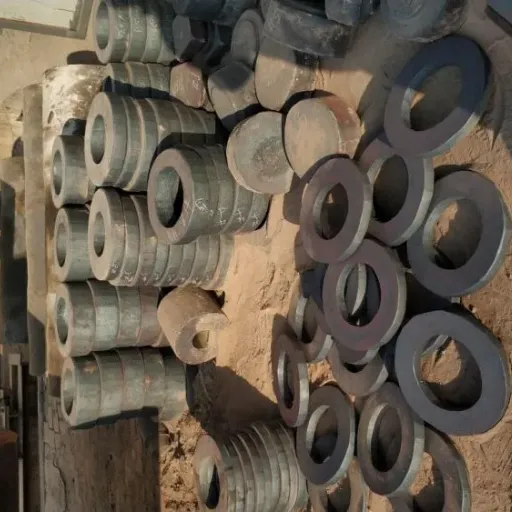
Reducing eddy current loss is not theoretical. It is an engineering discipline with established techniques that manufacturers apply every day. Here are four methods that deliver measurable results.
1. Use Thinner Laminations
The most direct approach is to reduce lamination thickness. Cutting thickness from 0.50 mm to 0.30 mm reduces theoretical eddy current loss by approximately 64%. Modern high-efficiency transformers and precision motors routinely use 0.23 mm to 0.30 mm laminations. The trade-off is increased manufacturing cost, more laminations to handle, and greater sensitivity to burrs or insulation damage. For applications where every watt counts, such as distribution transformers operating under efficiency regulations, the investment in thinner laminations pays back quickly through reduced operating losses.
2. Select Ultra-Low Carbon Pure Iron Grades
Material grade selection directly constrains the minimum achievable core loss. DT4C electromagnetic pure iron, with its ultra-low carbon content and controlled grain orientation, offers a superior combination of high permeability and stable loss characteristics. Unlike standard steel grades that may contain variable carbon levels and unpredictable magnetic behavior, certified DT4C delivers consistent performance batch after batch. This consistency allows design engineers to operate closer to theoretical limits without adding excessive safety margins.
For applications requiring even higher density or specialized properties, DT8 and DT9 grades provide additional options. These grades address specific magnetic and mechanical requirements while maintaining the ultra-low impurity levels necessary for predictable core loss performance.
3. Optimize Core Assembly and Insulation
Even premium laminations lose effectiveness if the core assembly process compromises interlaminar insulation. Burrs from stamping or shearing operations can pierce insulation coatings and create microscopic short circuits between adjacent laminations. Proper de-burring, careful handling, and controlled core clamping pressure preserve the electrical isolation that suppresses eddy currents.
Core annealing after stamping can also help. The stress relief annealing process restores magnetic properties degraded by mechanical cutting and forming. For precision applications, annealed pure iron laminations recover permeability and reduce both hysteresis and eddy current components of total core loss.
4. Consider Alternative Core Construction for High-Frequency Use
At frequencies above several hundred hertz, even the thinnest metallic laminations struggle to contain eddy current loss. In these regimes, designers sometimes turn to powder metallurgy cores or amorphous materials. However, for applications where high saturation flux density is non-negotiable, such as high-power inductors or pulsed power systems, segmented or slotted pure iron cores offer a middle path. By physically interrupting the conductive path with insulating gaps, segmented construction suppresses eddy currents while preserving the high saturation capability of pure iron.
Ready to specify the right pure iron grade for your core design? Contact our engineering team to discuss your magnetic requirements, operating frequency, and loss targets. We provide custom-cut laminations, slit coils, and precision-processed pure iron components engineered to minimize eddy current loss from the start.
Selecting the Right Pure Iron Grade for Low Eddy Current Applications
Choosing the correct pure iron grade requires matching material properties to application demands. Not every transformer needs DT4C. Not every solenoid benefits from the thinnest available lamination. The optimal specification balances performance requirements, manufacturing constraints, and cost.
For Distribution and Power Transformers
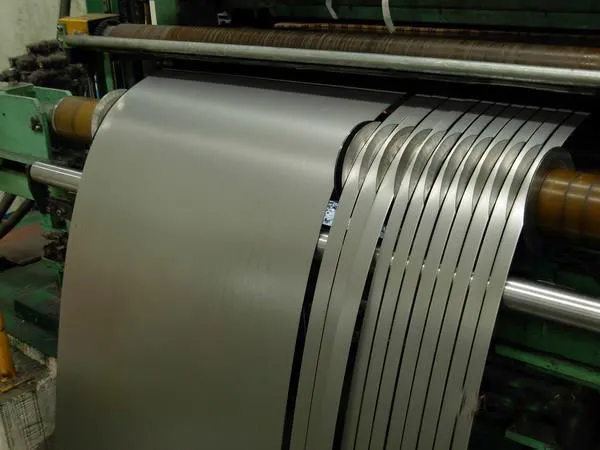
Large power transformers operating at 50 Hz or 60 Hz prioritize low total core loss above almost everything else. Cold-rolled pure iron sheets and precision-slit coils in DT4C grade provide the ultra-low carbon content and consistent grain structure needed for efficient operation. Custom slitting to exact core window dimensions reduces scrap and ensures uniform lamination stacking. When every kilowatt-hour of no-load loss translates directly into operating cost, specifying the right grade and processing method is a financial decision, not merely a technical one.
For High-Frequency Inductors and Filter Chokes
Inductors operating at switching frequencies of 10 kHz and above face eddy current loss levels orders of magnitude higher than line-frequency equipment. In these applications, solid pure iron cores are rarely suitable unless segmented or powdered. However, for frequencies in the 400 Hz to 2 kHz range, such as aircraft power systems or medium-frequency heating equipment, thin-gauge pure iron laminations remain viable. The key is precise thickness selection, often 0.20 mm or below, combined with high-purity material to minimize additional hysteresis losses.
for Automotive and EV Motor Cores
Electric vehicle motors operate across wide speed ranges using variable-frequency drives. The fundamental frequency varies from near DC at standstill to hundreds of hertz at maximum speed. PWM switching introduces harmonic frequencies that can excite significant eddy current loss in stator teeth. High-efficiency EV motors increasingly use thin laminations, sometimes 0.20 mm or thinner, with advanced insulation coatings. Pure iron grades with guaranteed low core loss across broad frequency ranges help motor manufacturers meet stringent efficiency and thermal targets.
for Relay and Solenoid Manufacturers
Relays and solenoids present a special case. Many operate with DC excitation, where time-varying flux is minimal and eddy current loss is negligible during steady state. However, the pull-in and drop-out transients involve rapid flux changes that can generate significant eddy currents. These currents delay magnetic response, affect switching speed, and produce contact bounce. For high-speed relays, pure iron armatures with optimized geometry and material grade ensure rapid flux establishment and clean switching characteristics.
The Procurement Perspective
From a procurement standpoint, eddy current loss is invisible at the moment of purchase. You cannot see it in a material certificate. You measure it months or years later through higher electricity bills and thermal management challenges. This is why partnering with a supplier who understands core loss mechanisms matters. A supplier who can provide certified material grades, custom processing, and technical guidance helps you avoid the hidden costs of suboptimal material selection.
We maintain deep inventory of DT4C, DT8, and DT9 pure iron grades in multiple forms, including cold-rolled coils and precision-slit sheets suitable for laminations down to 0.3 mm. Our in-house slitting and cutting services deliver ready-to-stack laminations cut to your exact specifications, eliminating the scrap and dimensional variability that contribute to assembly-level core loss.
Conclusion
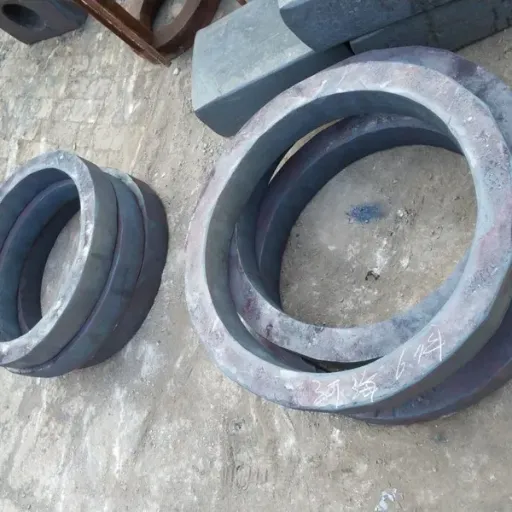
Eddy current loss is one of the most persistent and expensive inefficiencies in electromagnetic design. It hides inside transformer cores, motor stators, and inductor assemblies, converting valuable electrical energy into waste heat that must then be removed through cooling systems. The good news is that eddy current loss is not a mystery. Its governing physics are well understood, its controlling variables are identifiable, and the engineering methods to suppress it are proven.
The key takeaways are clear:
Eddy current loss scales with the square of both frequency and flux density, making it especially severe in high-frequency and high-power-density applications.
Total core loss combines eddy current loss and hysteresis loss, and both depend critically on material selection and core construction.
Thinner laminations, higher material resistivity, and intact interlaminar insulation are the primary mechanical defenses against eddy current loss.
Ultra-low carbon pure iron grades such as DT4C provide the magnetic purity and consistent domain structure needed for predictable, low-loss performance.
Custom processing, including precision slitting and cut-to-length services, ensures that material properties translate into real-world assembly performance without degradation from poor dimensional control.
If you are designing or sourcing magnetic cores for transformers, motors, relays, or inductors, the material decisions you make today will determine efficiency and thermal performance for the entire product lifecycle. Do not leave eddy current loss to chance.
Our engineering team can recommend the optimal DT grade, lamination thickness, and processing method for your specific application. Whether you need prototype quantities for R&D testing or bulk supply for production scale, we deliver certified electromagnetic pure iron from our Taiyuan facility with the consistency your designs demand.
Recently Posted
-
Shanxi Jurun Technology: Your Electromagnetic Pure Iron Partner from Taiyuan, China's Pure Iron Prod
August 14, 2026When an international buyer searches for electromagnetic pure iron, they are not just looking for a material. They are looking for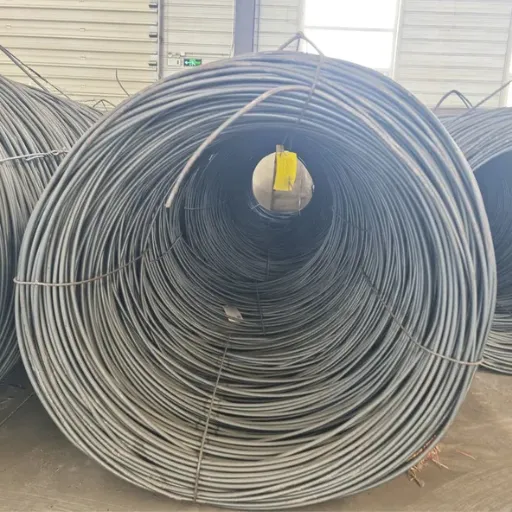 Read More
 -
Cold Drawing Process for Electromagnetic Pure Iron Wire: How Wire Rod Becomes Precision Cold-Drawn W
August 13, 2026Not long ago, a solenoid valve manufacturer in Italy received a shipment of 5.5 mm electromagnetic pure iron cold-drawn wire inten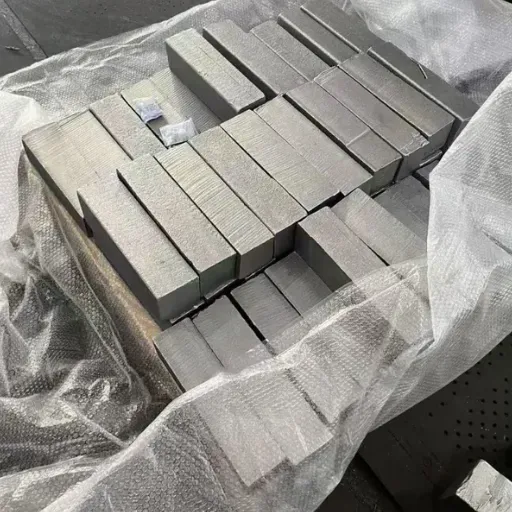 Read More
 -
How to Choose a Food Vacuum Sealer Supplier in China: 8 Evaluation Criteria
August 13, 2026An e-commerce brand owner in the UK contacted us some time ago after a supplier relationship fell apart. They had sourced roughly Read More
 -
Electromagnetic Pure Iron for Relay Manufacturing: Material Requirements, Grade Selection, and Case
August 13, 2026Some time ago, a relay production line in Zhejiang province began experiencing a puzzling failure pattern. Roughly 3 out of every
Read More

Contact Us
Recommended Products
-
 Seamless Tube With Good Cold Electrical Pure Iron Fittings Hot Workability for Forming Fittings and ConduitsNegotiableMOQ: 1 Ton
 -
Electromagnetic Pure Iron Forging for Automotive Sensor ManufacturingNegotiableMOQ: 100 Kilograms
-
Precision Cut Pure Iron Square Bar High Saturation Induction Raw Material for Generator and RotorNegotiableMOQ: 100 Kilograms
-
DT4C Super Grade Electromagnetic Pure Iron Bright Bar With Bundle Weight 30-100kg for Easy TransportationNegotiableMOQ: 1 Ton
-
DT4C Electromagnetic Pure Iron Cold-Drawn Wire 0.5mm-6.0mm Diameter for TransformersNegotiableMOQ: 100 Kilograms
-
Industrial Pure Iron Bar for Electromagnetic Relay and Sensor ProductionNegotiableMOQ: 1 Ton
-
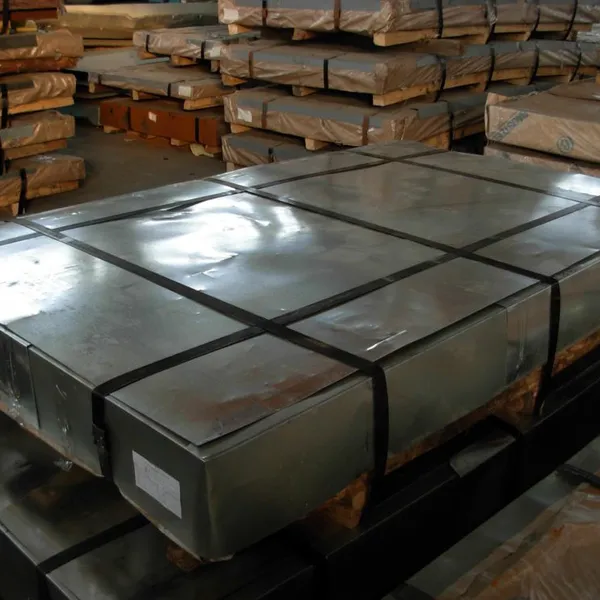
Electromagnetic Pure Iron Thin Sheet 0.3mm-0.8mm for Solenoid and Relay ManufacturingNegotiableMOQ: 500 Kilograms
-
Electrical Pure Iron Hot-Rolled Coil for Magnetic Components With Low Iron LossNegotiableMOQ: 1 Ton
-
Low Carbon DT4C Pure Iron Round Bar With 99.8% Fe Content for Electrical ApplicationsNegotiableMOQ: 1 Ton
-
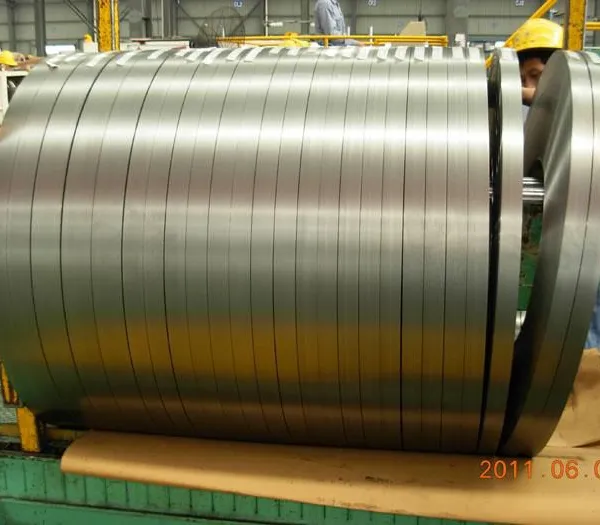
Cold Rolled Pure Iron Slit Coil DT4C Grade Ultra Low Carbon ≤0.004% for Magnetic ComponentsNegotiableMOQ: 1 Ton
-
Low Iron Loss Electromagnetic Pure Iron Hot-Rolled Coil DT4C for Transformer CoresNegotiableMOQ: 1 Ton
-
Soft Magnetic Pure Iron Sheet With Minimum Iron Loss for High-Efficiency MotorsNegotiableMOQ: 1 Ton
-
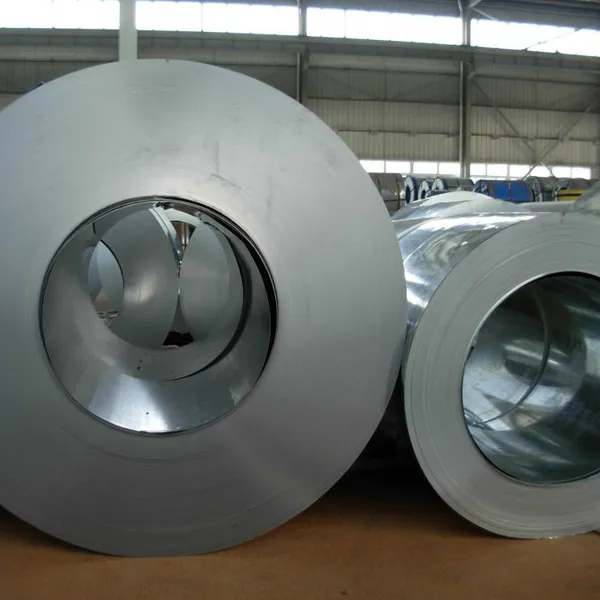
Electromagnetic Pure Iron Cold Rolled Coil DT4C for High Magnetic Permeability ApplicationsNegotiableMOQ: 1 Ton
-
Industrial Pure Iron Tube Superior Surface Quality Electromagnetic Pure Iron Tube for Welding and Plating ProcessesNegotiableMOQ: 1 Ton
-
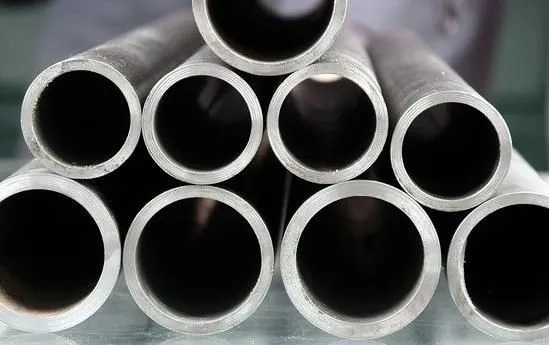
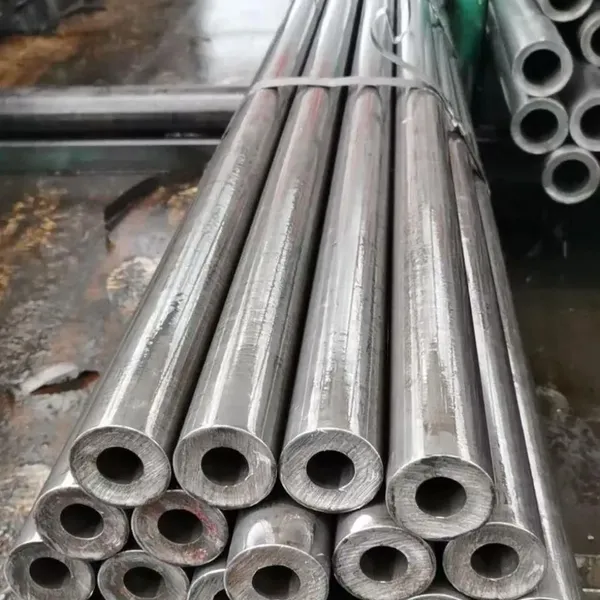
DT4 Seamless Pure Iron Tubing for High-Performance Electrical Equipment ApplicationsNegotiableMOQ: 1 Ton
-
DT4C Iron Wire Rod for Precision Magnetic Shielding ApplicationsNegotiableMOQ: 100 Kilograms
-
Industrial Pure Iron Fittings DT4 Pure Iron Seamless Tube With Low Hysteresis Loss for Electromagnetic SystemsNegotiableMOQ: 1 Ton
-
DT4C Cold Rolled Coil Slitting for Electrical Enclosure ManufacturingNegotiableMOQ: 1 Ton
-
Anti Rust Coated Pure Iron Square Bar Low Carbon Raw Material for Welding and Forging Magnetic PartsNegotiableMOQ: 100 Kilograms
-
DT4 Pure Iron Cold-Drawn Wire 0.5mm-6.0mm Diameter for Precision EngineeringNegotiableMOQ: 500 Kilograms