
 Business License

Soft Magnetic Materials: A Complete Guide to Selection and Industrial Applications
When Chen Wei reviewed his factory's quarterly energy report in March 2026, one number stopped him cold: transformer core losses had jumped 18% in just six months. His team had switched to a lower-grade core material to cut costs. The savings on raw materials? About $12,000. The extra energy costs? Nearly $40,000.
Chen's story is not unique. Manufacturers across the electrical equipment industry constantly face the same trade-off. The wrong choice in soft magnetic materials can turn a cost-cutting decision into an expensive mistake.
You already know that magnetic performance matters. What you need is a clear framework for choosing materials that deliver both efficiency and reliability without blowing your budget. This guide breaks down the essential properties, types, and real-world applications of soft magnetic materials so you can make informed decisions for transformers, motors, sensors, and beyond.
You will learn what separates high-performance soft magnetic materials from standard grades, how to match material properties to your specific application, and why processing methods can matter as much as the base alloy. We will also look at where the industry is headed as electric vehicles and renewable energy drive new demand.
What Makes Soft Magnetic Materials Essential
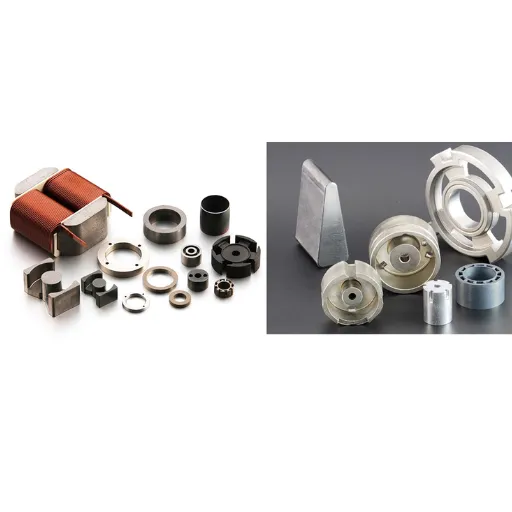
Soft magnetic materials form the invisible backbone of modern electrical infrastructure. Unlike hard magnetic materials, which retain magnetization and serve as permanent magnets, soft magnetic materials magnetize easily under an external field and return to a neutral state when the field disappears. This reversible behavior makes them indispensable anywhere alternating magnetic fields operate.
The global soft magnetic materials market reflects this dependency. Industry analysts project the market will exceed $45 billion by 2028, driven largely by power generation, electric vehicle motors, and consumer electronics. Growth rates in the EV sector alone are climbing above 15% annually as manufacturers race to improve motor efficiency and reduce weight.
Want to see which pure iron grades deliver the best magnetic performance for your application? Explore our complete range of electromagnetic pure iron products.
What makes these materials so valuable is their ability to minimize energy loss during repeated magnetization cycles. In a transformer core, the material switches magnetic polarity 100 or 120 times per second depending on grid frequency. Every cycle generates a small amount of heat through hysteresis loss and eddy current loss. Over millions of cycles, even tiny inefficiencies compound into significant energy waste and thermal management challenges.
Key Properties That Define Performance
Selecting the right soft magnetic material starts with understanding the core properties that govern behavior in real devices. Engineers and procurement teams who grasp these fundamentals make better choices and avoid the costly surprises Chen Wei experienced.
Magnetic Permeability
Magnetic permeability measures how readily a material responds to an applied magnetic field. High permeability means the material reaches strong magnetization with minimal applied force. This property directly impacts how much copper winding a transformer or inductor requires. Higher permeability core materials reduce the number of wire turns needed, which lowers copper costs, resistance losses, and overall device size.
Electromagnetic pure iron grades like DT4C achieve some of the highest permeability values among metallic soft magnetic materials. This characteristic explains why pure iron remains the material of choice for high-sensitivity relays, precision sensors, and specialized transformer applications where every fraction of efficiency counts.
Coercivity and Hysteresis Loss
Coercivity represents the reverse magnetic field strength required to drive a material back to zero magnetization after saturation. Low coercivity means the material changes magnetic state easily. Soft magnetic materials by definition exhibit low coercivity, but the exact value varies significantly between grades and processing conditions.
Hysteresis loss occurs because magnetization and demagnetization follow slightly different paths, creating a loop on the B-H curve. The area inside that loop equals energy lost as heat per cycle. Materials with narrower loops waste less energy. Annealing processes, grain orientation, and impurity levels all influence hysteresis behavior.
Saturation Induction
Saturation induction defines the maximum magnetic flux density a material can carry. Once saturated, additional applied field produces minimal increase in flux. Transformer designers need adequate saturation induction to prevent core saturation under peak load conditions. Pure iron and iron-cobalt alloys offer the highest saturation levels among commercial soft magnetic materials, reaching above 2.0 Tesla compared to roughly 1.9 Tesla for conventional silicon steel.
Electrical Resistivity
Electrical resistivity matters because alternating magnetic fields induce circulating currents within the core material itself. Higher resistivity suppresses these eddy currents and their associated energy losses. Silicon steel achieves higher resistivity than pure iron through silicon additions, which is why power transformers operating at line frequency typically use silicon steel rather than unalloyed iron.
Types of Soft Magnetic Materials
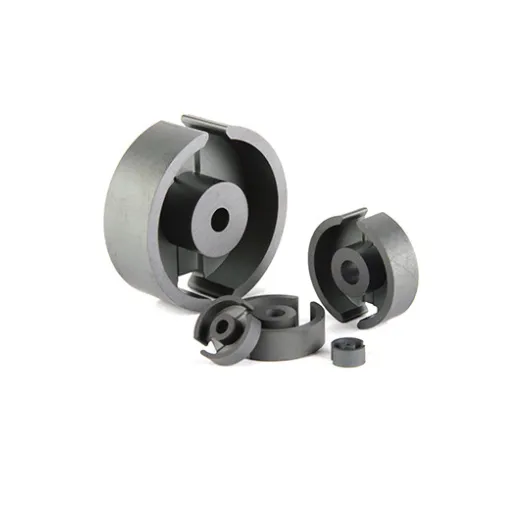
The soft magnetic materials family includes several distinct categories, each optimized for specific applications, frequency ranges, and cost targets. Understanding where each type excels helps narrow the selection field quickly.
Iron and Low-Carbon Steels
Pure iron and ultra-low carbon steels represent the foundational soft magnetic materials. With carbon content at or below 0.004%, grades like DT4C electromagnetic pure iron deliver exceptional magnetic permeability and low coercivity. These materials suit DC applications, low-frequency transformers, and high-sensitivity electromagnetic devices where maximum permeability outweighs the need for high resistivity.
Industrial pure iron also serves as the starting material for powder metallurgy processes that produce soft magnetic composites. The high purity ensures consistent pressing and sintering behavior while maintaining favorable magnetic characteristics in the finished part.
Silicon Electrical Steel
Silicon steel dominates the power transformer and motor industries. Adding 1% to 4% silicon increases electrical resistivity significantly, which suppresses eddy current losses at 50 Hz and 60 Hz operating frequencies. Grain-oriented silicon steel, where crystal grains align during manufacturing, achieves superior permeability and lower losses in the rolling direction. This material forms the core laminations in nearly every large power transformer worldwide.
Non-oriented silicon steel serves rotating machinery like motors and generators where magnetic flux travels in multiple directions. The manufacturing process costs less than grain-oriented steel, making it economical for high-volume automotive and industrial motor production.
Nickel-Iron Alloys
Nickel-iron alloys, commonly called Permalloy, offer the highest permeability of any metallic soft magnetic material. These alloys work in specialized applications including magnetic shielding, precision current transformers, and sensitive inductive components. The trade-off is cost. Nickel content makes these alloys significantly more expensive than silicon steel or pure iron, limiting their use to applications where performance justifies the premium.
Soft Ferrites
Soft ferrites are ceramic materials based on iron oxide combined with manganese, zinc, or nickel. Their high resistivity makes them essentially immune to eddy current losses, which is why they dominate high-frequency applications above roughly 10 kHz. Switching power supplies, radio frequency inductors, and electromagnetic interference filters all rely on ferrite cores. The downside is lower saturation induction and mechanical brittleness compared to metallic materials.
Amorphous and Nanocrystalline Alloys
Amorphous metal alloys, produced by rapid solidification, lack crystalline structure and exhibit extremely low hysteresis loss. Transformer cores built from amorphous ribbon can reduce no-load losses by 60% to 70% compared to conventional silicon steel. The material costs more and requires different core construction methods, but the lifetime energy savings often justify the investment in distribution transformers.
Nanocrystalline alloys combine ultrafine crystal structures with soft magnetic behavior. These materials bridge the gap between metallic alloys and ferrites, offering good high-frequency performance with higher saturation than ferrites. They find use in high-frequency transformers, common-mode chokes, and advanced inductive components.
Industrial Applications of Soft Magnetic Materials
Soft magnetic materials touch nearly every sector of modern industry. The choice of material and grade depends on operating frequency, magnetic flux levels, environmental conditions, and cost constraints.
Power Transformers and Distribution Equipment
Power transformers represent the largest single application for soft magnetic materials by volume. Utility-grade transformers operate at line frequency with high flux densities, making grain-oriented silicon steel the default choice. The material's low core loss directly translates to higher efficiency and lower operating temperatures over decades of service life.
For specialty transformers requiring extreme permeability or precise magnetic behavior, electromagnetic pure iron provides advantages that silicon steel cannot match. Instrument transformers, audio transformers, and certain measurement devices rely on pure iron cores to achieve the required accuracy and linearity.
Electric Motors and Generators
The electrification of transportation has thrust soft magnetic materials into the automotive spotlight. EV motors require high-efficiency core materials to maximize driving range while minimizing motor weight and cost. Non-oriented silicon steel remains the workhorse material for most EV traction motors, but advanced grades and processing methods continue to push performance boundaries.
Ready to test the difference? Request a custom quote for DT4C pure iron specifications tailored to your motor or transformer core requirements, no obligation required.
Beyond EVs, industrial motors, household appliances, and HVAC systems consume enormous quantities of non-oriented silicon steel. Efficiency regulations in major markets increasingly demand higher-grade materials to meet minimum performance standards.
Electromagnetic Relays and Solenoids
Relays and solenoids operate through electromagnetic actuation, making soft magnetic materials central to their function. The plunger, yoke, and core components must deliver high force with rapid response and low residual magnetization. Pure iron and low-carbon steels excel here because their high permeability enables strong magnetic fields with modest coil currents.
In high-frequency switching applications, ferrite or powdered metal cores become necessary to control eddy current heating. Material selection for relays involves balancing magnetic force, switching speed, residual magnetism, and cost across the expected duty cycle.
Sensors and Magnetic Shielding
Position sensors, current sensors, and magnetic field detectors rely on soft magnetic materials to concentrate or shield magnetic flux. High-permeability nickel-iron alloys serve in precision current transformers and fluxgate magnetometers where sensitivity and linearity are paramount.
Magnetic shielding protects sensitive electronics from external fields. Permalloy and similar high-permeability alloys provide effective shielding at low field strengths, while pure iron works better for high-field attenuation in industrial environments.
Renewable Energy Systems
Wind turbine generators and solar inverter transformers create substantial demand for advanced soft magnetic materials. Offshore wind turbines in particular benefit from high-efficiency transformer cores because maintenance access is difficult and energy yield over a 25-year lifespan dwarfs initial material costs. Amorphous metal cores are gaining traction in this segment as operators prioritize long-term efficiency over upfront capital expenditure.
How to Select the Right Soft Magnetic Material
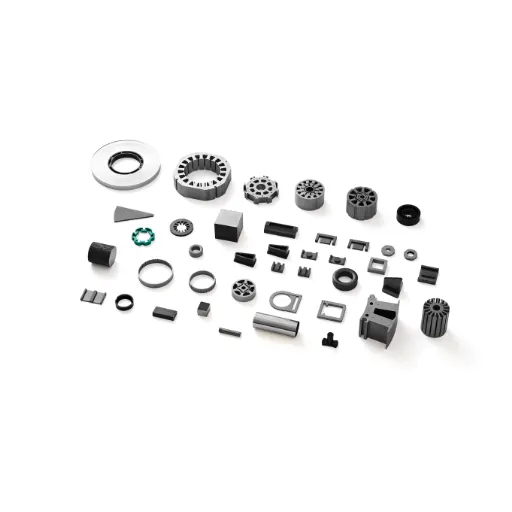
Choosing the optimal material requires systematic evaluation of application requirements against material capabilities. A structured approach prevents overspending on unnecessary performance while avoiding the efficiency penalties of underspecification.
Define Operating Frequency
Frequency is the primary filter that eliminates whole categories of materials. At DC and line frequency, metallic materials including pure iron and silicon steel perform well. As frequency rises into the kilohertz range, eddy current losses in metals grow rapidly and ferrites or thin-gauge alloys become necessary. Above 100 kHz, ferrites and specialized powder cores dominate the landscape.
Establish Flux Density Requirements
Peak flux density in the application determines whether saturation induction becomes a limiting factor. High-power transformers and motors need materials with robust saturation to avoid core saturation under peak load. Applications with lower flux requirements can prioritize permeability and loss characteristics over saturation levels.
Calculate Total Cost of Ownership
Purchase price per kilogram tells only part of the story. Energy losses over the equipment lifetime often exceed material cost by orders of magnitude.
When Sarah Okonkwo took over procurement at a mid-sized motor manufacturer in 2024, she shifted evaluation criteria from upfront material cost to total cost of ownership. Her first project compared standard silicon steel against a higher-grade alloy for a new motor line. The premium alloy added $8,000 to material costs annually but reduced energy losses enough to save $34,000 in electricity over the same period. The company adopted the higher-grade material across its product range within 18 months.
Total cost analysis should include material purchase, processing, assembly, energy losses over expected life, and any maintenance or replacement costs tied to thermal aging or degradation.
Consider Processing and Form Requirements
The raw material is only the beginning. How it reaches your production line matters enormously.
Stamping operations need material in coil or sheet form with consistent thickness and surface quality. CNC machining requires bars or forgings with uniform composition and freedom from hard spots that damage tooling. Custom components may need slitting, cutting, or surface preparation before they are ready for assembly.
Working with a supplier that offers in-house processing can eliminate third-party handling, reduce lead times, and improve dimensional consistency. For manufacturers feeding automated stamping lines, precision-slit coils delivered to exact width specifications minimize setup time and material scrap.
Evaluate Environmental and Mechanical Constraints
Operating temperature, vibration, and environmental exposure affect material behavior and longevity. High-temperature applications may require materials with stable magnetic properties across the service temperature range. Corrosive environments call for protective coatings or materials with inherent oxidation resistance.
Processing Methods That Enhance Magnetic Properties
Raw alloy composition sets the baseline, but processing determines whether a material reaches its full magnetic potential. Several key manufacturing steps influence the final performance in your application.
Cold Rolling and Annealing
Cold rolling reduces material thickness and introduces crystallographic texture that can enhance magnetic properties in preferred directions. Subsequent annealing relieves internal stresses, promotes grain growth, and establishes the final magnetic characteristics. The exact annealing atmosphere, temperature profile, and cooling rate are closely guarded process parameters that differentiate premium grades from commodity materials.
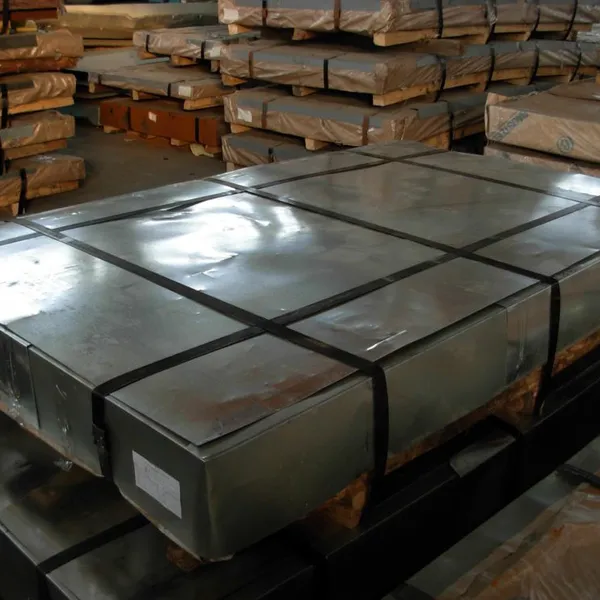
Electromagnetic pure iron cold-rolled sheets receive careful annealing to maximize permeability and minimize coercivity. The resulting material serves in precision applications where magnetic consistency is critical.
Slitting and Cutting
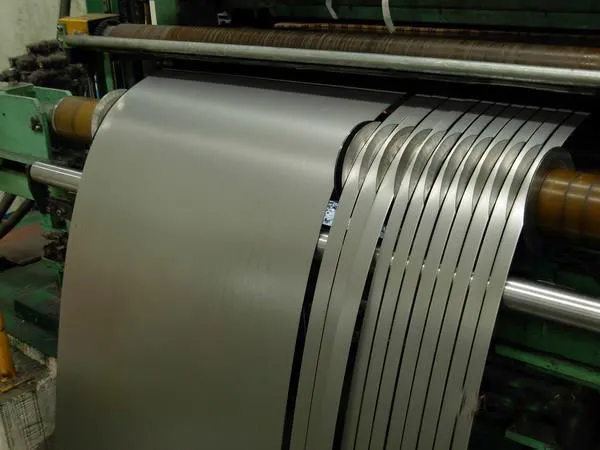
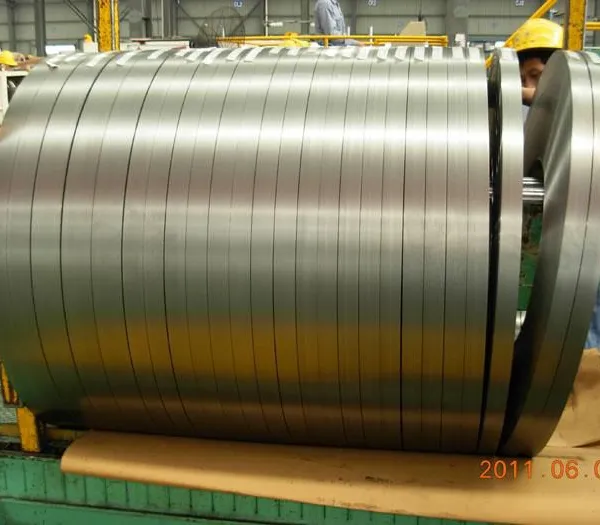
Coil slitting converts wide master coils into narrower strips matching specific stamping press requirements. Precision slitting maintains edge quality and width tolerance, which matters when material feeds automatically into high-speed presses. Poor edge condition causes jamming, increases die wear, and creates scrap.
Bar and tube cutting to exact lengths eliminates preparation work at your facility. Materials delivered ready for machining or assembly reduce handling, improve workflow, and lower overall production costs.
Surface Treatment
Anti-rust coatings protect pure iron during storage and transit without interfering with subsequent welding or plating operations. For components that will be plated or painted, surface preparation ensures coating adhesion and uniform finish. These seemingly minor details affect manufacturing yield and component reliability.
The Future of Soft Magnetic Materials
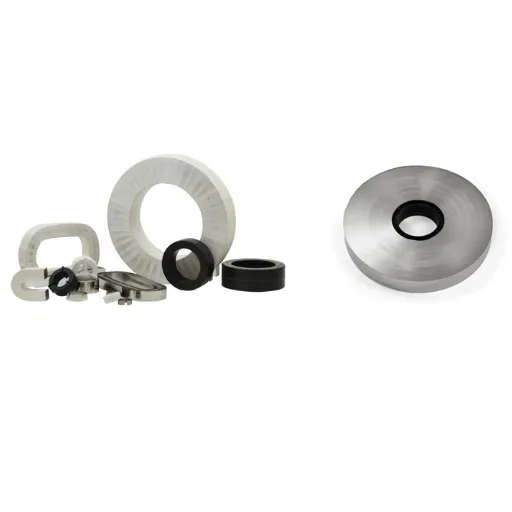
Several emerging trends are reshaping demand and driving innovation in soft magnetic materials. Manufacturers and procurement teams who anticipate these shifts can position their supply chains advantageously.
Electrification and EV Growth
Electric vehicle production continues to expand globally, and each EV contains substantially more soft magnetic material than a conventional internal combustion vehicle. Traction motors, onboard chargers, DC-DC converters, and auxiliary systems all require optimized core materials. The EV sector is pushing material suppliers to develop thinner-gauge silicon steel and advanced coatings that reduce losses while maintaining manufacturability.
High-Frequency Power Electronics
Wide bandgap semiconductors based on silicon carbide and gallium nitride enable power converters to operate at higher frequencies with lower losses. These devices need magnetic components that perform efficiently at frequencies where conventional materials struggle. Nanocrystalline alloys and advanced ferrites are capturing growing share in this evolving market.
Sustainability and Efficiency Regulations
Governments worldwide are tightening efficiency standards for transformers, motors, and appliances. The European Union's Ecodesign regulations and similar programs in Asia and North America effectively mandate higher-grade soft magnetic materials to meet minimum efficiency thresholds. These regulations create long-term demand shifts toward lower-loss materials regardless of short-term commodity price fluctuations.
Additive Manufacturing
Additive manufacturing of soft magnetic components is moving from research toward production. The ability to produce complex core geometries without stamping dies offers compelling advantages for prototyping and low-volume production. While not yet competitive for high-volume motor laminations, additive methods may transform magnetic component design for specialized applications.
Conclusion
Soft magnetic materials may operate invisibly inside transformers, motors, and sensors, but their impact on efficiency, cost, and reliability is unmistakable. Choosing the right material requires balancing magnetic properties against frequency, flux density, processing needs, and total cost of ownership. The cheapest option upfront rarely delivers the best value over a product's lifetime.
Key takeaways to apply in your next project:
Match material type to operating frequency: metals for low frequency, ferrites for high frequency
Evaluate total cost including energy losses, not just purchase price
Consider processing and form requirements early in the selection process
Specify grade and processing standards that your application actually needs
Build supplier relationships that offer both material quality and processing flexibility
When the R&D team at VoltEdge Motors needed to prototype a new generation of high-efficiency stators in early 2026, they tested four different soft magnetic materials before settling on a premium electromagnetic pure iron grade. The winning material did not have the lowest catalog price, but it delivered the magnetic consistency and low core loss their design demanded. Their prototype exceeded efficiency targets by 4%, and the design moved directly to pilot production without further material changes.
Request Your Custom Pure Iron Quote Today and get direct-source pricing on DT4C and other electromagnetic pure iron grades tailored to your transformer, motor, or sensor manufacturing needs. Our team in Taiyuan can precision-cut, slit, or process materials to your exact specifications before shipping.
Recently Posted
-
Shanxi Jurun Technology: Your Electromagnetic Pure Iron Partner from Taiyuan, China's Pure Iron Prod
August 14, 2026When an international buyer searches for electromagnetic pure iron, they are not just looking for a material. They are looking for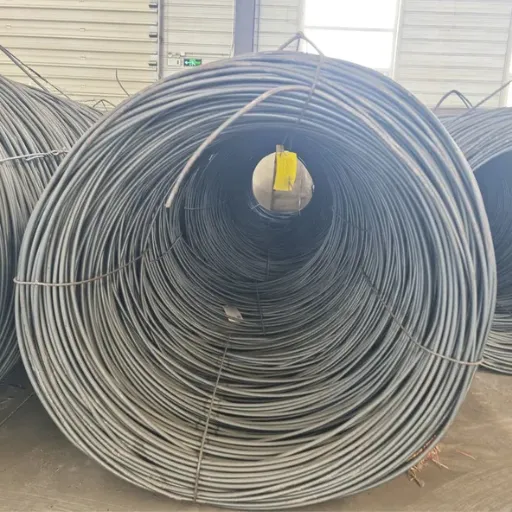 Read More
 -
Cold Drawing Process for Electromagnetic Pure Iron Wire: How Wire Rod Becomes Precision Cold-Drawn W
August 13, 2026Not long ago, a solenoid valve manufacturer in Italy received a shipment of 5.5 mm electromagnetic pure iron cold-drawn wire inten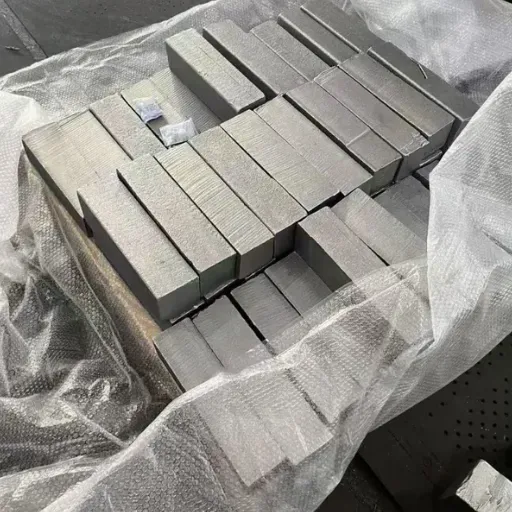 Read More
 -
How to Choose a Food Vacuum Sealer Supplier in China: 8 Evaluation Criteria
August 13, 2026An e-commerce brand owner in the UK contacted us some time ago after a supplier relationship fell apart. They had sourced roughly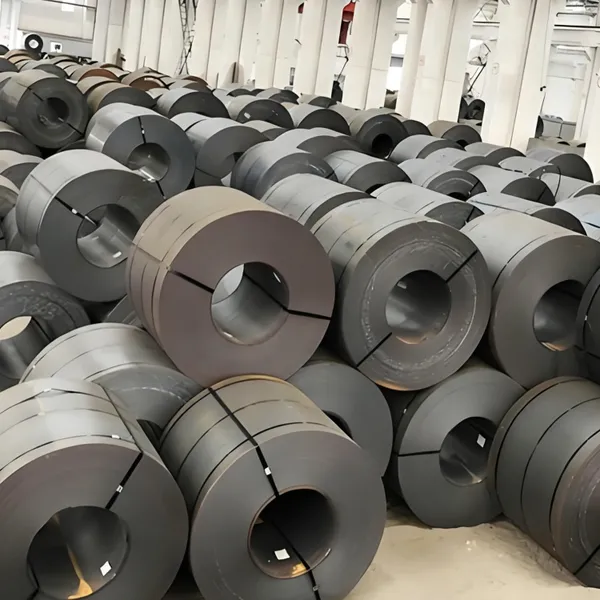 Read More
 -
Electromagnetic Pure Iron for Relay Manufacturing: Material Requirements, Grade Selection, and Case
August 13, 2026Some time ago, a relay production line in Zhejiang province began experiencing a puzzling failure pattern. Roughly 3 out of every
Read More

Contact Us
Recommended Products
-
 Seamless Tube With Good Cold Electrical Pure Iron Fittings Hot Workability for Forming Fittings and ConduitsNegotiableMOQ: 1 Ton
 -
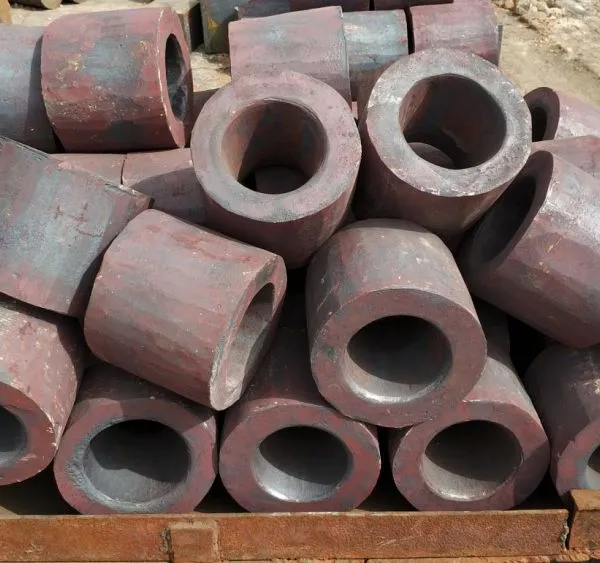
Electromagnetic Pure Iron Forging for Automotive Sensor ManufacturingNegotiableMOQ: 100 Kilograms
-
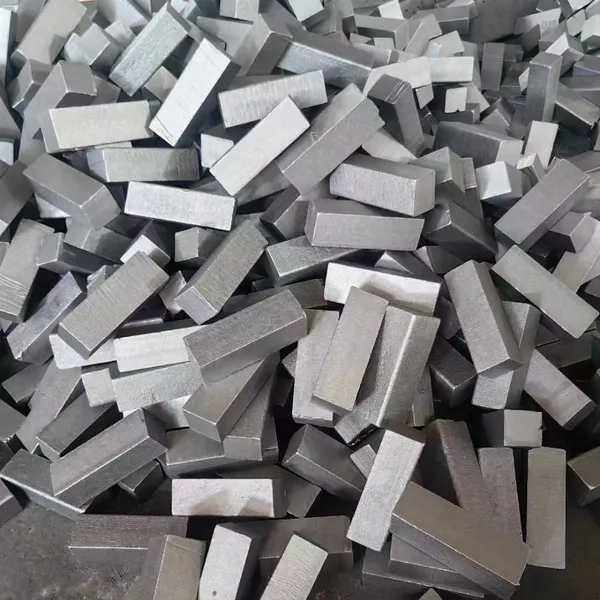
Precision Cut Pure Iron Square Bar High Saturation Induction Raw Material for Generator and RotorNegotiableMOQ: 100 Kilograms
-
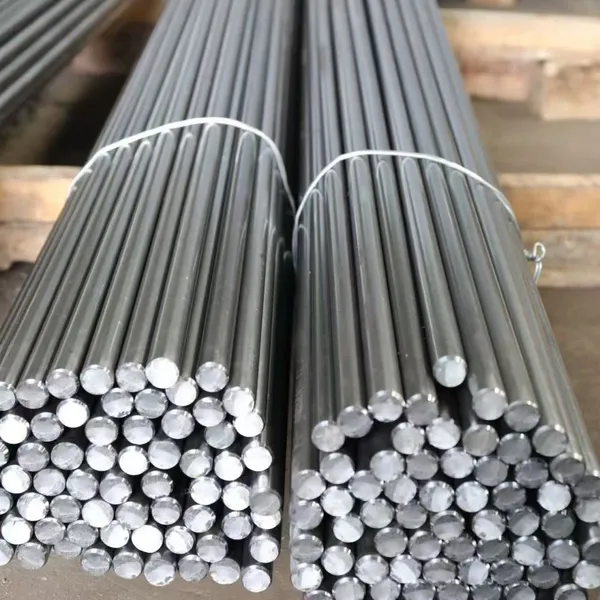
DT4C Super Grade Electromagnetic Pure Iron Bright Bar With Bundle Weight 30-100kg for Easy TransportationNegotiableMOQ: 1 Ton
-
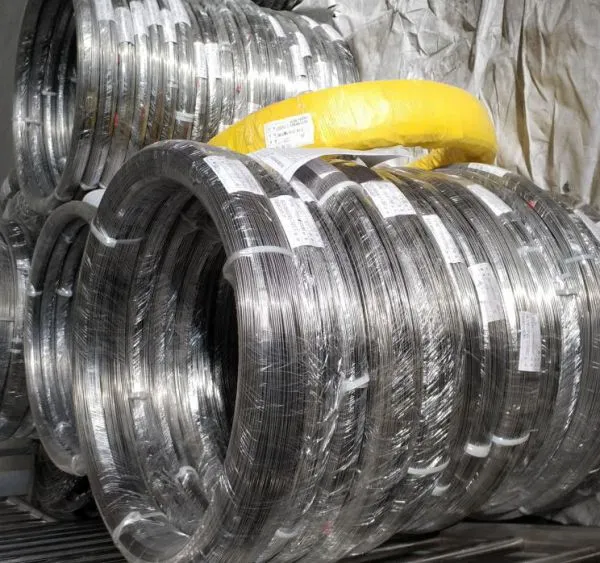
DT4C Electromagnetic Pure Iron Cold-Drawn Wire 0.5mm-6.0mm Diameter for TransformersNegotiableMOQ: 100 Kilograms
-
Industrial Pure Iron Bar for Electromagnetic Relay and Sensor ProductionNegotiableMOQ: 1 Ton
-
Electromagnetic Pure Iron Thin Sheet 0.3mm-0.8mm for Solenoid and Relay ManufacturingNegotiableMOQ: 500 Kilograms
-
Electrical Pure Iron Hot-Rolled Coil for Magnetic Components With Low Iron LossNegotiableMOQ: 1 Ton
-
Low Carbon DT4C Pure Iron Round Bar With 99.8% Fe Content for Electrical ApplicationsNegotiableMOQ: 1 Ton
-
Cold Rolled Pure Iron Slit Coil DT4C Grade Ultra Low Carbon ≤0.004% for Magnetic ComponentsNegotiableMOQ: 1 Ton
-
Low Iron Loss Electromagnetic Pure Iron Hot-Rolled Coil DT4C for Transformer CoresNegotiableMOQ: 1 Ton
-
Soft Magnetic Pure Iron Sheet With Minimum Iron Loss for High-Efficiency MotorsNegotiableMOQ: 1 Ton
-
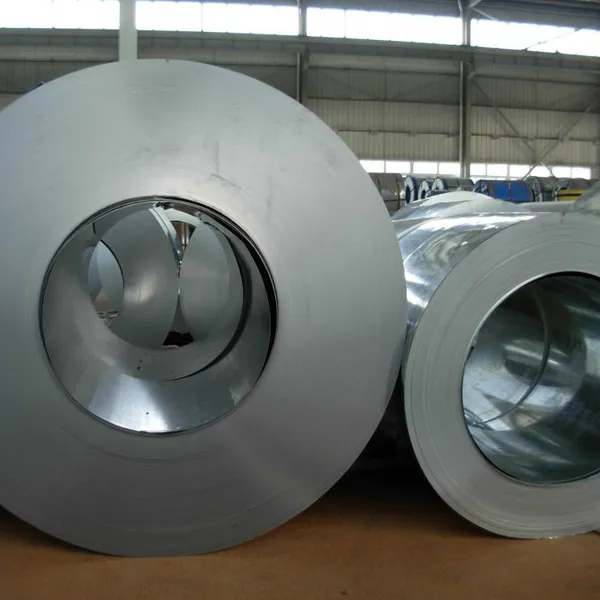
Electromagnetic Pure Iron Cold Rolled Coil DT4C for High Magnetic Permeability ApplicationsNegotiableMOQ: 1 Ton
-
Industrial Pure Iron Tube Superior Surface Quality Electromagnetic Pure Iron Tube for Welding and Plating ProcessesNegotiableMOQ: 1 Ton
-
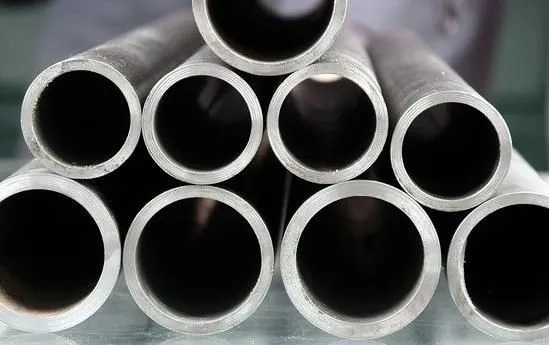
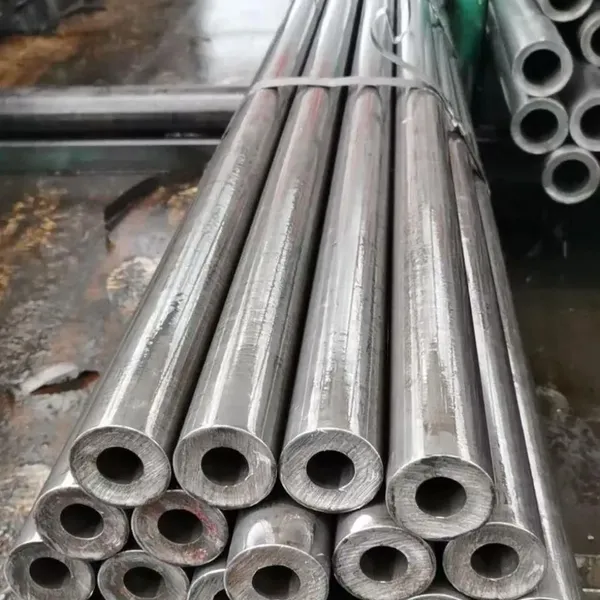
DT4 Seamless Pure Iron Tubing for High-Performance Electrical Equipment ApplicationsNegotiableMOQ: 1 Ton
-
DT4C Iron Wire Rod for Precision Magnetic Shielding ApplicationsNegotiableMOQ: 100 Kilograms
-
Industrial Pure Iron Fittings DT4 Pure Iron Seamless Tube With Low Hysteresis Loss for Electromagnetic SystemsNegotiableMOQ: 1 Ton
-
DT4C Cold Rolled Coil Slitting for Electrical Enclosure ManufacturingNegotiableMOQ: 1 Ton
-
Anti Rust Coated Pure Iron Square Bar Low Carbon Raw Material for Welding and Forging Magnetic PartsNegotiableMOQ: 100 Kilograms
-
DT4 Pure Iron Cold-Drawn Wire 0.5mm-6.0mm Diameter for Precision EngineeringNegotiableMOQ: 500 Kilograms