
 Business License

Electrical Pure Iron Cold Rolled Coil: Complete Specifications and Selection Guide
When A Shenzhen transformer manufacturer made the change from silicon steel laminations to coils of cold-rolled pure iron - DT4C, something of a surprise was unfurled in what they were able to document. The 500kVA distribution transformers tested at a 5% reduction in no-load loss during certification testing. This amounts to an energy savings of roughly 1,200 kWh annually per unit. Upon comparison with production of some 200 transformers, the change of material literally meant no less than a waste of 240,000 kWh of electrical input. For the company, recovery of the cost of the material premium would be realized by the time the 13th month rolled in.Find more info now.
This epitomizes how vital coil material selection is to electromagnetic design. The right electrical pure iron cold rolled coil will spell the difference; thereby, the efficiency of a transformer, motor, or relay to working at its utmost, as against acting as a significant energy waster through immoderate hysteresis loss. Nevertheless, differences among the DT4 and DT4C grades of steel, along with how varying cold rolling specifications affect lamination performance, are questions that continue to cause serious confusion among many engineers.
This article is a sophisticated technical guide introducing electric zinc-free cold rolled coils. It gives the reader an insight into the influence of cold rolling on magnetic properties, specifications for the correct grade and dimensions for application, and'the quality aspects for assurance in the procurement of these precision materials. Apart from the theoretical knowledge of-isolating material properties for transformer laminations, motor cores, or relay components, this basically provides the processing engineer with knowledge to make a judicious choice of material and its procurement.
What Is Electrical Pure Iron Cold Rolled Coil?
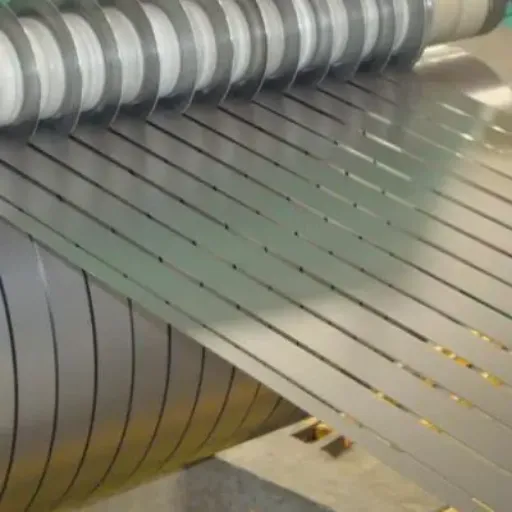
The electrical pure iron cold rolled coil represents a high-purity ferromagnetic material (≥99.5% iron content, typically ≥99.8%) manufactured via cold rolling methods yielding precise dimensional tolerances and high-quality surface. Cold rolling is better than hot working, in which the material deforms with enhanced mechanical properties while being temperature-controlled for desired yield stresses.
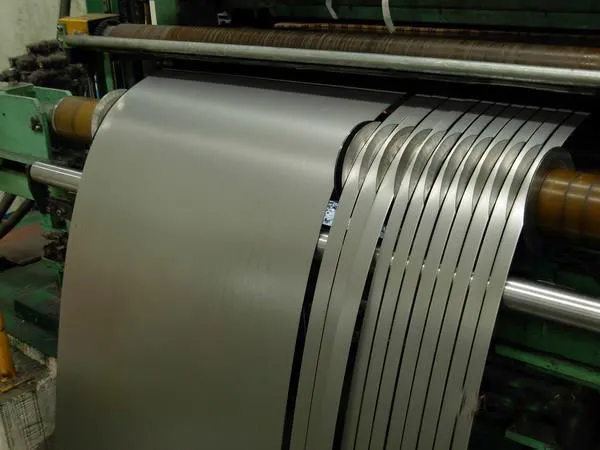
Coils are beneficial in large-scale production due to their configuration, as continuous coil format allows automatic feeding of laminations into the stamping presses. Precision slitting divides master coils into widths custom-matched to specific core designs. Uniform coil thickness across coil length ensures the stack height is uniform in assembled cores, thereby blocking all air pockets that will otherwise cause local heating and loss in efficiency.
Cold Rolling Process and Magnetic Implications
The cold-rolling technique reduces the thickness of the material through compressing the material between hardened rollers. This process results in highly precise dimensions that really cannot be attained by the hot-rolling regime, which have crucial considerations for the magnetic applications:
Dimensional accuracy: Cold rolling can achieve a standard thickness tolerance of ±0.03mm, or ±0.01mm for precision. Consistency has a direct effect on uniform lamination stacks, which is very important considering the fact that lamination interfaces are mostly involved in the reduction of eddy current losses.
Surface quality: The roughness of cold-rolled pure iron can be from ≤0.4 μm for mirror finish to ≤3.2 μm for mill finish. Less rough finishes help reduce the interlaminar eddy currents in the assembled cores, while adequate surface roughness is important for adhesion of insulation coating.
Effects of Work Hardening: The cold rolling process increases dislocation density within the crystal structure, increasing mechanical hardness but also increasing coercivity by 20-40% compared to annealed material. Thus, stress-relief annealing becomes inevitable before intending for final use in electromagnetic applications.
Material Grades and Magnetic Properties
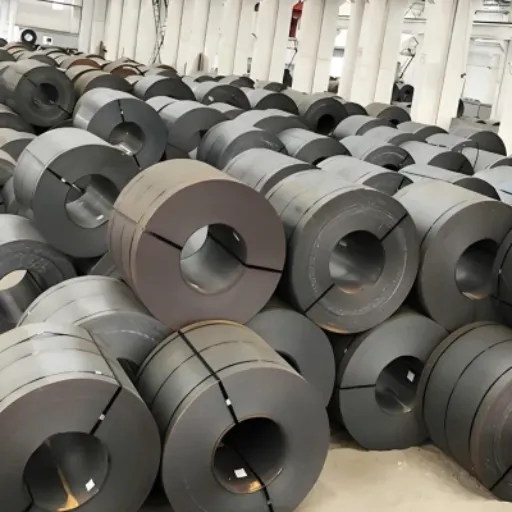
According to the Chinese National Standard GB/T 6983-2008, an electromagnetic pure iron sheet, cold rolled, for use in a fesile:t grade, ring plate, or sheet electrical steel product shall be classified into DT4, DT4A, DT4B, or DT4C depending on the grade of the product categories.
DT4 Series Grade Comparison
| Grade | Coercivity (Hc) | Max Permeability (μmax) | Carbon Max | Relative Performance |
|---|---|---|---|---|
| DT4 | ≤96 A/m | ≥7.50 mH/m | ≤0.025% | Baseline |
| DT4A | ≤72 A/m | ≥10.00 mH/m | ≤0.025% | 25% improved |
| DT4E | ≤48 A/m | ≥12.50 mH/m | ≤0.025% | 50% improved |
| DT4C | ≤32 A/m | ≥15.00 mH/m | ≤0.004% | 67% improved |
DT4 (Standard Grade): Basic Electromagnetic Pure Iron, mainly crafted for general applications such as industrial motors, standard transformers, and simple electromagnetic parts where basic magnetic properties are sufficient for design considerations.
DT4A (Advanced Grade): It has been designed to improve key magnetic properties, thereby enhancing better performance and rapid magnetization. It is commonly directed in power distribution transformers, factory relays, and automotive electromagnetic components for which performance improvement can justify some extra cost.
DT4E (Extra High Grade): This has an extraordinary magnetic permeability and reasonably lower coercivity for the better industrial electromagnetic system. It is perfect for integrated telecommunications, precision measuring instrument, and medical equipment seeking consistent and predictable magnetic features.
Why DT4C Commands Premium Pricing
When the Engineering team of Hangzhou Zhongtian Transformer was analyzing their material requirements for their new line of high-efficiency distribution transformers, they had to balance cost against performance. The cost of DT4C coils is roughly 55% higher than that of standard DT4 material. However, their tests showed that DT4C could reduce the no-load losses by about 18% over DT4, which is a large saving over the lifetime of the transformer.
If such a transformer were to be operated at full load continuously, it would have saved about 4,000 kWh per year by means of an 18% higher mechanical loss. For some reason at industrial electricity prices, the DT4C clinks would already pay for themselves between 12 and 18 months, and thereafter onward all further gains in operability would be purely performance-based. This is a sufficiently persuasive reason for the priority of material gains over the perhaps higher initial pain in the pocket.
Magnetic Flux Density Requirements
All DT4 series grades must meet minimum magnetic flux density (B) values at specified magnetizing field strengths:
| Field Strength (A/m) | Minimum B (Tesla) |
|---|---|
| 200 | 1.20 |
| 500 | 1.40 |
| 2,500 | 1.62 |
| 5,000 | 1.71 |
| 10,000 | 1.80 |
These values ensure suitable magnetic response across the entire operating range. Iron has a saturated flux density of about 2.15 Tesla, a significantly larger value than the alternative silicon steel, which has a saturation value of 1.9 - 2.0 T, hence permitting more compact core designs to have the same electric load.
Chemical Composition and Purity Standards
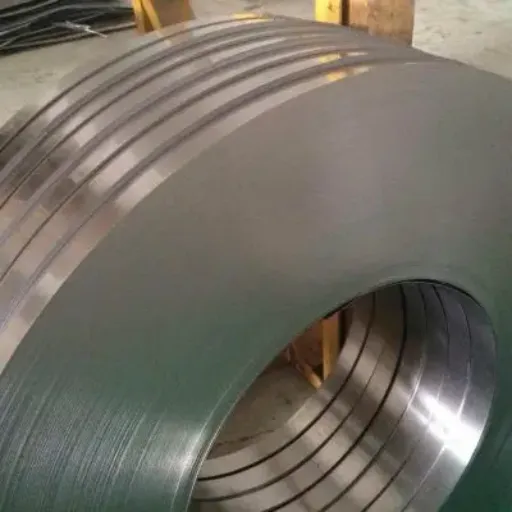
In high-end quality carbon steel, the low amount of carbon content directly influences magnetic performance. Carbon, along with iron, forms iron carbide (Fe3C) precipitates which impede the movement of the magnetic domain wall, thereby increasing coercivity and hysteresis energy loss.
Chemical Composition by Grade (GB/T 6983-2008)
| Element | DT4 Max | DT4C Typical | Impact on Magnetic Properties |
|---|---|---|---|
| Carbon (C) | ≤0.025% | ≤0.004% | Critical: carbides pin domain walls, increase coercivity |
| Silicon (Si) | ≤0.20% | ≤0.020% | Moderate: increases resistivity but reduces saturation |
| Manganese (Mn) | ≤0.30% | ≤0.20% | Low: combines with sulfur, minimal magnetic impact |
| Phosphorus (P) | ≤0.020% | ≤0.011% | Moderate: increases coercivity if excessive |
| Sulfur (S) | ≤0.020% | ≤0.003% | Moderate: forms MnS inclusions, affects grain structure |
| Aluminum (Al) | 0.15-0.50% | ~0.30% | Beneficial: controls grain size, improves permeability |
| Iron (Fe) | Balance | ≥99.8% | Base material purity |
The carbon differential between DT4 (≤0.025%) and DT4C (≤0.004%) explains most of the magnetic performance gap. Vacuum degassing and secondary refining processes achieve the ultra-low carbon levels required for DT4C grade, adding cost but delivering measurable efficiency improvements.
Dimensional Specifications and Tolerances
Precise dimensional control separates cold rolled coils from hot-rolled alternatives. For lamination applications, thickness consistency directly impacts core assembly quality and magnetic performance.
Standard Dimensional Parameters
| Parameter | Standard Range | High Precision | Application Guidance |
|---|---|---|---|
| Thickness | 0.1mm – 10.0mm | 0.35-2.0mm | 0.3-0.5mm for transformers |
| Thickness Tolerance | ≤ ±0.03mm | ≤ ±0.01mm | ±0.01mm for high-frequency |
| Master Coil Width | 600mm – 1250mm | 600mm typical | Per slitting equipment |
| Slit Width Range | 4mm – 600mm | 4mm minimum | Match lamination design |
| Width Tolerance | ±0.5mm | ±0.01mm | ±0.01mm for precision apps |
| Coil ID | 508mm / 610mm | Standard | Verify uncoiler compatibility |
| Bundle Weight | 30 – 100 kg | Customizable | Per handling equipment |
Thickness Selection by Application
| Application | Typical Thickness | Tolerance Requirement | Rationale |
|---|---|---|---|
| Distribution transformers | 0.3-0.5mm | ±0.03mm | Balance cost and performance |
| High-frequency transformers | 0.1-0.2mm | ±0.01mm | Minimize eddy currents |
| EV motor cores | 0.1-0.35mm | ±0.01mm | High-speed operation |
| Relay laminations | 0.2-1.0mm | ±0.03mm | Standard tolerance adequate |
| Magnetic shielding | 0.05-0.5mm | ±0.03mm | Various thicknesses needed |
Surface Finish Categories
| Finish Type | Roughness (Ra) | Best Applications | Notes |
|---|---|---|---|
| Mirror Polish | ≤0.4 μm | High-frequency transformers, precision instruments | Minimum interlaminar losses |
| Polished | ≤1.6 μm | Standard transformer laminations, motor cores | Good coating adhesion |
| Mill Finish | ≤3.2 μm | General industrial applications, non-critical components | Cost-effective option |
Surface finish selection depends on many factors. Glass-smooth surfaces inhibit interlaminar turbulence currents or support surface prep for good insulation coating job. For standard distribution transformers that work at 50/60 Hz, a very fine mirror polish (≤0.4 μm Ra) gives the greatest efficiency gains. Mill finish is widely applied in general use for cost savings.
Cold Rolling Effects and Annealing Requirements
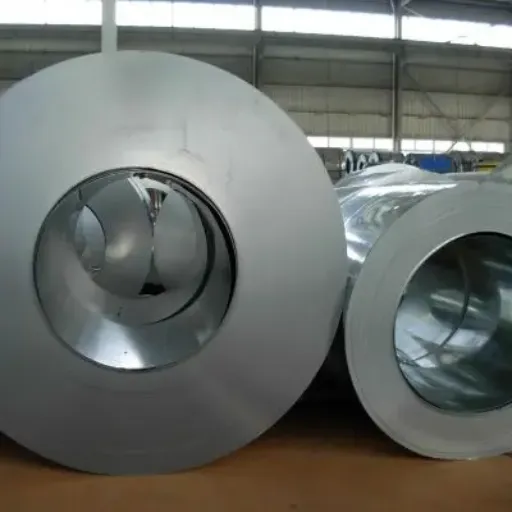
Understanding how cold rolling affects magnetic properties enables proper specification and processing decisions.
Mechanical and Magnetic Changes from Cold Rolling
The work hardening involved in cold rolling affects both the mechanical and magnetic properties:
Change in Mechanical Properties:
The tensile strength goes up from ≈200 MPa (annealed) to 265+ MPa (cold rolled).
The hardness climbs from HV5 ≈ 120 to HV5 ≤195.
Elongation drops from ≈40% to ≥25%.
Yield strength increases to almost 160 MPa.
Magnetic Property Changes:
Coercivity goes up 20–40% by dislocation density.
Permeability decreases 15–25% from annealed values.
Hysteresis loss is increased with the coercivity increase.
Crystal lattice strain restricts the movement of magnetic domain walls.
Henceforth, this makes cold-rolled material inadequate for high-energy magnetic application usage directly, if not subjected to post-heat treatment.
Stress Relief Annealing Process
Annealing performed after the cold-rolling process restores good magnetic properties, utilizing several different mechanisms:
Recrystallization: The heated marerial reaches 1000°C (for zero-carbon iron) to build new, unstrained grains, thereby doing away with deformed structural components caused by cold rolling.
Stress Relief: When annealing, thermal activity permits dislocations to move and thus leads to the elimination of internal stress raising the hindrance to domain wall mobility.
Carbon Removal: If annealing is done in a hydrogen atmospyhere at high temperatures, the surface carbon is removed still further and magnetic softness is improved.
Grain Growth: Grain growth controlled during annealing results in optimum permeability characteristics through domain structure and a coecivity minimum.
Recommended Annealing Parameters
| Parameter | Specification | Purpose |
|---|---|---|
| Temperature | 1000°C | Recrystallization and grain growth |
| Atmosphere | Dry hydrogen or argon | Prevents oxidation, enables decarburization |
| Duration | 4-8 hours | Complete stress relief and grain growth |
| Cooling Rate | Controlled furnace cooling | Prevents thermal stress, maintains grain structure |
| Result | 85-90% property recovery | Near-annealed magnetic performance |
Proper annealing can recover approximately 90% of the original magnetic properties that existed before cold rolling, making the process essential for high-performance applications.
Primary Applications
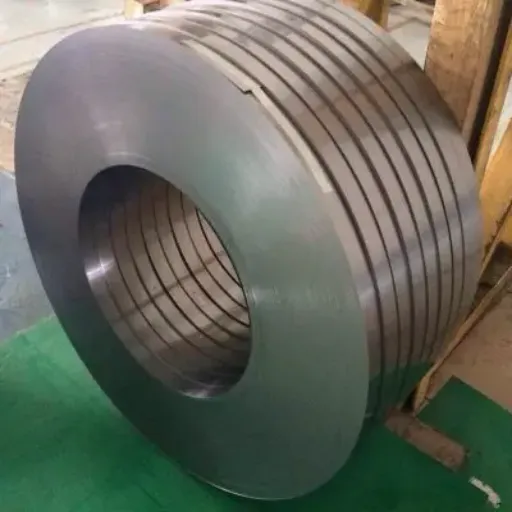
Electrical pure iron cold rolled coils serve critical functions across the electromagnetic industry where material performance directly impacts system efficiency.
Transformer Core Laminations
The highest volume of application for cold rolled pure iron coils is the distribution and power transformer. The material specification invariably has a bearing on the efficiency of the transformer.
Service Benefactors:
High permeability lessens magnetizing current requirements
Low coercivity cuts down hysteresis loss during AC operations
High saturation flux density (2.15T) gives rise to compact designs
Thin lamination (0.3mm to 0.5mm) reduces the eddy current loss
Grade Selection: DT4C for transformers with premium efficiency with the aim of maximum energy saving. DT4A suits standard industrial transformers with a balance between cost and performance.
Process: Here it includes precise slitting into lamination width, stress-relief annealing, coating insulation application, and followed by stamping lamina with optimized overlap patterns.
Motor and Generator Components
Electric motors and generators rely on pure iron laminations for efficient magnetic circuit operation:
Types of Applications:
EV traction motors: Laminations of a thickness of 0.1-0.35 mm for high-speed operations
Industrial motors: Laminations of usual thickness (0.5-0.65 mm) for general-purpose drives
Aviation motors: DT4C grade for weight-critical, high-reliability applications
Generator stators: High-permeability material for maximum flux linkage
The higher saturation flux density of pure iron (2.15 T) permits to build smaller frames, thus offering the potential of a given power, which is indispensable in EV applications where space and weight restrictions play a major role in the design.
Relay and Solenoid Cores
The use of timely and highly responsive magnetic materials with inherently low remanent magnetism is essential to updating any kind of precision electromagnetic devices:
Randomly-Oriented Applications:
Winding wire magnetic pole control position sensors
Automotive speed sensors
Position control for hydraulic and pneumatic actuators
Error signal generation in servo motor systems
Magnetization Systems:
Ring-shaped magnetizers in sputtering systems
Non-destructive testing magnetizers
Pass-through plate magnetizers for paper and films
Braking magnetizers for magnetic particle brakes
In applications that need rapid response magnetic flight nearly zero remanence, this application is dominated by grade DT4C as its low coercive force is ≤32 A/m (3 Oe), which allows it to respond in sub-10 milliseconds and produce virtually no remnants of magnetization which can stick or delay in release.
Magnetic Shielding
Because of its large paramagnetic property, pure iron is ideal for applications involving magnetically shielded materials:
Applications for Shielding:
Magnetic shielding against MRI scanners
Enclosures for NMR spectrometers
Shielding suitable for extremely sensitive electronic equippage
Geophysical survey instrument shielding
Magnetic components of particle accelerators
Cold-rolled coils are slit to appropriate widths, and formed into shields by being bent or deep-drawn (with intermediate annealing), and then are furnished with housing to shield the protected enclosures. High permeability ensures that the low reluctance paths provided will effectively shift magnetic flow around shielded areas.
Slitting and Processing Specifications
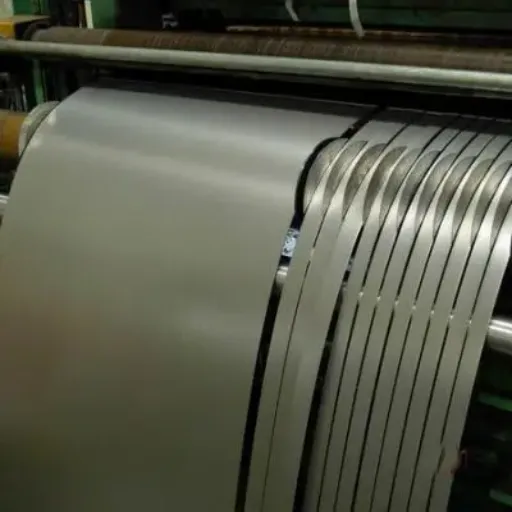
For lamination production, master coils must be slit to precise widths before stamping. Slitting quality directly affects lamination stackability and core performance.
Precision Slitting Requirements
| Parameter | Standard Tolerance | Precision Tolerance | Impact on Laminations |
|---|---|---|---|
| Width Tolerance | ±0.5mm | ±0.01mm | Stack height consistency |
| Burr Height | <0.1mm | <10% of thickness | Prevents interlaminar shorts |
| Edge Quality | Clean sheared | Precision ground | Uniform stacking |
| Camber | <2mm/m | <1mm/m | Straight lamination strips |
| Minimum Width | 10mm | 4mm | Small core designs |
Burr Control Criticality
The burr produced during slitting has raised edges that hinder tight stacking of lamination and thereby penetrating interlaminar insulation, which in turn generates eddy current paths that increase loss in the core. Hence, for high-efficiency transformer applications, height of burr should be less than 10% of material thickness.
Edge Conditioning Options
Standard Sheared Edge: Good for industries where some burrs are acceptable.
Precision Ground Edge: Industries need this to perform most efficiently in the case of transformers, where minimal burrs are critical for the proper stacking of laminations.
Round Edge: Special processing that rounds the slit edges aids in safe handling while removing the points of stress concentration from formed parts.
Quality Verification and Standards Compliance
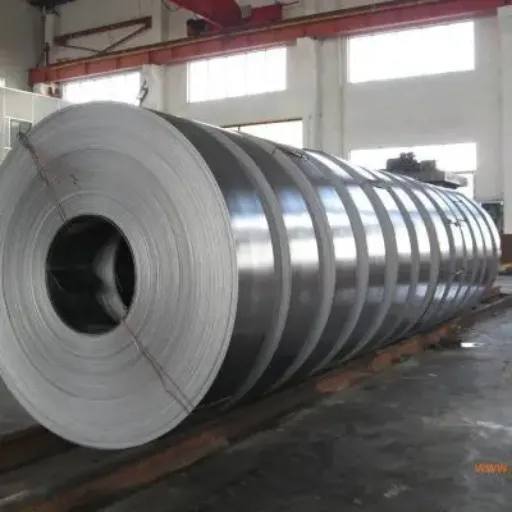
Verifying material quality ensures received coils meet specifications and will perform as expected in your application.
Required Quality Documentation
Mill Test Certificate (MTC) must include:
Heat number and batch traceability
Chemical composition analysis (all elements)
Magnetic property test results (Hc, μmax, B values)
Dimensional inspection report
Compliance statement with GB/T 6983-2008
Incoming Inspection Checklist
Dimensional Verification:
Measure thickness at multiple points across coil width using calibrated micrometer
Verify width with precision measuring tools
Check coil ID for compatibility with uncoiling equipment
Assess camber (straightness) on uncoiled sample
Surface Quality Inspection:
Visual examination for surface defects, scratches, or contamination
Verify surface roughness matches ordered specification
Check edge condition and burr height
Confirm corrosion protection (oiled, VCI wrapping) intact
Certificate Verification:
Cross-check heat numbers on coils against MTC
Verify chemical composition compliance with ordered grade
Confirm magnetic properties meet specification
Validate dimensional tolerances on certificate match actual measurements
Standards and Certifications
| Standard | Scope | Relevance |
|---|---|---|
| GB/T 6983-2008 | Chinese electromagnetic pure iron standard | Primary specification for DT4 series |
| ASTM A848 | Low-carbon magnetic iron | International reference standard |
| GB/T 708 | Cold rolled steel plate and strip | Dimensional tolerances |
| GB/T 14981 | Hot-rolled wire rod dimensions | Tolerance reference |
| IEC 60404 | Magnetic materials international standards | Magnetic testing methods |
Conclusion
Cold rolled coils of electrical pure iron can aptly be seen as a material class for highly performing electromagnetic application. From transformer laminations that need low core loss to relay components that need rapid magnetic response, the choice of hot-galvanizing grade and processing specifications directly cater to the system efficiency and reliability.
When considering electrical pure iron cold-rolled coils, bear it in mind that the following have an impact:
Dimensional tolerances must be precise to match the working of the stamping equipment and lamination design requirements. While selecting some here, motors and transformers need low core loss; others need decent balance of cost-performance.
An aspect of concern presented is adhesion serration requirements of any application.
Annealing is either planned in-house or through the supplier processing schedule.
Slitting quality plays a direct role in the stackability of laminations and core efficiency.
Quality assurance through material certification (MTC) once posted for review, followed by strict incoming inspection, can eliminate the problems that can arise down the production line.
Another fact to stress is that without question, the pure iron industry of China, based, near Taiyuan, Shanxi Province, provides a world outlet to these specialized materials at competitive prices with a wide range of grades. Purchasing teams and design engineers appreciate the specifications and selection criteria to get the best materials for their electromagnetic systems.
Referring to your next high performance magnetic material project, look at how electrical pure iron cold rolled coils can improve efficiency, reduce energy loss, and improve manufacturing consistency in a business environment. The investment in proper specification of materials will ultimately pay off in the improved performance and life reliability of the product.
Frequently Asked Questions (FAQs)
What is an Endless ribbon of pure iron-and how is it different from heat or cold-rolled sheets?
An endless strip of pure iron is a small, flat item made from pure iron that is low in alloying element/minimal in carbon content; in the surface structure of the hot rolled materials, which also develops at high temperatures, there are some equally large grains, while a cold-rolled sheet or cold-rolled pure iron strip is finished in a relatively colder condition to enhance its tolerance and surface finish for much better mechanical strength. Pure iron strip is developed for soft magnetic behavior and comparatively high magnetic permeability, whereas typical stainless steels and alloyed steels are focused on strength and resistivity instead of magnetic and corrosion resistance characteristics.
Why is purity so important in a pure iron strip for applications related to electrical and electromagnet work?
High purity iron is purer than the material called Armco iron; its impurities degrade the electrical resistivity that inhibits magnetonization and magnetization capabilities. For someone looking for magnetic properties such as an electric magneto, which has over-fluxed alloys or tissue paper transformer core, a high-purity iron strip surpasses electrical-conducting properties and decreases core losses, providing magnetic properties compared to alloyed or low-purity steels.
Whence, than injected steel of various magnetic and electrical properties, standing next to an iron sheet, pure iron-plated iron, so-called Armco iron or just its many types?
The armco pure iron has been historically accepted to represent very-pure soft magnetic iron, and modern industrial pure iron ribbons and armco pure iron have the same intent, which is to aim at having high magnetic permeability and low coercivity. The features that make the difference in both are the levels of purity (99.995% for armco [and high] industrial pure iron), processing, e.g., cold-rolling against powder-metallurgy, and heat-treatment. Both endow themselves to have the best magnetic properties applicable as cores, while embracing electromagnets and transformer cores.
Can you mention some typical and highly specific applications for pure-iron ribbons in the electrical engineering field?
There is a clear and outright application of pure iron strip as it is used in core applications like transformers, inductors, electromagnets as well as iron core components needed to possess high magnetic permeability and low hysteresis losses. There is also the application of electrical pure iron cold rolled coil though primarily used for low-frequency magnet cores or soft magnetic parts in motors and generators, specialized components in research, or neodymium ion boron magnet assemblies where a pure iron backing or flux path is required.
What might be the influences of the manufacturing methods, pure iron wire cold rolled and powder metallurgy, on the performance?
Various heat-treating or extruding processes can be used for the powder core manufacturing, which can significantly affect the performance of a magnetic material. The various mechanical treatments and outer/inner applied magnetic fields alter the magnetic behavior of the materials. Alternatively, mechanical strength and thermal-mechanical performance requirements of each core design usually involve careful heat treating; this could also be included in one core design, or for magnetic and non-magnetic validated phases.
Recently Posted
-
Shanxi Jurun Technology: Your Electromagnetic Pure Iron Partner from Taiyuan, China's Pure Iron Prod
August 14, 2026When an international buyer searches for electromagnetic pure iron, they are not just looking for a material. They are looking for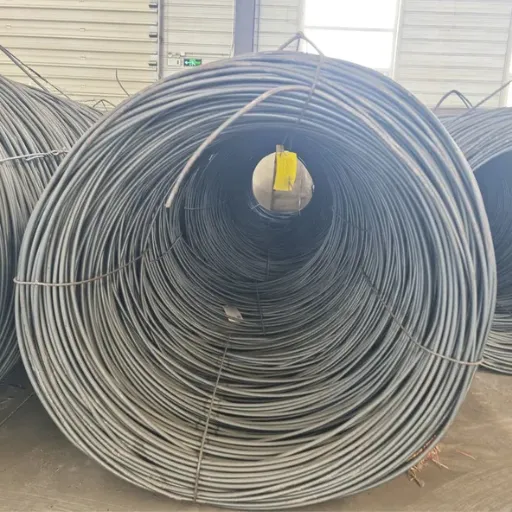 Read More
 -
Cold Drawing Process for Electromagnetic Pure Iron Wire: How Wire Rod Becomes Precision Cold-Drawn W
August 13, 2026Not long ago, a solenoid valve manufacturer in Italy received a shipment of 5.5 mm electromagnetic pure iron cold-drawn wire inten Read More
 -
How to Choose a Food Vacuum Sealer Supplier in China: 8 Evaluation Criteria
August 13, 2026An e-commerce brand owner in the UK contacted us some time ago after a supplier relationship fell apart. They had sourced roughly Read More
 -
Electromagnetic Pure Iron for Relay Manufacturing: Material Requirements, Grade Selection, and Case
August 13, 2026Some time ago, a relay production line in Zhejiang province began experiencing a puzzling failure pattern. Roughly 3 out of every
Read More

Contact Us
Recommended Products
-
 Seamless Tube With Good Cold Electrical Pure Iron Fittings Hot Workability for Forming Fittings and ConduitsNegotiableMOQ: 1 Ton
 -
Electromagnetic Pure Iron Forging for Automotive Sensor ManufacturingNegotiableMOQ: 100 Kilograms
-
Precision Cut Pure Iron Square Bar High Saturation Induction Raw Material for Generator and RotorNegotiableMOQ: 100 Kilograms
-
DT4C Super Grade Electromagnetic Pure Iron Bright Bar With Bundle Weight 30-100kg for Easy TransportationNegotiableMOQ: 1 Ton
-
DT4C Electromagnetic Pure Iron Cold-Drawn Wire 0.5mm-6.0mm Diameter for TransformersNegotiableMOQ: 100 Kilograms
-
Industrial Pure Iron Bar for Electromagnetic Relay and Sensor ProductionNegotiableMOQ: 1 Ton
-
Electromagnetic Pure Iron Thin Sheet 0.3mm-0.8mm for Solenoid and Relay ManufacturingNegotiableMOQ: 500 Kilograms
-
Electrical Pure Iron Hot-Rolled Coil for Magnetic Components With Low Iron LossNegotiableMOQ: 1 Ton
-
Low Carbon DT4C Pure Iron Round Bar With 99.8% Fe Content for Electrical ApplicationsNegotiableMOQ: 1 Ton
-
Cold Rolled Pure Iron Slit Coil DT4C Grade Ultra Low Carbon ≤0.004% for Magnetic ComponentsNegotiableMOQ: 1 Ton
-
Low Iron Loss Electromagnetic Pure Iron Hot-Rolled Coil DT4C for Transformer CoresNegotiableMOQ: 1 Ton
-
Soft Magnetic Pure Iron Sheet With Minimum Iron Loss for High-Efficiency MotorsNegotiableMOQ: 1 Ton
-
Electromagnetic Pure Iron Cold Rolled Coil DT4C for High Magnetic Permeability ApplicationsNegotiableMOQ: 1 Ton
-
Industrial Pure Iron Tube Superior Surface Quality Electromagnetic Pure Iron Tube for Welding and Plating ProcessesNegotiableMOQ: 1 Ton
-
DT4 Seamless Pure Iron Tubing for High-Performance Electrical Equipment ApplicationsNegotiableMOQ: 1 Ton
-
DT4C Iron Wire Rod for Precision Magnetic Shielding ApplicationsNegotiableMOQ: 100 Kilograms
-
Industrial Pure Iron Fittings DT4 Pure Iron Seamless Tube With Low Hysteresis Loss for Electromagnetic SystemsNegotiableMOQ: 1 Ton
-
DT4C Cold Rolled Coil Slitting for Electrical Enclosure ManufacturingNegotiableMOQ: 1 Ton
-
Anti Rust Coated Pure Iron Square Bar Low Carbon Raw Material for Welding and Forging Magnetic PartsNegotiableMOQ: 100 Kilograms
-
DT4 Pure Iron Cold-Drawn Wire 0.5mm-6.0mm Diameter for Precision EngineeringNegotiableMOQ: 500 Kilograms