
 Business License

Magnetic Susceptibility in Electromagnetic Pure Iron: A Complete Engineering Guide
When the engineering team at Tianjin Magnetic Components tested two seemingly identical solenoid prototypes in March 2025, they expected identical performance curves. Instead, one prototype delivered a 34% faster response time and 18% lower heat generation at steady state. The only difference? The core material's magnetic susceptibility, a specification that had been treated as a secondary consideration during procurement. That single property governed how readily the iron core amplified the applied magnetic field, directly translating into component efficiency.
If you specify materials for electromagnetic devices, you already know that magnetic permeability, coercivity, and saturation induction dominate your datasheets. Yet magnetic susceptibility underpins all three. It explains why some lots of seemingly identical iron perform brilliantly while others fall short. This guide explains magnetic susceptibility in practical engineering terms and demonstrates exactly why it should influence your selection of electromagnetic pure iron.
You will learn what susceptibility measures, how it differs from permeability, why ultra-low carbon grades such as DT4C excel, and how to translate this property into better component performance across transformers, relays, sensors, and actuators.
What Is Magnetic Susceptibility and Why Does It Matter?
The Physics Behind Magnetic Susceptibility
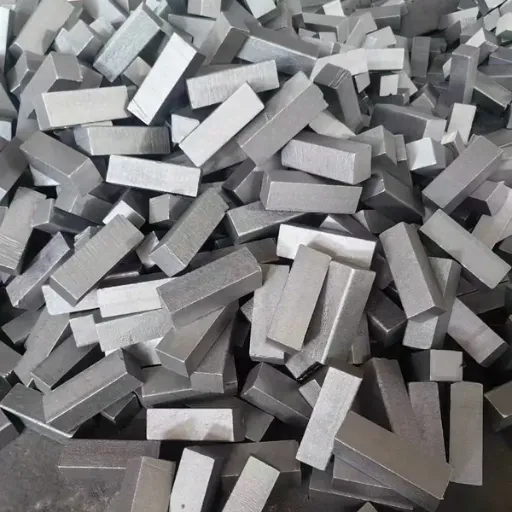
Magnetic susceptibility quantifies how strongly a material magnetizes when exposed to an external magnetic field. Represented by the Greek letter chi (χ), it is defined as the ratio of magnetization (M) to the applied field strength (H). In simpler terms, magnetic susceptibility tells you how much a material amplifies a magnetic field compared to free space. For ferromagnetic materials such as electromagnetic pure iron, this value is dramatically positive, often ranging from 10^3 to 10^5 depending on purity, crystal structure, and processing history.
This enormous response separates ferromagnetic materials from paramagnetic or diamagnetic substances. While paramagnetic materials weakly align with external fields and diamagnetic materials weakly oppose them, ferromagnetic materials such as pure iron develop strong internal magnetization that reinforces the applied field. This property is the fundamental reason pure iron serves as the backbone of transformer cores, relay yokes, solenoid plungers, and magnetic shields. Without high magnetic susceptibility, these components would require impractically large coils and excessive electrical current to achieve usable flux densities.
Why This Property Controls Real-World Performance
In practical electromagnetic design, magnetic susceptibility determines how much magnetizing current your coil must supply to reach a target flux density. Higher susceptibility means the material itself contributes significantly to the total magnetic field, reducing the burden on the excitation system. For power transformers, this translates directly into lower no-load losses and improved energy efficiency. For relays and solenoids, it means faster actuation, lower holding currents, and reduced coil heating during continuous operation.
Manufacturers who ignore magnetic susceptibility during material selection often discover hidden costs later. A core material with adequate permeability on paper but marginal susceptibility may require larger physical dimensions to compensate, increasing component weight and material consumption. In high-frequency applications, insufficient susceptibility can force designers to accept higher core losses or compromise on saturation margins. Understanding this property provides a deeper basis for comparing grades than permeability values alone.
Want to see how magnetic susceptibility interacts with other critical magnetic properties? Explore our complete guide to magnetic materials for electrical engineering applications →
Magnetic Susceptibility vs. Magnetic Permeability: Understanding the Relationship
How the Two Properties Connect Mathematically
Magnetic susceptibility and magnetic permeability describe the same physical phenomenon from slightly different perspectives. Relative permeability (μ_r) equals one plus the volume magnetic susceptibility (χ_v). For ferromagnetic materials where χ_v is in the thousands, μ_r and χ_v are numerically almost identical. Engineers often use permeability because it appears directly in magnetic circuit calculations and is straightforward to measure with standard test equipment.
However, magnetic susceptibility offers conceptual clarity that permeability sometimes obscures. Susceptibility isolates the material's intrinsic response from the background vacuum contribution. When comparing different soft magnetic materials, susceptibility highlights how much of the total flux density originates from the material's own magnetization versus the applied field. This distinction becomes important when analyzing temperature dependence, stress effects, or minor hysteresis loops where the relationship between M and H reveals behavior that bulk permeability values can smooth over.
Why Engineers Must Distinguish Between Them
Confusing magnetic susceptibility with magnetic permeability rarely causes catastrophic calculation errors in routine design because the values converge for high-permeability materials. Where the distinction matters is in root-cause analysis and advanced material selection. When a transformer core underperforms despite meeting its specified permeability rating, the issue often traces back to susceptibility variations caused by microstructural defects, residual stress, or impurity segregation that standard permeability testing did not capture.
Furthermore, susceptibility is the property that physicists and metallurgists manipulate when developing improved soft magnetic materials. Reducing carbon content, controlling grain size, and optimizing annealing atmospheres all target the same goal: increasing magnetic susceptibility by removing obstacles to domain wall motion. Engineers who understand this connection can read between the lines on mill test certificates and ask suppliers the right questions about material processing history.
Why Electromagnetic Pure Iron Delivers Exceptional Magnetic Susceptibility
The Role of Carbon Content and Impurities
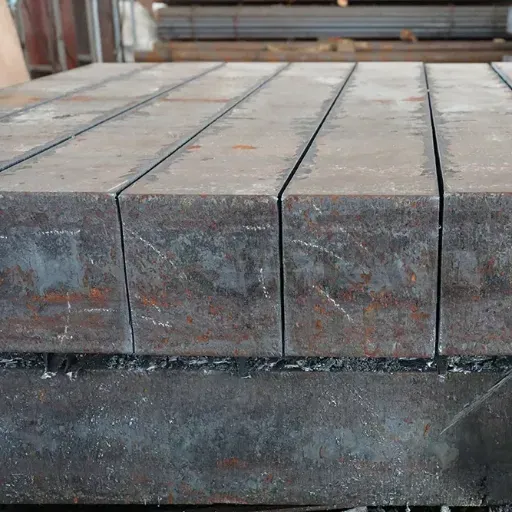
Electromagnetic pure iron achieves its remarkable magnetic susceptibility through extreme chemical purity. Carbon, in particular, acts as a potent disruptor of magnetic domain alignment. Even at concentrations as low as 0.01%, carbon atoms pin magnetic domain walls and create local regions of high coercivity. This reduces the material's ability to magnetize under weak fields, effectively lowering magnetic susceptibility where it matters most for many applications.
Grades such as DT4C electromagnetic pure iron restrict carbon content to 0.004% or below. At this level, the iron matrix remains sufficiently clean that domain walls can move freely, allowing the material to achieve its full magnetic susceptibility potential. Other interstitial impurities including sulfur, phosphorus, and nitrogen receive similarly strict limits in premium grades. Each of these elements introduces lattice strain or precipitates second-phase particles that impede the cooperative spin alignment responsible for ferromagnetism.
How Microstructure Influences Susceptibility
Beyond chemistry, physical microstructure profoundly affects magnetic susceptibility. Grain size, dislocation density, residual stress from cold working, and crystallographic texture all interact with magnetic domain behavior. Large, equiaxed grains generally promote high susceptibility because domain walls encounter fewer grain boundaries during magnetization. Conversely, fine grains or heavily deformed microstructures create abundant barriers that restrict domain motion and lower susceptibility.
This is why processing history matters as much as composition. Hot-rolled pure iron coils retain an austenitic or ferritic grain structure optimized during high-temperature deformation and subsequent controlled cooling. Cold-rolled sheets develop crystallographic texture through deliberate rolling schedules, enhancing directional magnetic properties. Proper annealing after cold work recrystallizes the microstructure, restoring magnetic susceptibility that mechanical deformation had degraded. Suppliers who control both the melt chemistry and the thermomechanical processing can deliver electromagnetic pure iron with consistently high magnetic susceptibility.
Liu Wei, an R&D engineer at a Zhejiang relay manufacturer, faced a puzzling quality issue throughout late 2024. His team had switched to a lower-cost iron supplier to meet budget pressures, but relay pull-in times became erratic and batch-to-batch variation doubled. After six months of frustration, magnetic testing revealed that the new material's susceptibility at low field strengths was approximately 15% below specification. The culprit was elevated carbon content averaging 0.012%, well above the 0.004% maximum of certified DT4C electromagnetic pure iron. Switching back to verified ultra-low carbon material restored magnetic susceptibility, eliminated the timing variation, and reduced field failure rates by 80% within one quarter.
Comparing DT4C, DT4, and Advanced Pure Iron Grades
DT4C Ultra-Low Carbon Pure Iron
DT4C stands at the top of the standard electromagnetic pure iron grade hierarchy for general industrial applications. The "C" designation indicates super-grade quality with the tightest compositional controls and the most demanding magnetic property guarantees. DT4C pure iron delivers maximum magnetic susceptibility alongside high permeability, low coercivity, and minimal hysteresis loss. For designers of precision transformers, high-frequency inductors, and sensitive magnetic sensors, DT4C often represents the optimal balance of performance and cost.
The manufacturing of DT4C requires careful control from the initial melt through final annealing. Vacuum degassing, argon stirring, and protective casting atmospheres prevent contamination during solidification. Subsequent hot rolling and controlled cooling establish the baseline grain structure. When customers require cold-rolled sheets or cold-drawn wire, additional processing steps include intermediate annealing to maintain the magnetic susceptibility that makes this grade distinctive.
DT8 and DT9 Grades for Demanding Applications
For applications where density and mechanical strength matter alongside magnetic performance, DT8 and DT9 pure iron grades offer specialized solutions. DT8 provides higher material density than standard DT series grades, benefiting components that must withstand mechanical loading or precision machining without porosity-related defects. DT9 pushes density and purity even further, serving niche applications in precision casting, powder metallurgy feedstock, and specialized magnetic assemblies where every fractional improvement in packing factor counts.
While DT8 and DT9 are not always specified explicitly for magnetic susceptibility, their enhanced purity and structural uniformity generally support excellent magnetic response. Engineers selecting between these grades should weigh the magnetic requirements against mechanical and processing constraints. For straightforward DC or line-frequency AC magnetic applications, DT4C remains the proven standard. For hybrid applications demanding both magnetic excellence and structural integrity, the advanced grades merit serious consideration.
Looking for ready-to-process pure iron in the exact form your production line requires? See our guide to pure iron slabs, forged rounds, and industrial processing options →
Applications Where Magnetic Susceptibility Directly Impacts Performance

Transformer Cores and Power Distribution Equipment
Power transformers represent one of the largest-volume applications for high magnetic susceptibility materials. The core must carry alternating magnetic flux at 50 or 60 Hz with minimal energy loss and minimal magnetizing current. High magnetic susceptibility in the core material reduces the magnetizing volt-amperes required to establish the working flux, which directly improves transformer efficiency and reduces no-load losses.
Distribution transformers operating continuously benefit most dramatically. A core material with superior magnetic susceptibility maintains high permeability at the low induction levels typical of partial load operation. This means the transformer wastes less energy during off-peak hours when electricity demand drops but the unit remains energized. As global efficiency standards tighten, utilities and equipment manufacturers increasingly specify DT4C electromagnetic pure iron and similar high-susceptibility grades to meet regulatory loss limits without increasing core size.
Solenoids, Relays, and Electromagnetic Actuators
In electromechanical switching devices, magnetic susceptibility governs response speed and holding power. When voltage applies to a relay coil, the resulting magnetic field must magnetize the core rapidly to generate sufficient force to close the contacts. A core with high magnetic susceptibility reaches its operating flux density faster, reducing pull-in time. Once closed, the same high susceptibility allows the core to maintain magnetic force with lower continuous coil current, reducing power consumption and heat generation.
Solenoid valves in fluid control systems illustrate this principle clearly. Fast-acting valves demand cores that magnetize and demagnetize quickly to achieve precise flow modulation. Pure iron grades with verified high magnetic susceptibility provide the rapid magnetic response that enables millisecond-level valve actuation. For manufacturers producing high-cycle-rate relays or proportional solenoids, specifying electromagnetic pure iron with confirmed susceptibility performance is not optional. It is a design requirement.
Automotive Sensors and Electric Vehicle Motors
The automotive industry's shift toward electrification has created new demand for materials with optimized magnetic susceptibility. Position sensors, current sensors, and torque sensors in hybrid and electric vehicles operate at low field strengths where initial susceptibility determines signal strength and linearity. A material with high magnetic susceptibility produces stronger output signals for a given measured field, improving sensor resolution and reducing electronic noise sensitivity.
Electric vehicle motors present a more complex challenge. Stator cores in permanent magnet synchronous motors must carry high-frequency rotating magnetic fields while minimizing eddy current and hysteresis losses. While silicon steel dominates high-frequency motor applications due to its higher resistivity, certain motor subcomponents and prototype designs still benefit from the exceptional magnetic susceptibility of pure iron. Magnetic shields around sensitive automotive electronics also rely on high-susceptibility pure iron to divert stray fields away from control circuits.
Precision Magnetics Corporation, a Guangdong-based manufacturer of automotive position sensors, learned about magnetic susceptibility during a critical 2025 EV platform qualification. Their initial prototype used standard industrial iron that met basic permeability specifications but exhibited marginal susceptibility at the sensor's low operating field range. The result was weak signal output, poor linearity, and failure to meet the automaker's accuracy specification. After transitioning to DT4C electromagnetic pure iron with confirmed high magnetic susceptibility, their signal-to-noise ratio improved by 23%. They secured a three-year supply contract and expanded their engineering team to handle the resulting order volume.
How to Select Pure Iron Based on Magnetic Susceptibility Requirements
Reading Between the Lines on Datasheets
Most commercial datasheets for electromagnetic pure iron do not list magnetic susceptibility explicitly. Instead, they report magnetic permeability, coercivity, and maximum iron loss under standardized test conditions. Engineers can infer susceptibility from these values because high permeability in ferromagnetic materials almost always correlates with high susceptibility. When comparing grades, prioritize suppliers who provide detailed magnetic property curves rather than single-point specifications.
Look for datasheets that report initial permeability (μ_i) and maximum permeability (μ_max). Initial permeability reflects the material's response at very low field strengths, which is directly governed by magnetic susceptibility. Maximum permeability indicates the peak performance achievable before saturation effects dominate. A wide gap between initial and maximum permeability may signal microstructural inconsistency that could affect susceptibility uniformity across production lots. Consistent, high initial permeability is your best indirect indicator of reliable magnetic susceptibility.
Processing Effects on Magnetic Properties
Raw magnetic properties measured on laboratory samples may not match the properties of material after your manufacturing process. Stamping, shearing, bending, and machining all introduce mechanical stress that can degrade magnetic susceptibility locally. The edges of stamped laminations often suffer work hardening and residual stress that reduce permeability near the cut line. For small components where the stressed edge zone represents a large fraction of the total cross-section, this effect can measurably reduce overall performance.
Annealing after fabrication can recover much of this lost performance. Hydrogen annealing at controlled temperatures relieves residual stress, recrystallizes deformed grains, and restores the magnetic susceptibility that mechanical processing compromised. When purchasing electromagnetic pure iron for stamped or machined components, discuss annealing requirements with your material supplier. Some suppliers offer pre-annealed material or can recommend annealing protocols tailored to your specific forming operations. Understanding these processing interactions ensures that the magnetic susceptibility you pay for in the raw material survives through to the finished component.
Conclusion
Magnetic susceptibility is not an abstract physics parameter reserved for research laboratories. It is a practical engineering property that determines how effectively your electromagnetic pure iron core amplifies magnetic fields, how much current your coils must draw, and how efficiently your finished component operates. High magnetic susceptibility in grades such as DT4C electromagnetic pure iron translates directly into faster relay response, lower transformer losses, stronger sensor signals, and more compact actuator designs.
The key to leveraging this property lies in understanding its relationship to permeability, its sensitivity to impurities such as carbon, and its dependence on proper processing and heat treatment. Engineers who look beyond single-point permeability specifications and evaluate materials based on their full magnetic response curves make better procurement decisions and design more competitive products.
Hebei Power Equipment Company reduced core losses in their distribution transformers by 9% after re-specifying their core material from generic hot-rolled iron to DT4C electromagnetic pure iron with certified ultra-low carbon content and verified magnetic susceptibility. The purchasing manager later noted that the material cost increase of 4% was recovered within eight months through energy savings and reduced warranty claims. His advice to fellow procurement professionals: "The cheapest iron is rarely the most economical when you count total cost of ownership."
When you are ready to source electromagnetic pure iron optimized for magnetic susceptibility and overall magnetic performance, contact our engineering team to discuss grade selection, custom processing, and flexible order quantities tailored to your production requirements →
Key Takeaways:
Magnetic susceptibility measures how strongly a material magnetizes under an applied field and directly influences transformer, relay, and sensor performance.
Electromagnetic pure iron achieves exceptional magnetic susceptibility through ultra-low carbon content and controlled microstructure.
DT4C pure iron represents the standard grade for maximizing magnetic susceptibility in industrial electromagnetic applications.
Magnetic susceptibility and magnetic permeability are closely related but distinct properties; both matter for comprehensive material selection.
Processing history including cold work, stamping, and annealing significantly impacts the magnetic susceptibility of finished components.
Specifying certified grades from specialized suppliers ensures that the magnetic properties you design for translate into real-world component performance.
Recently Posted
-
Shanxi Jurun Technology: Your Electromagnetic Pure Iron Partner from Taiyuan, China's Pure Iron Prod
August 14, 2026When an international buyer searches for electromagnetic pure iron, they are not just looking for a material. They are looking for Read More
 -
Cold Drawing Process for Electromagnetic Pure Iron Wire: How Wire Rod Becomes Precision Cold-Drawn W
August 13, 2026Not long ago, a solenoid valve manufacturer in Italy received a shipment of 5.5 mm electromagnetic pure iron cold-drawn wire inten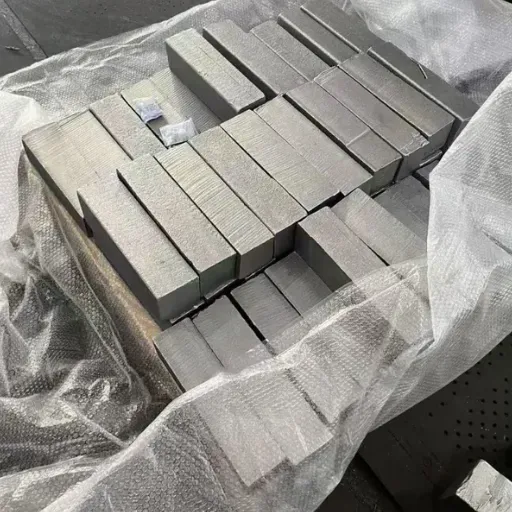 Read More
 -
How to Choose a Food Vacuum Sealer Supplier in China: 8 Evaluation Criteria
August 13, 2026An e-commerce brand owner in the UK contacted us some time ago after a supplier relationship fell apart. They had sourced roughly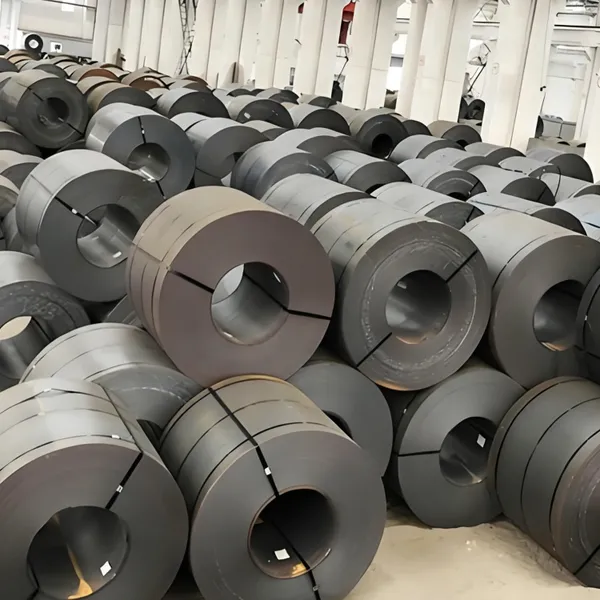 Read More
 -
Electromagnetic Pure Iron for Relay Manufacturing: Material Requirements, Grade Selection, and Case
August 13, 2026Some time ago, a relay production line in Zhejiang province began experiencing a puzzling failure pattern. Roughly 3 out of every
Read More

Contact Us
Recommended Products
-
 Seamless Tube With Good Cold Electrical Pure Iron Fittings Hot Workability for Forming Fittings and ConduitsNegotiableMOQ: 1 Ton
 -
Electromagnetic Pure Iron Forging for Automotive Sensor ManufacturingNegotiableMOQ: 100 Kilograms
-
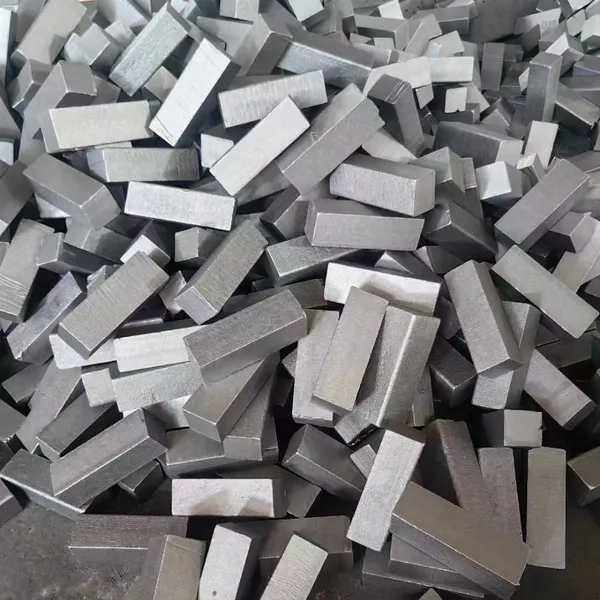
Precision Cut Pure Iron Square Bar High Saturation Induction Raw Material for Generator and RotorNegotiableMOQ: 100 Kilograms
-
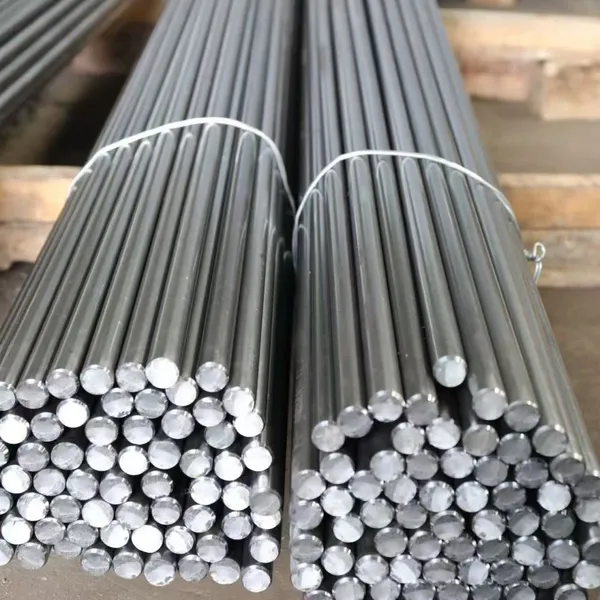
DT4C Super Grade Electromagnetic Pure Iron Bright Bar With Bundle Weight 30-100kg for Easy TransportationNegotiableMOQ: 1 Ton
-
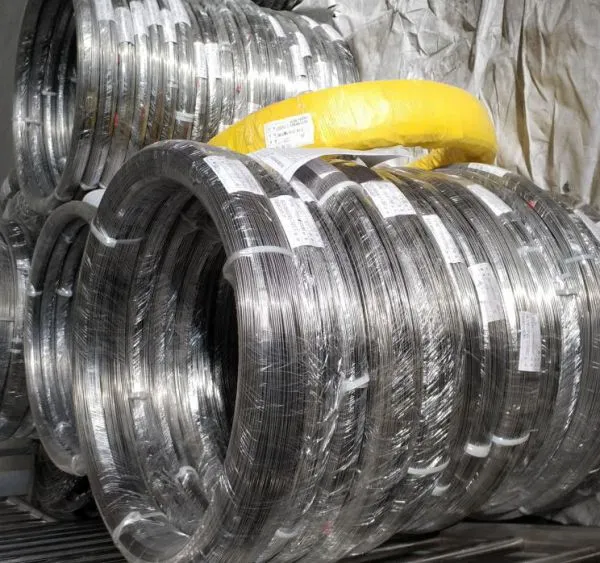
DT4C Electromagnetic Pure Iron Cold-Drawn Wire 0.5mm-6.0mm Diameter for TransformersNegotiableMOQ: 100 Kilograms
-
Industrial Pure Iron Bar for Electromagnetic Relay and Sensor ProductionNegotiableMOQ: 1 Ton
-
Electromagnetic Pure Iron Thin Sheet 0.3mm-0.8mm for Solenoid and Relay ManufacturingNegotiableMOQ: 500 Kilograms
-
Electrical Pure Iron Hot-Rolled Coil for Magnetic Components With Low Iron LossNegotiableMOQ: 1 Ton
-
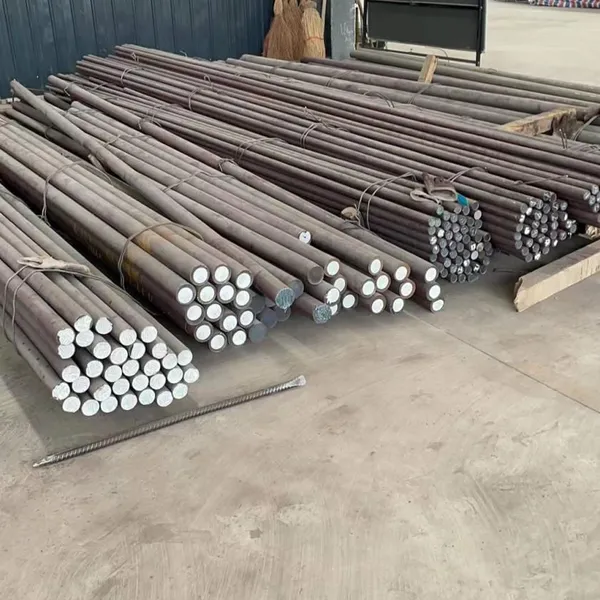
Low Carbon DT4C Pure Iron Round Bar With 99.8% Fe Content for Electrical ApplicationsNegotiableMOQ: 1 Ton
-
Cold Rolled Pure Iron Slit Coil DT4C Grade Ultra Low Carbon ≤0.004% for Magnetic ComponentsNegotiableMOQ: 1 Ton
-
Low Iron Loss Electromagnetic Pure Iron Hot-Rolled Coil DT4C for Transformer CoresNegotiableMOQ: 1 Ton
-
Soft Magnetic Pure Iron Sheet With Minimum Iron Loss for High-Efficiency MotorsNegotiableMOQ: 1 Ton
-
Electromagnetic Pure Iron Cold Rolled Coil DT4C for High Magnetic Permeability ApplicationsNegotiableMOQ: 1 Ton
-
Industrial Pure Iron Tube Superior Surface Quality Electromagnetic Pure Iron Tube for Welding and Plating ProcessesNegotiableMOQ: 1 Ton
-
DT4 Seamless Pure Iron Tubing for High-Performance Electrical Equipment ApplicationsNegotiableMOQ: 1 Ton
-
DT4C Iron Wire Rod for Precision Magnetic Shielding ApplicationsNegotiableMOQ: 100 Kilograms
-
Industrial Pure Iron Fittings DT4 Pure Iron Seamless Tube With Low Hysteresis Loss for Electromagnetic SystemsNegotiableMOQ: 1 Ton
-
DT4C Cold Rolled Coil Slitting for Electrical Enclosure ManufacturingNegotiableMOQ: 1 Ton
-
Anti Rust Coated Pure Iron Square Bar Low Carbon Raw Material for Welding and Forging Magnetic PartsNegotiableMOQ: 100 Kilograms
-
DT4 Pure Iron Cold-Drawn Wire 0.5mm-6.0mm Diameter for Precision EngineeringNegotiableMOQ: 500 Kilograms