
 Business License

How to Source Electromagnetic Pure Iron from China: A Step-by-Step Buyer's Guide
Not long ago, a European automation company sent the same inquiry to six Chinese suppliers: "Need electromagnetic pure iron, DT4, cold-drawn bar, 12 mm, 3 tons." The quotations that came back differed by nearly 40% in price and varied wildly in lead time, certification, and surface condition. The buyer who simply picked the lowest quote received material with mill scale and no magnetic property certificate — and spent an extra five weeks correcting the order. The buyer who asked structured questions closed a compliant order in under three weeks.
China supplies a substantial share of the world's electromagnetic pure iron, yet the sourcing process is opaque to first-time importers. This guide walks through the complete workflow — defining the requirement, finding a supplier, issuing an inquiry, evaluating quotations, verifying samples and certificates, negotiating terms, and managing logistics — so that buyers can source with confidence. Each step includes the specific information to request and the warning signs to watch for.
1. Step 1: Define Your Requirement Before You Search
The single largest source of sourcing failure is an incomplete requirement definition. A Chinese supplier can quote almost anything, but it can only guarantee what it is asked to guarantee. If the inquiry omits magnetic properties, the buyer receives material that meets only chemical composition — which may or may not perform in the finished component.
A complete requirement statement covers five elements: grade (DT4, DT4C, DT8, or another), product form (wire rod, wire, bar, plate, coil, or forging), dimensions, quantity, and required certifications. For magnetic components, add the performance requirement — for example, coercivity ≤ 48 A/m after annealing — because this determines whether a DT4 or DT4C quotation is acceptable.
The table below shows a recommended inquiry template that removes most ambiguity.
| Requirement Element | Example | Why It Matters |
|---|---|---|
| Grade | DT4C per GB/T 6983 | Sets composition and magnetic property floor |
| Product form | Cold-drawn bar, straightened | Determines production route and tolerances |
| Dimensions | 12 mm diameter, 2–4 m length | Affects availability and price per ton |
| Quantity | 3 tons (one lot) | Determines MOQ eligibility and pricing tier |
| Magnetic requirement | Hc ≤ 48 A/m annealed | Separates commodity supply from engineered supply |
| Certificates | Mill test certificate; magnetic test report on request | Enables incoming inspection and traceability |
Buyers who send a complete requirement the first time receive comparable quotations, which makes price evaluation meaningful. Buyers who send "need pure iron, lowest price" receive non-comparable quotations, which makes price evaluation meaningless.
2. Step 2: Identify the Right Type of Supplier
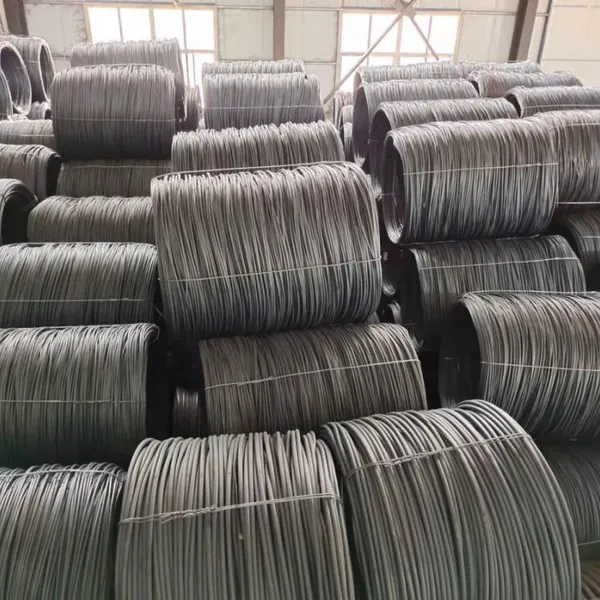
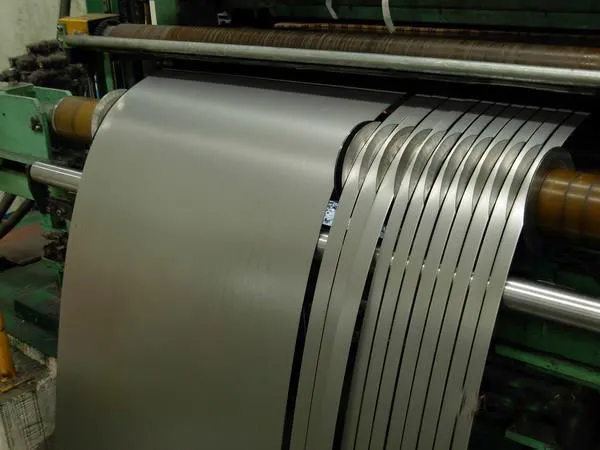
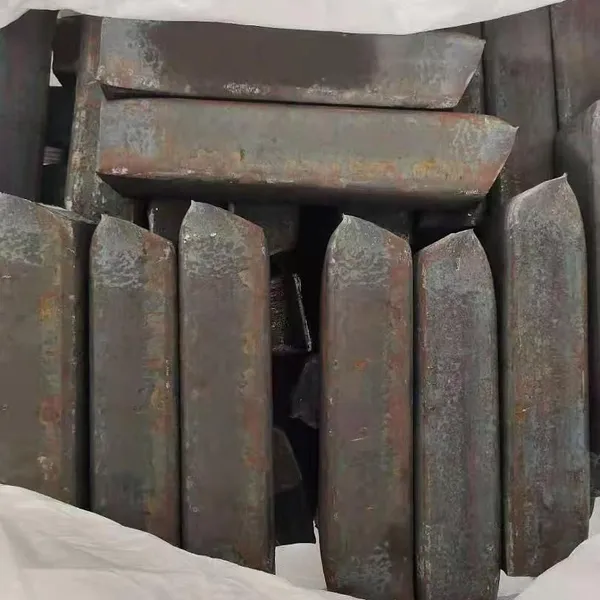
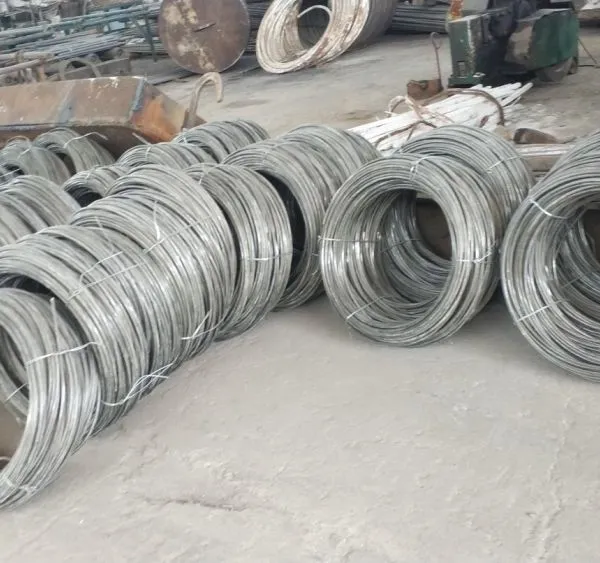
Chinese electromagnetic pure iron suppliers fall into three broad categories. The first is the integrated producer, which operates its own melting and rolling facilities and controls the material from scrap selection through finished product. The second is the processing supplier, which buys hot-rolled wire rod or bar from mills and performs cold drawing, straightening, cutting, and annealing. The third is the trading company, which aggregates material from multiple sources without owning production assets.
Each category suits a different buyer profile. Integrated producers offer the strongest traceability and are preferred for large volumes and strict specifications. Processing suppliers offer flexibility in dimensions and surface condition, which suits precision component manufacturers. Trading companies offer convenience and breadth but introduce an extra layer that can complicate quality disputes.
The choice is not about which category is "better" — it is about matching supplier type to requirement. A buyer sourcing DT4C cold-drawn wire at 1 mm diameter for relay pins needs a processor with fine-wire drawing capability. A buyer sourcing 50 tons of DT4 wire rod for magnet feedstock may go directly to an integrated producer. Shanxi Jurun Technology Co., Ltd., based in Taiyuan — the center of China's pure iron production — operates across the wire rod, wire, and bar product lines, which gives buyers a single counterparty for multiple forms.
3. Step 3: Send a Structured Inquiry
Once three to five candidate suppliers are identified, send each the same structured inquiry. Consistency is essential: if every supplier receives a different question set, the responses cannot be compared. Include the requirement table from Step 1, plus four commercial questions: unit price by form, monthly production capacity, typical lead time, and minimum order quantity.
Ask for the quotation in a defined unit — usually US dollars per ton, FOB Chinese port, or CIF destination port. Mixed units are a common source of comparison error; one supplier quoting per kilogram against another quoting per ton distorts the evaluation. Require the quotation to state the standard (GB/T 6983 or equivalent), the exact grade, and the surface condition of the product.
Request a delivery timeline in writing: production time, inspection time, and shipping time as separate line items. This breakdown exposes unrealistic promises early. A supplier that quotes a total lead time of 10 days for a made-to-order DT4C cold-drawn bar lot is either holding stock or preparing to cut corners.
4. Step 4: Evaluate Quotations Beyond Price
Price is the most visible differentiator and the least informative one. A 20% price gap between two DT4C quotations usually reflects differences in material source, heat treatment, surface quality, or certification completeness — not pure margin. Evaluating quotations requires comparing five dimensions, not one.
The first dimension is grade integrity: does the quotation actually commit to the requested grade, or does it hedge with "or equivalent"? The second is magnetic property certification: can the supplier provide a magnetic test report for the lot, or only a chemical composition certificate? The third is surface and tolerance: does the price include pickling, bright drawing, or precision straightening?
The fourth is packaging: export-ready oiled and wrapped material, or bare bars? The fifth is after-sales: how does the supplier handle a non-conforming batch?
Price-per-ton is meaningful only after these dimensions are equalized. In practice, buyers who force this comparison often find that the apparent 15% saving on the low bid disappears once they add magnetic certification, export packaging, and reasonable lead time to the lower-grade offer. We recommend building a weighted comparison table rather than comparing unit prices in isolation.
5. Step 5: Verify Samples and Certificates
For first orders, sample verification is the highest-value step in the entire sourcing process. Ask for a representative sample of the exact product form and dimension you will buy — not a "typical" sample from a different size. Test the three things that matter: chemical composition, magnetic properties where applicable, and surface condition.
Chemical composition is verified against the mill test certificate, which should show carbon, silicon, manganese, phosphorus, sulfur, and aluminum content. Magnetic properties require a separate test — coercivity and maximum permeability measured on a standard ring or bar specimen — and only some suppliers maintain the equipment to perform it. A supplier that cannot produce magnetic test data cannot truthfully guarantee DT4C-level performance.
Certificate verification is equally important. The mill test certificate should carry a heat number that traces the material back to a specific production lot. For export orders, the commercial documents include the commercial invoice, packing list, certificate of origin, and the mill certificate; a magnetic property report can be added on request. Buyers should request copies of these documents before shipment, not after arrival, to avoid surprises at customs clearance.
6. Step 6: Agree on Contract, Payment, and Lead Time
Chinese export transactions for industrial materials typically use T/T (telegraphic transfer) with a deposit structure, or an L/C (letter of credit) for larger orders. A common arrangement is 30% deposit with the balance against a copy of the shipping documents, though terms vary by supplier and relationship. Buyers should confirm which Incoterms apply — FOB and CIF are the most common for steel products — because they allocate cost and risk at different points.
Lead time depends on whether the material is stock or made-to-order. Stock items such as standard DT4 wire rod may ship within 1–2 weeks, while made-to-order DT4C cold-drawn bar can require 4–6 weeks. The contract should state the lead time explicitly and define what happens on delay — for example, a liquidated damages clause or a delivery date adjustment. A written contract matters even for smaller orders, because it fixes the grade, dimensions, and certification obligations in writing.
Buyers should also clarify the sampling and inspection procedure before signing: will the material be inspected at the mill, at a third-party lab, or at destination? Pre-shipment inspection by an independent agency adds roughly 0.3–0.5% to the order value but provides objective evidence for both parties. For precision grades, we recommend it.
7. Step 7: Manage Export Logistics and Documentation
Electromagnetic pure iron exports from China typically move through ports such as Tianjin, Qingdao, or Shanghai, depending on the supplier's location and the destination market. The supplier usually coordinates inland transport, export customs clearance, and booking with a freight forwarder, either its own or the buyer's nominated one.
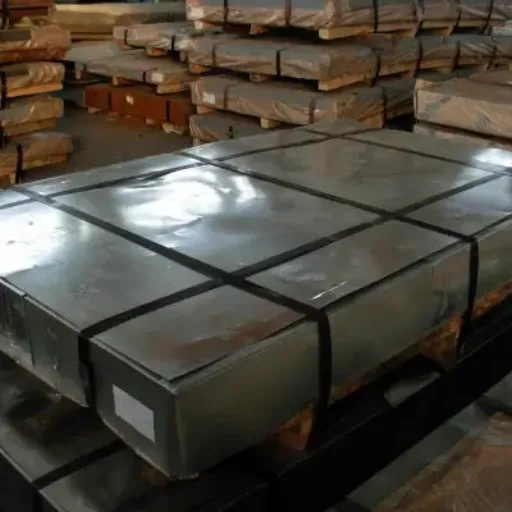
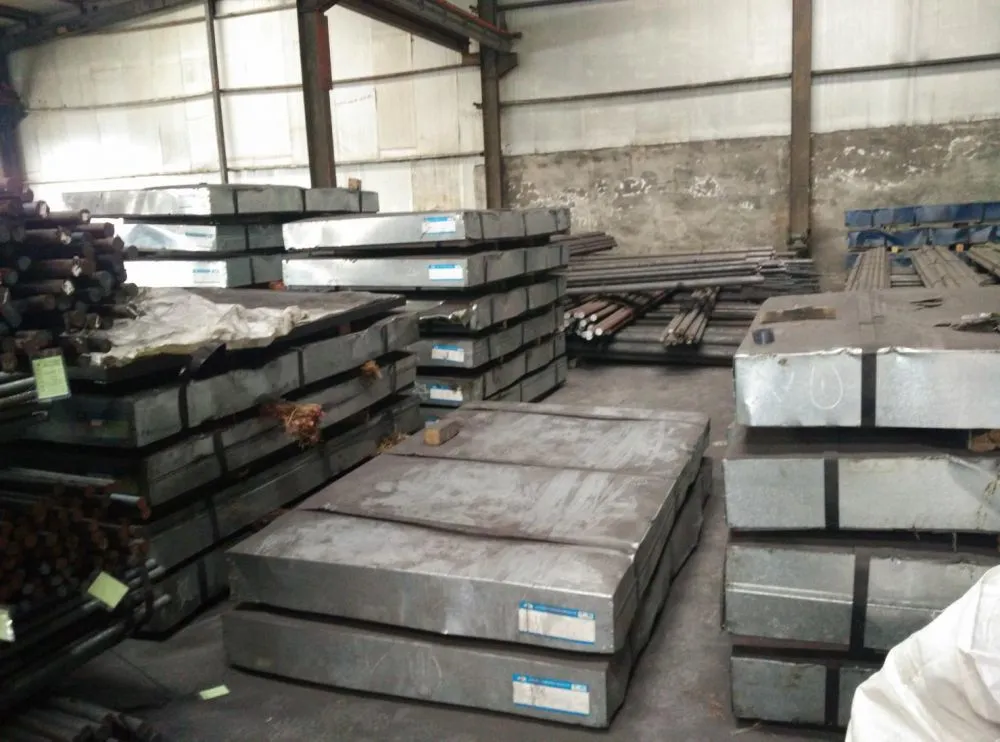
Packaging is a material-specific concern. Pure iron rusts readily, so export packaging normally includes anti-rust oil coating, VCI (vapor corrosion inhibitor) paper or film, and steel-strapped bundles or seaworthy wooden crates. Bar products are usually bundled and wrapped; coil and wire products are secured with edge protection to prevent transit damage. The buyer should specify the packaging standard in the order rather than leaving it to default practice.
Documentation for the shipment includes the commercial invoice, packing list, bill of lading, certificate of origin, and the mill test certificate. Depending on destination country requirements, additional documents — such as a fumigation certificate for wooden packaging — may be needed. A supplier experienced in exports will provide a document checklist before shipping; a buyer can also request a pre-shipment document review to confirm everything is in order before the vessel departs.
8. Step 8: Incoming Inspection and Long-Term Relationship
When the material arrives, verify it against the order before processing. Check the grade marking and heat number on the bundles, confirm the dimensions against the packing list, and visually inspect the surface for rust or damage. For the first order, send a sample to a local laboratory for composition verification so the mill certificate can be confirmed independently.
Magnetic performance can only be fully verified by testing finished or annealed samples, so retain a piece from each lot for a test piece if your application depends on magnetic properties. Store retained samples with their heat numbers; this creates an auditable chain from mill certificate to finished component.
Finally, treat the first order as the start of a relationship rather than a transaction. Suppliers learn a buyer's quality expectations over time, and repeat buyers receive better lead times, more flexible terms, and faster responses to non-conformance. Jurun Technology, for example, maintains grade and dimension preferences for returning customers, which shortens quoting cycles on repeat orders. A stable supplier relationship is often the cheapest quality insurance available to an importer.
9. Common Sourcing Mistakes and How to Avoid Them
Five mistakes account for most failed pure iron sourcing projects. The first is skipping the magnetic property requirement, which turns a precision material order into a commodity purchase. The second is comparing prices across different standards or surface conditions, which makes the comparison meaningless.
The third is accepting "or equivalent" grade substitutions without written justification, which invites downgrade risk. The fourth is omitting packaging specifications, which leads to rusted material on arrival. The fifth is choosing a supplier purely on price and discovering only at customs that the documents are incomplete.
Each mistake has a structural cure. Put the magnetic requirement in the contract. Standardize the quotation template. Insist that grade substitutions require the buyer's written approval.
Specify packaging in the purchase order. And evaluate suppliers on documentation competence, not just price. Buyers who institutionalize these cures typically see their first-order success rate improve substantially, with fewer rework cycles and shorter qualification timelines.
10. FAQ
10.1 What is the minimum order quantity for pure iron from China?
MOQs vary by product form and supplier. Standard wire rod and hot-rolled bar are often available from stock in lots as small as 1–2 tons, since mills produce these forms continuously. Cold-drawn wire and bar are typically made to order, with MOQs around 1–3 tons depending on diameter and tolerance.
Forged and large-section products are usually quoted per piece. A buyer should state the intended quantity in the first inquiry, because many suppliers maintain separate pricing tiers above and below roughly 5 tons.
10.2 How long does delivery take from order to port?
For stock material, production and packing typically take 1–2 weeks. For made-to-order cold-drawn or annealed products, allow 4–6 weeks from order confirmation to shipment readiness. Sea freight from Chinese ports to Europe or North America adds roughly 3–6 weeks depending on the route and port congestion, so a full lead time of 5–10 weeks is realistic for a made-to-order lot. Buyers who need faster delivery should confirm stock availability during the inquiry stage and consider air freight for small, urgent quantities.
10.3 Do I need a magnetic property certificate, and how do I verify it?
You need a magnetic property certificate whenever the application depends on magnetic performance — relays, solenoid valves, magnetic shielding, and similar components. The certificate reports coercivity and maximum permeability measured on a standard specimen, typically after the annealing condition specified by the customer. To verify it, ask which test method was used, whether the specimen came from the actual lot or a representative sample, and retain a test piece from the delivered lot for independent confirmation at a local laboratory.
10.4 Can I source DT4C directly from a mill in China?
Yes, but mills typically sell in large lots and may not offer downstream processing such as cold drawing, precision straightening, or surface treatment. Most export orders for finished product forms are handled by suppliers that combine mill sourcing with processing capability. A supplier such as Shanxi Jurun Technology operates on this model — sourcing hot-rolled wire rod and bar, performing cold drawing and finishing, and exporting the finished forms with full certification. This combination gives buyers mill-level traceability with processor-level flexibility.
Recently Posted
-
DT4 vs. DT4C Pure Iron: Magnetic Performance, Cost Differences, and When to Upgrade
September 3, 2026A solenoid valve producer in Jiangsu ordered DT4 cold-drawn bar for a new proportional valve line, reasoning that the grade was &q Read More
 -
Industrial Pure Iron vs. Armco Iron: Terminology, History, and Modern Equivalents
September 2, 2026Not long ago, a European motor manufacturer opened an aging drawing for a magnetic shielding housing and found the material callou Read More
 -
Shanxi Jurun Technology: Your Electromagnetic Pure Iron Partner from Taiyuan, China's Pure Iron Prod
August 14, 2026When an international buyer searches for electromagnetic pure iron, they are not just looking for a material. They are looking for Read More
 -
Cold Drawing Process for Electromagnetic Pure Iron Wire: How Wire Rod Becomes Precision Cold-Drawn W
August 13, 2026Not long ago, a solenoid valve manufacturer in Italy received a shipment of 5.5 mm electromagnetic pure iron cold-drawn wire inten Read More

Contact Us
Recommended Products
-
 Seamless Tube With Good Cold Electrical Pure Iron Fittings Hot Workability for Forming Fittings and ConduitsNegotiableMOQ: 1 Ton
 -
Electromagnetic Pure Iron Forging for Automotive Sensor ManufacturingNegotiableMOQ: 100 Kilograms
-
Precision Cut Pure Iron Square Bar High Saturation Induction Raw Material for Generator and RotorNegotiableMOQ: 100 Kilograms
-
DT4C Super Grade Electromagnetic Pure Iron Bright Bar With Bundle Weight 30-100kg for Easy TransportationNegotiableMOQ: 1 Ton
-
DT4C Electromagnetic Pure Iron Cold-Drawn Wire 0.5mm-6.0mm Diameter for TransformersNegotiableMOQ: 100 Kilograms
-
Industrial Pure Iron Bar for Electromagnetic Relay and Sensor ProductionNegotiableMOQ: 1 Ton
-
Electromagnetic Pure Iron Thin Sheet 0.3mm-0.8mm for Solenoid and Relay ManufacturingNegotiableMOQ: 500 Kilograms
-
Electrical Pure Iron Hot-Rolled Coil for Magnetic Components With Low Iron LossNegotiableMOQ: 1 Ton
-
Low Carbon DT4C Pure Iron Round Bar With 99.8% Fe Content for Electrical ApplicationsNegotiableMOQ: 1 Ton
-
Cold Rolled Pure Iron Slit Coil DT4C Grade Ultra Low Carbon ≤0.004% for Magnetic ComponentsNegotiableMOQ: 1 Ton
-
Low Iron Loss Electromagnetic Pure Iron Hot-Rolled Coil DT4C for Transformer CoresNegotiableMOQ: 1 Ton
-
Soft Magnetic Pure Iron Sheet With Minimum Iron Loss for High-Efficiency MotorsNegotiableMOQ: 1 Ton
-
Electromagnetic Pure Iron Cold Rolled Coil DT4C for High Magnetic Permeability ApplicationsNegotiableMOQ: 1 Ton
-
Industrial Pure Iron Tube Superior Surface Quality Electromagnetic Pure Iron Tube for Welding and Plating ProcessesNegotiableMOQ: 1 Ton
-
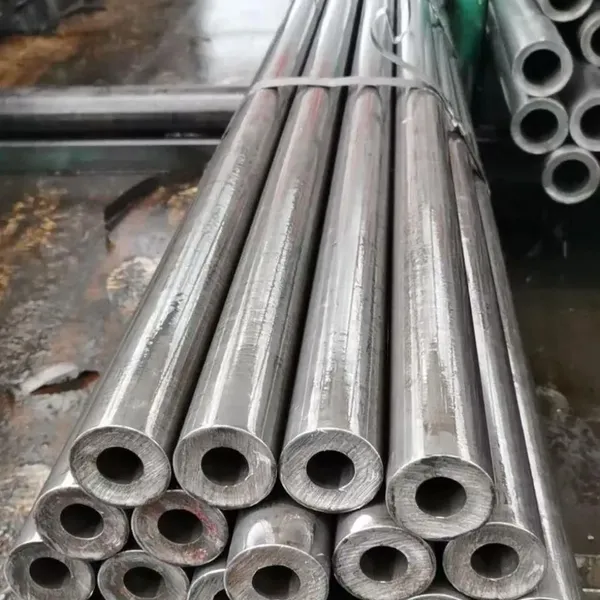
DT4 Seamless Pure Iron Tubing for High-Performance Electrical Equipment ApplicationsNegotiableMOQ: 1 Ton
-
DT4C Iron Wire Rod for Precision Magnetic Shielding ApplicationsNegotiableMOQ: 100 Kilograms
-
Industrial Pure Iron Fittings DT4 Pure Iron Seamless Tube With Low Hysteresis Loss for Electromagnetic SystemsNegotiableMOQ: 1 Ton
-
DT4C Cold Rolled Coil Slitting for Electrical Enclosure ManufacturingNegotiableMOQ: 1 Ton
-
Anti Rust Coated Pure Iron Square Bar Low Carbon Raw Material for Welding and Forging Magnetic PartsNegotiableMOQ: 100 Kilograms
-
DT4 Pure Iron Cold-Drawn Wire 0.5mm-6.0mm Diameter for Precision EngineeringNegotiableMOQ: 500 Kilograms